AI Automation for Associations and Nonprofits: Save Staff Time and Simplify Operations

New research shows 91% of organizations now use AI, up from 21% last year. Now, 88% of executives believe organizations that don’t adapt to AI within two years will struggle.
AI and automation can improve your organization’s operations and support retention. For example, AI can help associations identify members at risk of leaving so staff can offer better benefits and create stronger relationships throughout the membership journey.
This guide features the best ways to use AI to automate processes. It also introduces the types of tools available and includes a checklist to help organizations create a lasting automation plan.
Why Nonprofits and Associations Can’t Afford to Ignore AI Automation
Nonprofits and associations deal with many challenges. Even with skilled teams, they often have small staffs, limited budgets, more reporting to do, and higher expectations from donors, funders, members, and the community.
Research shows that 39% of organizations that use AI extensively cite repetitive administrative tasks as a top frustration. AI automation can reduce manual work by summarizing information, sorting requests, and observing patterns.
The benefits can include:
- Increased capacity for mission-driven work.
- Consistent processes.
- Operational visibility.
- Personalized engagement.
- Greater scalability.
Automation gives staff more time and better information to run their organizations. It also helps you connect daily tasks to greater goals.
Give members a reason to stay. Get the Member Retention Playbook for ways to improve onboarding, engagement, and renewals, plus a free four-week email course.
What does AI automation mean for nonprofits and associations?
AI automation in nonprofits and associations uses artificial intelligence and automated workflows to handle routine tasks with less hands-on staff involvement.
Traditional automation follows rules, like sending a thank-you letter after a donation. AI-powered automation can do more, such as summarizing a donor’s message and routing questions.
Most nonprofit and association automation falls into three categories.
1. Rule-based automation acts according to instructions and conditions. For example, it can send renewal reminders, route applications, and synchronize records between systems.
2. AI-assisted workflows use capabilities such as natural language processing, summarization, classification, and predictive analytics to help staff complete tasks more efficiently.
3. Agentic AI can coordinate several steps to reach a specific goal by taking actions within set limits, using approved tools and permissions.
These features help organizations run more smoothly and give donors, members, volunteers, and communities a better experience. They also set up the use cases that follow.
The Highest-Value AI Automation Opportunities for Nonprofits
Start with a repetitive workflow that takes a lot of time and is easy to standardize. The six areas below show the places where nonprofits can begin using AI tools.
1. HR and Employee Onboarding
Using AI tools in nonprofits can summarize induction materials, answer questions using approved policy documents, and send incomplete forms to the right person.
For example, a manager could use an automated onboarding process to see when a new employee is hired, assign training, send reminders for overdue documents, and give HR a summary of what’s been completed.
Save 1-3 hours per new employee, depending on your organization’s actual processes.
2. Finance and Reporting
Finance teams often use different accounting systems, spreadsheets, budgets, and reporting templates. Creating regular summaries and matching up information takes a lot of time for financial planning and analysis teams.
Using AI-powered tools can help sort transactions for you to review, summarize budget differences, and draft explanations in creating financial reports. Staff can create a summary and check the numbers and explanations against the initial records.
Save 2-5 hours each month on repetitive reporting and analysis, depending on reporting complexity and data quality.
3. Program Data Entry and Service Coordination
AI tools in social sector programs can help you pull information from forms, summarize feedback, and find missing fields. Next, the connected workflows will send the records to the correct staff member.
For example, a community organization that gets many assistance requests each week could use automation to sort request types, find unfinished submissions, and send each one to the right team for review.
Save 2 to 6 hours each week on recurring, structured submissions.
4. Grant Compliance and Reporting
Using an automated grant management workflow can help your team spot approaching deadlines and notify the grant manager when deadlines are approaching. Automated grant workflows also collect program metrics and prepare a report outline.
Finally, staff check the numbers and ensure the report meets grant requirements before sending the final version for review.
Save 2-4 hours per reporting cycle by automating information collection and repetitive sections.
5. Board Management and Governance
Using AI-powered board management tools can help your team summarize approved documents, draft meeting agendas, organize tasks, and help staff find past decisions.
For example, after a board meeting, AI can create a draft summary of decisions and tasks generated on an approved transcript. The board secretary or another staff member then reviews and approves the official record.
Save 2-4 hours for your team, depending on board size, meeting frequency, and documentation process.
6. Constituent Communications and Member Retention
Using AI automation can help you segment audiences, tailor messages, summarize constituent histories, and schedule regular member communications. Use these features to create personalized experiences based on renewal dates, engagement trends, interests, and benefit use.
Utilizing AI-powered predictive analytics can offer greater insights on membership and engagement data linked to non-renewal. This lets staff focus outreach on members who could need further help.
Save 2 – 5 hours each week for teams doing frequent, repeatable outreach. Results will vary based on messaging volume, workflow complexity, and degree of personalization.
How AI and Automation Can Help Associations Improve Member Retention
Research found that 88% of association professionals focus on improving retention, and nearly half said their association management software (AMS) helped. Connecting technology investments to the member experience matters.
Two approaches are notably valuable in improving member retention.
1. Predictive analytics can spot members who might not renew their memberships
An association can examine engagement behaviors to detect signs that a member is at risk of lapsing.
The American Orthopedic Society for Sports Medicine (AOSSM) used Nimble AMS to understand membership engagement. Using predictive analytics, their team linked lower engagement to a higher risk of lapsing. This finding enabled the association to identify engagement gaps and act proactively.
2. Automation can simplify the renewal and onboarding processes
Automation can help members understand their benefits and stay connected with the organization.
The American Composites Manufacturers Association (ACMA) increased member retention by 12% by using Nimble AMS and automation to simplify membership renewal procedures, including related communications.
These examples show how AI and automation work together to improve member engagement and retention.
Recommended AI Tools for Nonprofit and Association Operations
The best AI tool for your association or nonprofit depends on things like your workflow, current systems, data policies, and how much automation you want. Use the criteria below to narrow your options.
| Function | Tool category | Example use case |
| HR and onboarding | HRIS and workflow automation | Coordinate documents, training, and reminders |
| Finance and reporting | Accounting, reporting, and analytics | Draft budget summaries and flag unusual entries |
| Program operations | Case management and intake automation | Categorize requests and flag incomplete forms |
| Grant compliance | Grant management and document AI | Track deadlines and prepare report drafts |
| Board management | Board portals with AI capabilities | Summarize meetings and track action items |
| Constituent engagement | CRM and marketing automation | Segment audiences and coordinate follow-ups |
| Membership operations | Association management software with AI and automation | Personalize onboarding, renewals, and engagement workflows |
When looking at tools, don’t just count AI features. Focus on tools that solve real problems for your organization and ask these questions.
- Integration features: Can the tool connect to your existing CRM, accounting software, HR systems, and program databases?
- Access controls: Can administrators restrict which users and workflows can access specific records?
- Human approval options: Can your staff review important actions before completing them?
- Audit trails: Does the platform record what actions occurred and who or what initiated them?
- Data governance: Are your retention, privacy, security, and model-training policies clear?
- Ease of use: Can your staff manage the workflow without extensive technical training?
- Measurable effects: Can you track completion time, error rates, staff adoption, and other relevant performance indicators?
A connected nonprofit operating system with AI features should make it easier to manage multiple separate solutions. For associations, a modern AMS can also link membership records, engagement data, communications, and the renewal process to provide a more coordinated member experience.
The right platform should fit your current technology and not add complexity.
Automating Multi-Step Workflows
Standard automation usually handles single tasks or follows a set order. Agentic AI for nonprofits is more flexible. AI agents understand a goal, take several steps, use approved tools, and adjust as they receive new information.
Nonprofits and associations that handle program requests can use a workflow that ingests forms, summarizes and sorts requests, routes them based on set rules, and sets up follow-up tasks. These workflows cut down on repetitive work, but they still need definite instructions, the right permissions, regular checks, and human review.
Start with defined workflows and involve people in decisions about eligibility, funding, and sensitive information. Once the system has proven reliable, you can give it more independence.
AI Automation Trends for Nonprofit Organizations in 2026
When you draft an automation roadmap, consider these AI developments.
Connected AI Operations
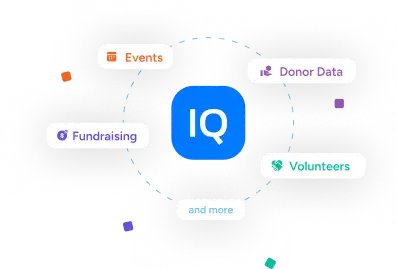
Most organizations use different systems to manage donors, accounting, programs, volunteers, and communications. Connecting these tools eliminates duplicate data entry and makes it easier for departments to share information.
For associations, connected membership data can also help teams see how engagement, benefit use, event attendance, and renewal behavior relate to one another.
Agentic AI and Workflow Coordination
AI agents can help with multi-step processes that used to require employees to switch between apps, gather information, and follow up by hand.
Good uses include preparing regular reports, helping with onboarding, tracking deadlines, and routing requests. Only automate as much as the workflow’s complexity and risk allow.
AI-Based Knowledge Management
Policies, grant documents, procedures, meeting records, and other materials are often kept in different places. AI-based knowledge management lets employees search for approved information and create summaries with links to the source documents.
This is especially helpful when staff turnover is high, or the organization relies on just a few people’s knowledge.
Predictive Analytics and Engagement
Predictive analytics can help organizations spot patterns, such as changes in member engagement, renewal risks, recurring problems, or unusual financial trends.
For an association, an engagement warning is most helpful when it shows staff which members might need outreach, extra resources, or a more personal experience.
Predictions should help guide your investigation, not replace good judgment. Organizations need to understand their data, possible biases, and the limits of predictive systems before using results to make decisions.
Governance as a Core Requirement
As AI becomes more central to daily work, organizations need explicit policies on data access, human approval, and accountability. Using AI automation responsibly should make work more efficient for your team without sacrificing privacy or transparency.
Your AI Automation Readiness Audit
Before you invest in a new platform, assess whether your organization has the data, processes, and internal support needed to carry out automation successfully.
Data readiness
- We know where the workflow needs data is stored.
- We have clearly defined access permissions and data ownership.
- We have reviewed the privacy, security, retention, and AI vendor policies.
Process readiness
- We have documented the workflow and its current steps.
- We are familiar with typical exceptions and the places where things can go wrong.
- We can define success and measure the baseline.
People and governance
- A staff owner owns the workflow.
- Employees understand when to use AI and when human review is required.
- We have a process for reviewing errors, escalating issues, and auditing actions.
If you still have several items unchecked, work on your processes before buying AI software. Make sure everyone knows their responsibilities, your data is consistent, and your current workflow is documented before you automate it.
Putting It into Practice: Choosing an AI-Powered Operating Platform
Many nonprofits and associations start with individual AI tools for automation. While these help at first, too many separate solutions can create new problems.
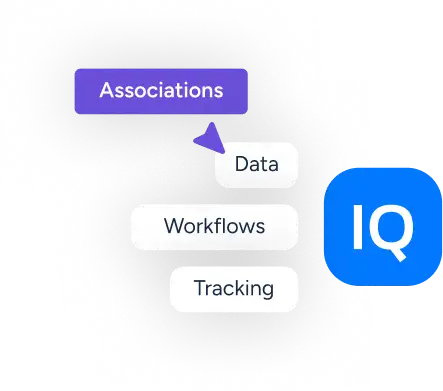
An AI-powered operating platform can bring together workflows, organizational data, analytics, and governance. It offers three main priorities for organizations looking into AI automation:
- Agentic workers should carry out multi-step business workflows, such as renewals, outreach, and compliance tracking, with each action logged and reviewable.
- AI analytics deliver surface-level findings and possible early-warning signals to help teams investigate trends and make better-informed decisions.
- Governed AI provides accountability and oversight customized to the needs of nonprofits and associations.
Built on Momentive Software’s more than 40 years of sector knowledge, MomentiveIQ helps organizations bring AI within their procedures with a stronger understanding of the systems, processes, and relationships that support their work.
For associations and nonprofits looking to move beyond isolated experiments, MomentiveIQ offers an AI platform built around the social sector’s business demands.
Get your MomentiveIQ demo and see how AI can help your organization work smarter while keeping focused on its mission.
FAQ
AI automation for nonprofit organizations uses artificial intelligence and automated workflows to reduce manual work in areas such as reporting, intake processing, grant administration, constituent communications, and board material preparation. Associations can also use AI to support member onboarding and engagement, generate predictive retention insights, and manage renewal communications.
Start with repetitive, low-risk tasks that follow established rules. Try sending reminders, sorting documents, preparing reports, or arranging onboarding. Avoid high-impact decisions related to funding, employment, or sensitive personal matters.
How much time can your staff save? It depends on your workload, data quality, and how you set things up. A workflow might save a few minutes per task or several hours per reporting cycle. Track your time before and after you implement automation, including review and maintenance.
A chatbot mainly reacts to prompts and questions. Agentic AI can work toward a specific goal by taking multiple steps and using approved tools to gather information, update records, or arrange follow-ups.
Your nonprofit data is prepared when it is accurate, consistently structured, accessible to authorized users, and covered by privacy policies. If your records are incomplete, duplicated, or poorly governed, you need to address those problems before automating important workflows.
Not every workflow needs dedicated developers, since many platforms supply automation and integrations that non-technical teams can handle with the right training. For more complex setups, IT support is needed for data integration, permissions, security, and testing. Even small organizations should pick a clear owner and set up a process to monitor performance.
With AI automation, your team can spend less time on repetitive tasks and more time helping the people, programs, and communities that rely on you.
Identify a need, set a goal, and create a workflow your team can handle. Next, build connected processes to increase efficiency and accountability.
MomentiveIQ uses AI to automate time-consuming workflows, deliver predictive insights, and track and hold every action accountable. Built for nonprofits and associations, it’s backed by over 40 years of sector experience.