How to Recruit Gen Z Members: 5 Data-Backed Strategies for Associations

Recruiting Gen Z members takes more than promoting networking events, professional development opportunities, or conference registration discounts. This generation is entering the workforce with practical questions about career growth, financial stability, and what it takes to get ahead. Associations have a compelling story to tell on all three fronts, but first, they need to make sure younger professionals understand what membership can actually do for them.
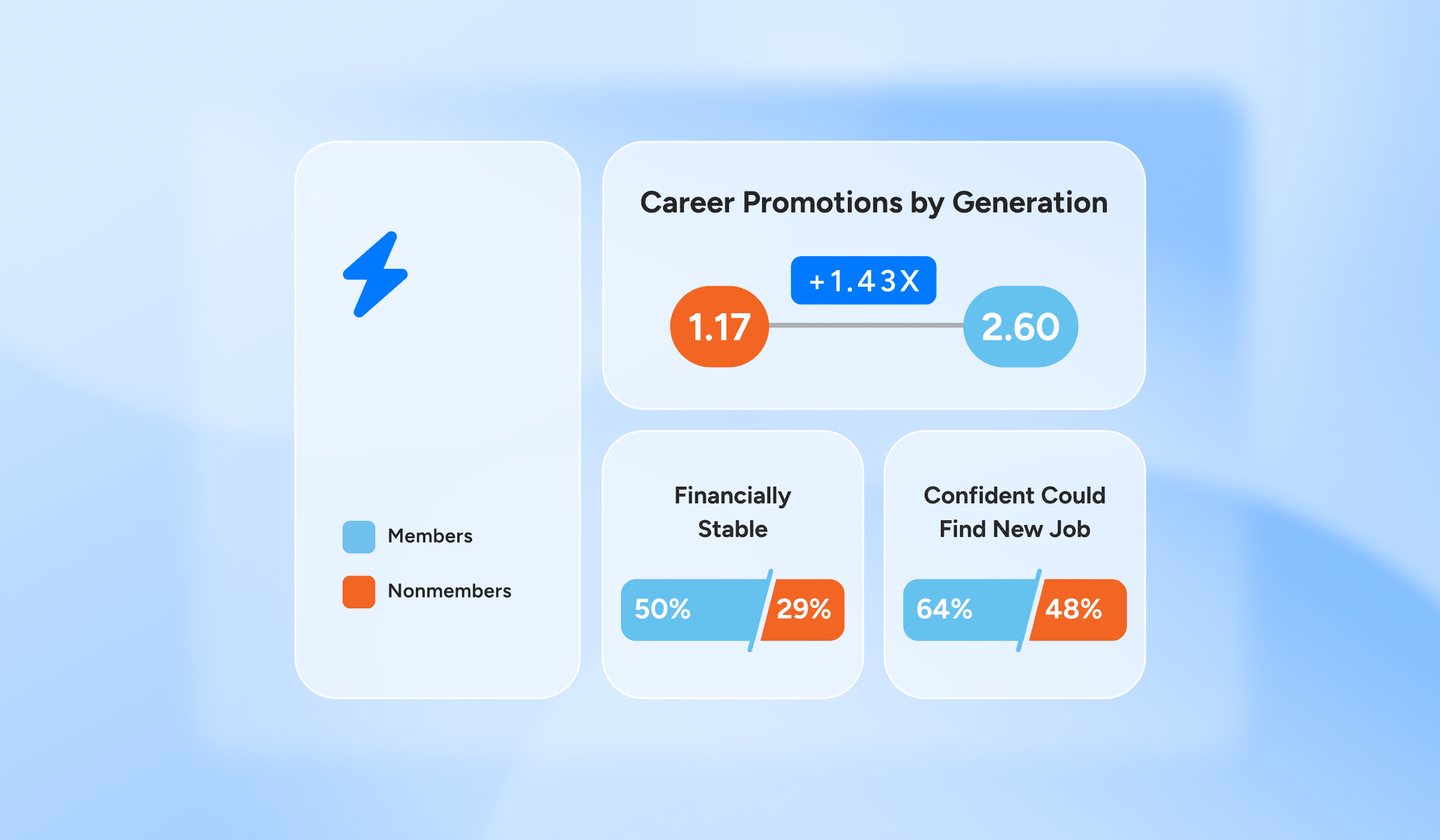
Data from Momentive’s 2026 Associations Membership Report points to significant opportunity. Gen Z association members averaged 2.6 promotions at their current company, compared with 1.17 for Gen Z professionals who aren’t members, about twice as many. Half of Gen Z members feel financially stable, vs. 29% of nonmembers, and 64% feel confident they could find a new job if they lost theirs, vs. 48%.
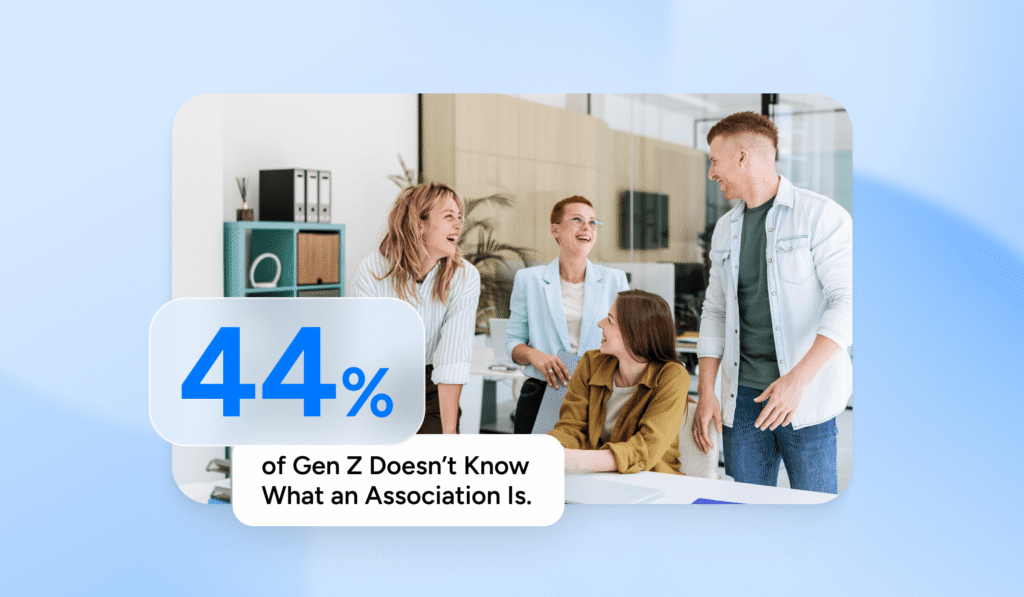
Membership alone doesn’t create those outcomes, but the differences give associations a clear story to tell. Getting it heard is the work: 44% of Gen Z nonmembers say they haven’t joined because they don’t know what a professional membership organization is.
Here are five ways to lead with proof, explain what you are in plain English, and reach younger professionals where they already look.
1. Explain What an Association Is Before You Sell What It Does
Before you can convince someone to join your association, make sure they understand what an association is.
That may seem obvious to established association professionals, but it may not be clear to someone just starting their career. In Momentive’s research, 44% of Gen Z nonmembers said, they hadn’t joined because they didn’t know what a professional membership organization was. That’s a significant awareness gap, suggesting a traditional membership pitch may be getting ahead of itself.
Gen Z professionals may be familiar with LinkedIn groups, online communities, and industry influencers but may not understand how a professional membership organization differs from those resources. In fact, 26% of Gen Z nonmembers weren’t aware there was any organization serving their specific industry.
Consider what happens when your recruitment messaging starts with benefits like member-exclusive webinars, annual conferences, committee participation, or continuing education credits. Those benefits might resonate with existing members, but they mean very little to someone who doesn’t understand why a professional organization exists or how it fits into their career.
Start with the basics instead. Explain that an association brings together people who work in the same profession or industry to help them learn, connect, share knowledge, and advance their field. Then show what that looks like in practice.
For example, your awareness content could cover:
- A straightforward explanation of what an association does and how membership organizations support professionals and industries.
- Clarification on who can join and whether membership is open to students, recent graduates, early-career professionals, or people changing careers.
- Connection to the organization’s real-world efforts, such as help finding a mentor, building new skills, or understanding industry changes.
- Share examples of what membership looks like and how members use the community, resources, and career opportunities available to them.
Once potential members understand what an association is, they’re better positioned to decide whether joining makes sense for their career path and the current climate.
Give members a reason to stay. Get the Member Retention Playbook for ways to improve onboarding, engagement, and renewals, plus a free four-week email course.
2. Lead Recruitment Ads With Proof of Value, Not Just a Pitch
Often at the start of their career, Gen Z professionals are more financially conscious and will weigh membership costs against the potential/expected benefits. Broad, sweeping promises about networking opportunities, professional development, and community may not convince them that dues are worth the investment.
You can leverage concrete evidence about Gen Z professionals who belong to associations compared with those who don’t in your marketing:
- 2.6 promotions at their current company, on average, for Gen Z association members, vs. 1.17 for nonmembers (twice times as many).
- 50% reported feeling financially stable, compared with 29% of Gen Z professionals who weren’t association members.
- 64% felt confident about finding a new job if they lost theirs, compared with 48% of nonmembers.
These statistics offer a more compelling starting point for recruitment creative than a generic message about the value of membership.
Instead of leading with “Join our association and grow your network,” try a headline that connects membership to career advancement. For example: “Your next career move starts with the right connections” or “Build the skills and connections that help move your career forward.”
Where the underlying data supports it, use specific statistics prominently in your advertising. A stat about promotions belongs in the headline or visual so readers see it immediately, not buried in the final paragraph of the ad copy.
Describe these as differences between groups: “Gen Z members average 2.6 promotions at their current company,” with a source line. Membership alone doesn’t create the outcome, so avoid wording that implies it does.
Then, pair the data and stats with a clear explanation of how your organization helps members pursue those outcomes. Highlight benefits like mentoring programs, career development resources, industry connections, or preferred access to employers. The goal is to show potential members why the numbers matter to their own professional lives.
For associations trying to reach younger professionals, the message is simple: show Gen Z why membership is valuable, with proof they can check.
3. Put Recruitment Budget Where Gen Z Already Searches
Your recruitment strategy can be well-written, visually appealing, and backed by solid data, but it won’t do much good if the right people never see it.
That’s why associations need to pay attention to where Gen Z professionals look for jobs and career opportunities. Early-career professionals are already thinking about their next move, even if they’re not actively applying. Those moments offer a natural opportunity to introduce membership as a resource for navigating their careers.
Among Gen Z professionals who aren’t association members, Indeed is the top job-search destination (69%), followed by Google (40%), LinkedIn (35%), and ZipRecruiter (23%). Gen Z members split more evenly between LinkedIn (42%) and Indeed (40%). For recruitment, that points to career-intent search and job sites first.
Post entry-level and internship roles so they surface in search, run search ads on career-intent queries, and send those clicks to a plain-English page about what your association is. Your own job board then becomes proof: 56.5% of Gen Z members have used their association’s online job board.
Gen Z professionals don’t all use the same channels, so use your own campaign performance data to decide where the next dollar will have the greatest impact
Work with university programs, career centers, employers, and industry partners to introduce students and emerging professionals to your organization.
The objective is to reach them when your organization can solve a problem they’re already trying to address.
4. Position Your Job Board as a Career Tool
An association’s job board often comes across as just another membership perk, something they can access alongside webinars, newsletters, and event discounts. For Gen Z professionals focused on finding work and building a career, that framing can bury the lede.
Instead, position your job board as a practical career resource that helps members discover opportunities, understand the market, and take the next step professionally.
Keep in mind that younger professionals expect digital tools to be intuitive and accessible, particularly on mobile devices. If your job board is hard to navigate or makes applicants jump through hoops, it can quickly lose their attention.
A few improvements can make a meaningful difference:
- Use AI-powered job matching to help users find openings that align with their skills, interests, experience, and career goals.
- Make searching, saving jobs, and applying easy on a smartphone.
- Reduce unnecessary steps and offer one-click applications where employers and technology support them.
- Display salary ranges whenever available so candidates can evaluate opportunities and understand their earning potential.
- Allow users to filter and search by experience level, location, industry, remote-work options, and relevant skills.
These features can turn a job board into something members use regularly.
You can offer a preview of available listings to entice new members, share selected opportunities on social media, and create landing pages that connect job seekers with membership benefits.
When potential members can see a direct connection between dues and a resource they need, the membership decision becomes easier to evaluate.
5. Make Career Pathways Visible in Every Recruitment Asset
Gen Z professionals are looking for more than their next job. Many are also trying to figure out how to build a career, what skills they’ll need, how and when to network, and what advancement might look like over time.
Associations are well positioned to help answer those questions. The challenge is making that support visible before someone joins.
Instead of saying that your organization offers career development, offer a visual career pathway, salary benchmarks, or a skills roadmap to make the possibilities more visual and concrete.
For example, your association could develop a career progression map showing how someone might move from an entry-level role to a mid-career or leadership position. Include the skills, certifications, experience, and professional connections that can help along the way.
If your association conducts compensation surveys or collects reliable industry data, use those findings to show how salaries vary by role, experience, specialization, or geography.
These resources give potential members something useful before they ever pay dues, while demonstrating the expertise and industry knowledge your organization can offer.
You can incorporate career pathways into nearly every recruitment channel:
- Share career maps on social media.
- Give university students a practical overview of career options within the profession, including roles they may not know exist.
- Use transparent salary benchmarks or advancement data in paid advertisements to grab attention, then connect the findings to specific member resources.
- Send career-focused content through email nurture campaigns based on members’ interests, experience levels, or professional goals.
Note: Some of your audience may want career advancement, while others may want to deepen their expertise or increase earning potential without moving into leadership, so it is important to reflect more than one definition of success.
The clearer you connect membership to those paths, the easier it is for prospective members to see how the organization can benefit them.
Turn Gen Z Recruitment Into a Long-Term Strategy
Recruiting Gen Z members means explaining your existing benefits in a way that connects with the issues younger professionals face today.
Gen Z association members reported more promotions, greater financial stability, and more confidence about finding a new job than their nonmember peers. Those differences give associations a compelling reason to examine how they communicate their value, while recognizing that membership alone doesn’t guarantee those outcomes.
Remember:
- Start by explaining what an association is before asking people to join
- Lead with credible evidence from third-party research
- Focus recruitment spending on relevant channels for Gen Z
- Make your job board a genuine career resource
- Show prospective members what professional growth can look like
The goal isn’t simply to attract a younger demographic. It’s to help the next generation of professionals understand why an association belongs in their career toolkit—and give them a clear reason to get involved.