How to Explain What an Association Is to Gen Z: 6 Ways That Work

Imagine a recent college graduate seeing an ad for your association on LinkedIn. The headline says, “Become a Member Today!” Below it, you highlight networking opportunities, professional development, and exclusive member benefits.
There’s one problem: They don’t know what an association is, why they should join, or what membership would do for them.
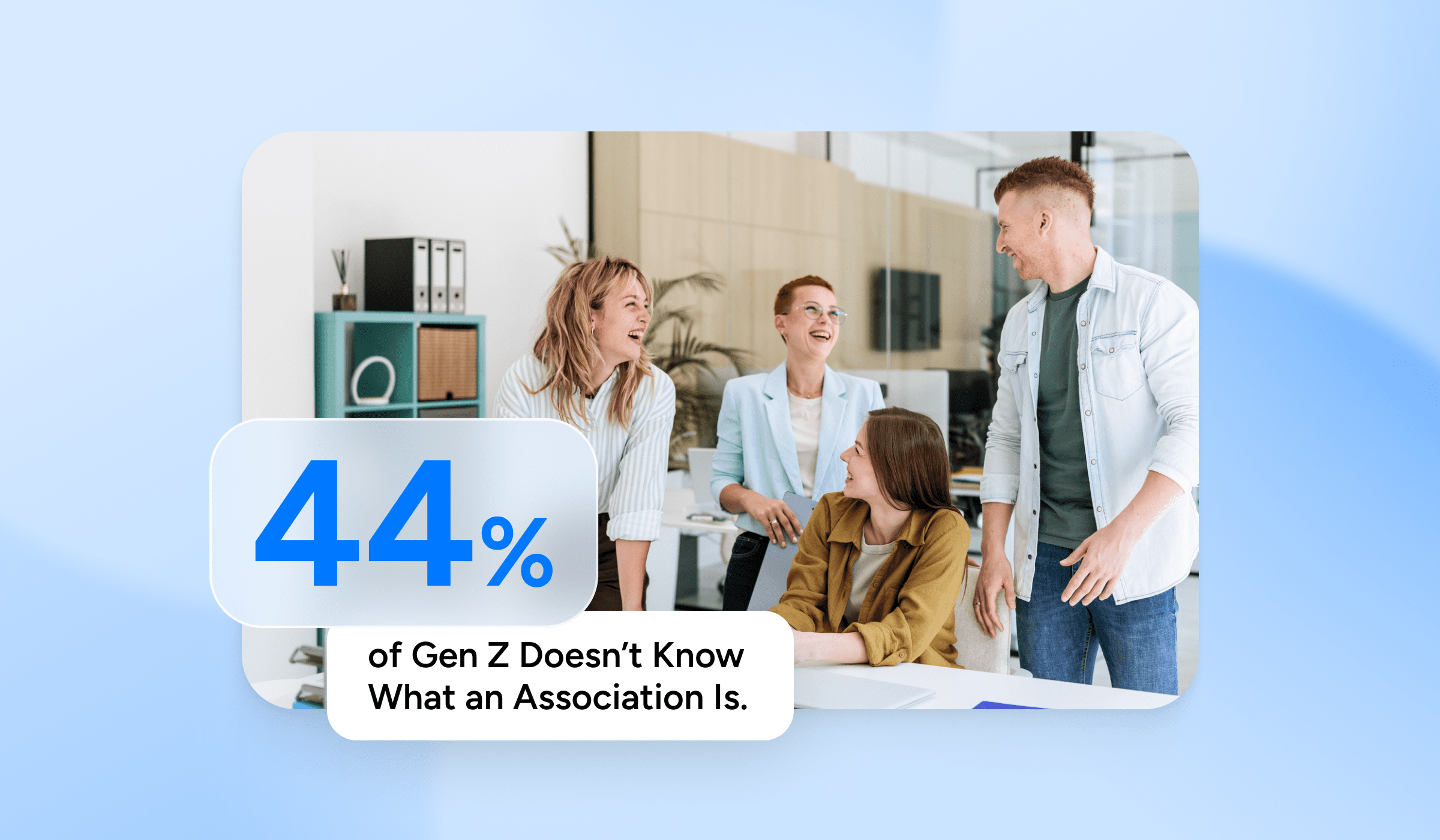
For many Gen Z professionals, that is a real possibility. In Momentive’s 2026 research, 44% of Gen Z nonmembers said they haven’t joined because they don’t know what a professional membership organization is. Among all nonmembers, the figure was 33%. Another 26% of Gen Z nonmembers said they aren’t aware of an organization for their industry.
If prospective members don’t understand what you do, a traditional membership pitch may not go far. Before you can convince someone to join, help them understand what an association does, who it serves, and why it matters to their professional life.
The good news: a small change gets you started. Add one step before the ask.
Why “Join Us” Messaging Isn’t Enough
Associations are familiar with promoting membership benefits. Your team might spend considerable time highlighting the benefits of an association, like annual conferences, industry resources, certification programs, advocacy efforts, and opportunities to connect with peers.
These are all valuable benefits. But they assume the audience already understands the basic concept of an association. Without that context, even a well-crafted membership campaign can fall flat.
Gen Z’s expectations suggest associations should reconsider how they introduce themselves. Younger professionals are accustomed to finding information online, comparing options, and deciding for themselves whether something deserves their time and money. They want to understand what they’re getting and how it connects to their goals.
A message focused entirely on membership benefits skips an important step: explaining why the organization exists.
Start with what your organization does and why someone should care. Then introduce membership as a way to get involved.
1. Explain What an Association Is in Plain English
Your organization may have a clear mission statement, but a prospective member may not understand it. Mission statements often use industry-specific language or broad phrases about advancing a profession, strengthening the community, or promoting excellence. Those ideas can be meaningful to existing members, but they may not tell an outsider much about what the organization does.
Make your message specific by answering three questions:
- Who is your association for? Identify the professionals, businesses, or communities you serve.
- What do you do? Describe your work in everyday language, from training and education to advocacy and industry resources.
- Why does it matter? Connect that work to a challenge your audience recognizes.
Create a short, consistent description of your organization. Put it on your website, social media profiles, recruitment materials, and event pages.
Here is a fill-in template: “[Association] is a community of [who]. We [train, connect, and advocate] so you can [outcome that matters to them].” For example: “We’re a membership organization for early-career accountants. We offer exam prep, mentors, and local meetups so you can move up faster.”
Make the description easy to find, too. A quarter (26%) of Gen Z nonmembers say they aren’t aware of a specific organization serving their industry, so place it where career searches land: your homepage, social profiles, campus pages, and event listings.
You don’t have to explain every program or benefit at once. Start by making sure people understand the basics.
2. Lead With the Problem You Solve, Not the Membership You Sell
People pay more attention when they recognize a problem or goal in your message. For a young professional, that might mean figuring out how to advance in a career, finding a mentor, building industry connections, or understanding which skills will matter in the next few years.
Your association may already offer resources that address those needs. The challenge is making the connection clear before asking someone to pay dues.
Relevance matters most. Among Gen Z nonmembers, 22% say membership isn’t relevant to their job and 17% don’t see the value, while 16% cite cost.
Instead of leading with “Join today to access exclusive member benefits,” try opening with a question or statement that reflects your audience’s experience.
For example:
- For early-career professionals: “Starting your career in healthcare? Connect with experienced professionals, find continuing education opportunities, and build skills you can use on the job.”
- For young professionals in a trade: “Want to keep up with changes in your industry? We connect professionals with training, practical resources, and people who understand the work.”
- For emerging industry leaders: “You don’t have to figure out your next career move alone. Find mentors, learn from peers, and discover new opportunities in your field.”
These messages still promote the value of membership, but they begin with something the audience already understands. Once people recognize the problem your association helps solve, you can explain how your organization supports them and where membership fits in.
3. Show What Your Association Actually Does
Real examples make it clear what your association does. Consider building awareness content around the work your association already does.
- Share member stories. Highlight how members have used educational resources, made meaningful professional connections, developed new skills, or found support during a career transition. Focus on specific experiences rather than generic testimonials about how great membership is.
- Make educational content accessible. Publish some subject matter videos, industry interviews, and practical tips or checklists to demonstrate your expertise without requiring the reader/viewer to become a member first.
- Highlight your impact. If your association has helped shape industry standards or influenced policy, explain that work in terms people can understand.
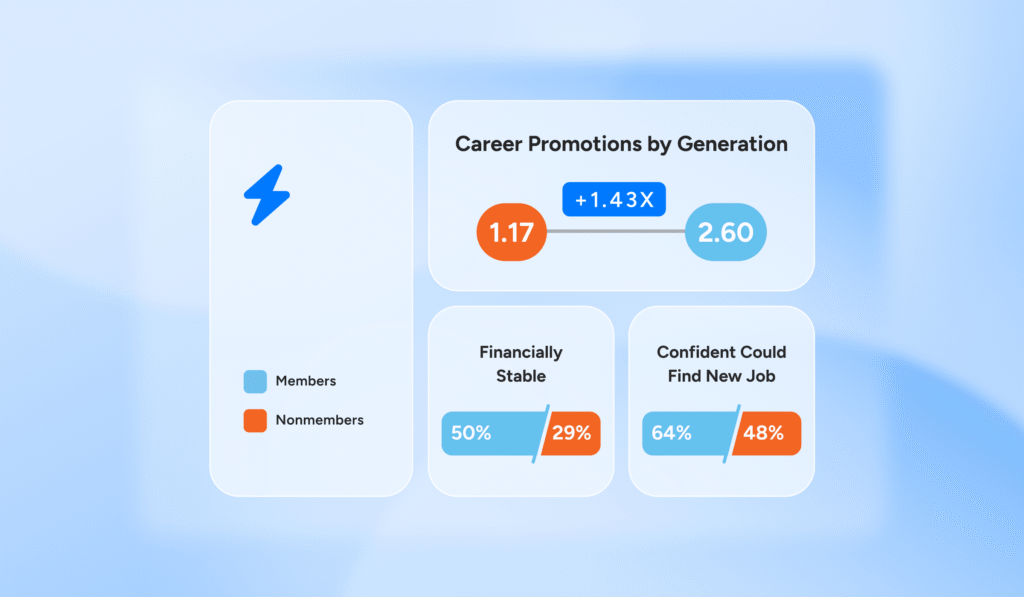
Specific research to support your case can help too. For instance: Gen Z members average 2.6 promotions at their current company, vs. 1.17 for Gen Z nonmembers (a 2x promotion rate for an early career), and 64% feel confident they could find a new job if they lost theirs, vs. just 48% of nonmembers.
This content does more than promote your organization. It helps prospective members see how associations support their profession and why joining one could be worthwhile. It also gives your audience a reason to engage with your content before they’re ready to consider membership.
4. Make Awareness Content Part of Your Recruitment Strategy
Membership recruitment doesn’t have to begin with a conversion campaign. Think about your recruitment efforts as a progression:
- Awareness: Help people understand what your association is and whom it serves.
- Education: Show how your organization supports its profession and the people working in it.
- Consideration: Explain membership benefits, costs, eligibility, and opportunities to get involved.
- Conversion: Give interested prospects a clear, straightforward path to join.
Not every prospective member will move through these stages in order. Someone who already knows your organization may be ready to join immediately. Someone who has never heard of an association may need more context.
Your marketing should account for both. You can even use awareness content in paid campaigns, campus outreach, early-career professional programs, and partnerships with employers or educational institutions.
The important thing is to give people a useful next step that matches their level of familiarity. Every next step needs a quick follow-up. Someone who downloads a guide, attends a public event, or asks a question is a warm prospect, and warm prospects go quiet when nobody follows up. For a small team, follow-up is the first thing to slip. AI agents can be your membership assistant, helping your team convert prospects through renewal. It could draft personalized follow-up outreach for your team to approve, learning from your feedback each time, and logging what changed and when.
5. Review Your Website From a Newcomer’s Perspective
Your website is often where prospective members go to decide whether your organization is relevant to them. But if you designed it primarily for existing members, it may not answer a newcomer’s questions.
Take a fresh look at your homepage and membership pages. Imagine you’re a recent graduate who has never heard of your association.
| Ask yourself: | If the answer is “no,” try: |
| Can you quickly figure out what the organization does? | Add a short, plain-language description of your association near the top of your homepage. |
| Is it clear who can participate? | Create an introductory page explaining what the organization does, whom it serves, and who can join. |
| Do you understand how the association relates to your profession? | Explain membership benefits with specific examples instead of relying on broad labels. |
| Can you find relevant information without navigating several layers of menus? | Make dues, eligibility requirements, and membership options easy to find. |
Also, include a clear next step for people who aren’t ready to join, such as attending a public event, exploring a resource library, or subscribing to a newsletter.
Keep the path short, too. Every extra click between a first visit and a membership inquiry costs you prospects.
You don’t need to rebuild your website to make it more welcoming. Often, a few changes to your messaging and navigation can make a meaningful difference.
6. Measure Awareness in Addition to Membership Sign-Ups
If your association measures only completed membership applications, you may overlook progress earlier in the recruitment process.
Depending on your channels and goals, useful metrics might include:
- Reach and impressions among younger audiences.
- Engagement with introductory social media posts and videos.
- Visits to your association’s “About” or introductory pages.
- Downloads of free resources or registrations for public events.
- Newsletter sign-ups from prospective members.
- Click-throughs from awareness content to membership information.
- The percentage of prospects who move from initial engagement to a membership inquiry or application.
Track what happens after the first click, too. If you can see which outreach led to an inquiry and which led to a membership, you know where to adjust. For instance, Momentive’s Membership Assistant connects its recommendations to what happened, giving your team a clear line from action taken to member retained. You’ll be able to update your member retention strategy based on actual evidence instead of just assumptions.
You can also ask prospective members how they first learned about your association and whether they understood what the organization offered before joining.
These measures won’t replace traditional membership conversion and retention metrics, but they’ll help you understand what happens before conversion and where potential members lose interest.
If awareness content attracts plenty of attention but few people explore membership, you may need to make the connection between your organization’s work and its membership benefits clearer. If people aren’t engaging with the content at all, revisit your messaging, distribution channels, and audience targeting. Use what you learn to refine the approach.
Give members a reason to stay. Get the Member Retention Playbook for ways to improve onboarding, engagement, and renewals, plus a free four-week email course.
Start by Making Your Association Easier to Understand
Gen Z’s limited familiarity with professional associations gives you a clear place to start when recruiting early-career prospects:
- Use straightforward language.
- Connect your work to real professional needs.
- Share examples of your impact.
- Give newcomers opportunities to explore your organization without an immediate sales pitch.
- Provide statistical research supporting the reasons why membership benefits their unique demographic’s needs to show you understand what makes them unique.
The goal should be to make sure your audience has enough context to understand what they’re being asked to join. When people understand your association’s purpose and see how it fits into their professional lives, the invitation to join becomes much more meaningful.
Momentive’s Membership Assistant supports your team throughout the full lifecycle, from converting prospects through renewal. It flags renewal risk before a lapse, drafts outreach your team approves, and logs actions, so nothing falls through the cracks on a small team.