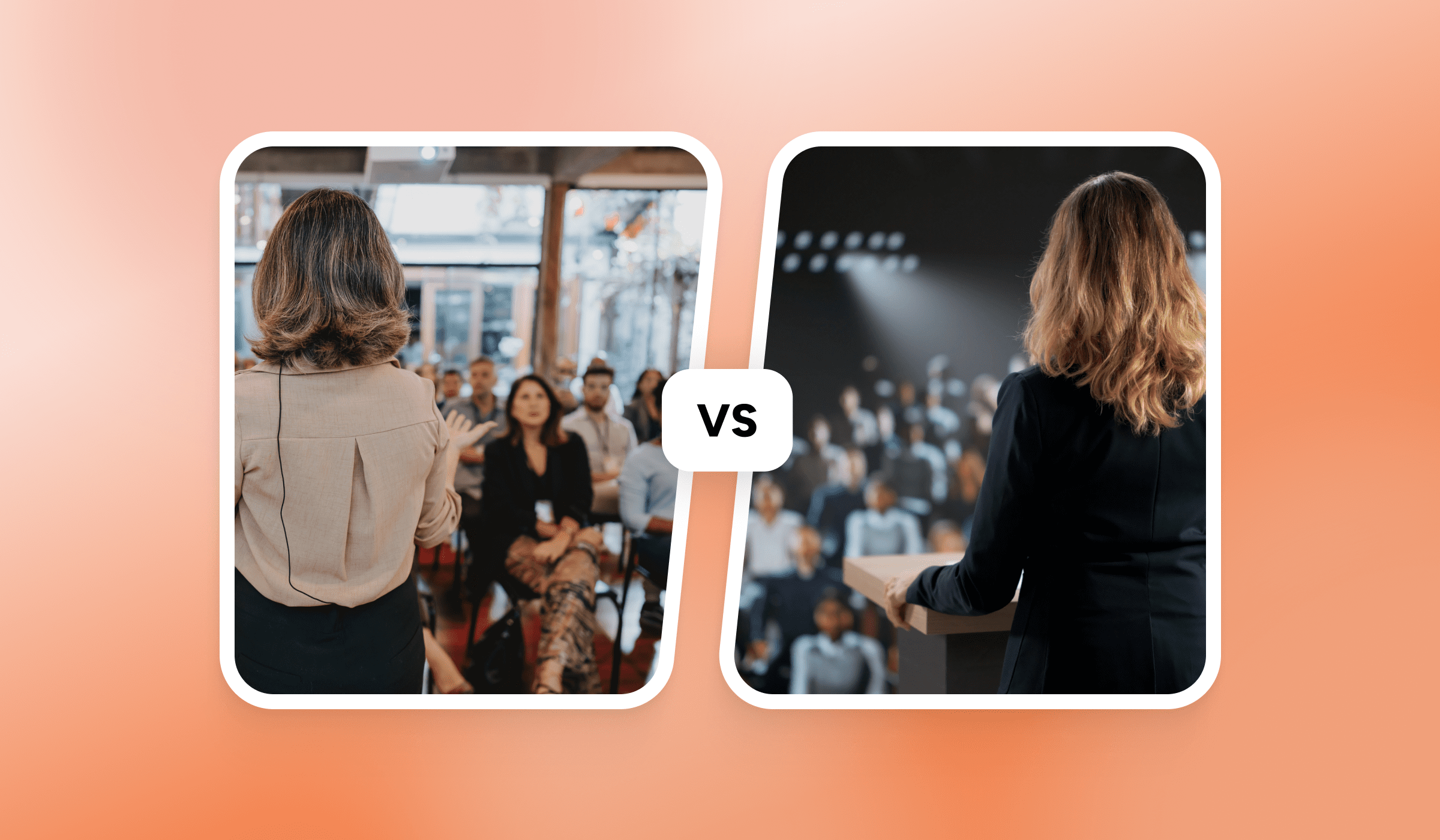

A 40-person donor luncheon and a 4,000-person annual conference are both “events.” But that’s where the similarity ends between large events vs small events. Planning large-scale events requires greater attention to detail and an understanding of the different aspects of event planning. It also requires the confidence that everything is being managed efficiently.
When you’re planning an event, regardless of its size, having a plan and timeline is essential. Thus, we’ve compiled an event planning checklist to help you stay organized and on track throughout the planning process. From large-scale event planning to each factor that will make your events successful, we’re here to help you every step of the way.
What Counts as a Large Event vs a Small Event?
When planning an event, size isn’t just about the number of people who attend. A 100-person leadership retreat and a 100-person certification workshop may require very different levels of coordination, staffing, and logistics. That’s why event professionals typically evaluate event size based on a combination of attendance, complexity, stakeholder involvement, and operational demands.
Understanding where your event falls on the spectrum can help you make better decisions about budgeting, staffing, vendor management, registration processes, and event technology. While there is no universal definition for a small or large event, most events share common characteristics that influence how they should be planned and managed.
Defining Small Events
Small events typically have fewer than 150 attendees. Think member mixers, board retreats, local fundraisers, or single-track training days. They usually involve one venue, one timeline, and a planning team you can fit around a conference table.
Defining Large Events
Large events typically have more than 500 attendees, and many run into the thousands. Annual conferences, trade shows, and multi-day summits fall under this category. They involve multiple session tracks, multiple vendors, and a planning team spread across departments (sometimes organizations).
Most event professionals plan somewhere in between. The dimensions below apply whether you’re closer to one end or straddling the middle.
Budget: How Scale Changes What You Spend
Your budget gets bigger with scale and more complicated, meaning more categories competing for the same dollars. Here’s how that translates for your budget:
Small Event Budget Breakdown
A small event budget usually centers on three categories: venue rental, food and beverage, and materials. You can often forecast total cost within a few thousand dollars, and a single spreadsheet keeps you organized.
Large Event Budget Breakdown
A large event budget adds categories that a small event never needs. Audiovisual production, speaker fees, security, insurance, and staffing all become line items of their own. A conference budget template helps you track these categories without losing sight of the total.
Hidden Costs That Grow With Scale
Contract overages, rush fees for last-minute changes, and shipping for signage and materials all grow disproportionately at scale. Build a contingency line of 10% to 15% into any event with over 500 attendees. Small events rarely need more than 5%.
Venue: Finding the Right Fit for Your Attendance Size
Venue selection is where scale becomes physical. The wrong fit shows up immediately, whether that’s a cramped hallway or a half-empty ballroom.
Venue Options for Small Events
Small events fit comfortably in a hotel meeting room, a restaurant private room, or your own office space. Choosing the right venue at this scale comes down to atmosphere and cost, not capacity.
Venue Options for Large Events
Large events need convention centers, hotel ballrooms with breakout rooms, or dedicated trade show floors. You’re also negotiating room blocks, loading dock access, and Wi-Fi bandwidth. None of that comes up when you’re booking a private dining room.
Logistics: What Gets More Complex at Scale
Logistics is where planners feel scale most acutely. Every process that worked fine for 50 people needs a redesign at 500.
Registration and Check-In at Scale
A small event can run registration off a sign-in sheet or a simple form. A large event needs online event registration built to handle waves of sign-ups, plus check-in and badging tools that keep lines moving instead of backing up into the lobby.
Catering, Transportation, and On-Site Coordination
Small events need a headcount and a delivery time. Large events need meal timing across multiple session breaks, shuttle schedules between hotels and the venue, and a team member dedicated to on-site problem-solving in real time.
Staffing: How Team Size and Structure Differ
Your team’s structure has to match your event’s structure. A flat team works for a small event. A large event needs layers.
Who You Need for a Small Event
One planner can usually run a small event with help from a volunteer or two. This holds true even for organizations running lean. The Small Staff Association Research Study shows that lean teams consistently deliver strong events by keeping scope tight and automating manual work.
Who You Need for a Large Event
Large events need a lead planner plus dedicated owners for registration, logistics, sponsorship, and content. Add day-of staff and volunteers for badge check-in, room monitoring, and speaker support. Without clear ownership at this scale, small issues turn into visible ones fast.
Timeline: How Far Out You Need to Start Planning
A small event can come together in 6 to 8 weeks. Begin by booking the venue, next confirm the headcount, and finally, order materials. Now, you’re set for your event.
However, a large event needs 9 to 12 months of lead time. Sometimes you’ll need even longer with annual conferences and contracted venues. Because of the timeline coordination of speaker outreach, sponsorship sales, and venue contracts, they require additional time and need to start well before registration opens.
Technology: The Tools Each Event Type Requires
The tools that work for a small event start to break down the moment your headcount multiplies. Knowing when to make that switch saves you from the frustration of a system stretched past its capacity.
Tech Stack for Small Events
A small event can run on a basic registration form, a shared spreadsheet, and email. If your event fits in one room and one afternoon, this is often all you need.
Tech Stack for Large Events
A large event needs a connected event management platform that offers helpful features and functionality, like registration, check-in, session scheduling, and reporting, working together rather than living in separate tools.
Event technology’s impact on ROI is highest at this scale, because disconnected systems cost you time your team doesn’t have. If you’re evaluating what to add, compare top event management platforms before you commit budget to any one system.
Benefits of Large-Scale Events
Large events build visibility and non-dues revenue that small gatherings can’t match. A well-run annual conference or large-scale expo attracts sponsors, press, and prospective members in a single concentrated push. The scale also justifies bigger swings: keynote speakers, exhibitor halls, and multi-day programming that deepen member or donor commitment.
Benefits of Small-Scale Events
Small events build depth instead of reach. A donor dinner or member roundtable gives you real conversations, not a name badge scan. They also cost less to run, take less time to plan, and let you test new formats before committing a full budget.
How to Choose the Right Scale for Your Goals
Scale isn’t a fixed decision. It’s a tool you adjust based on what you’re trying to accomplish this year.
Match Scale to Your Objectives and Budget
If your goal is deepening relationships with your top donors or most engaged members, a small event usually delivers more per dollar spent. If your goal is revenue growth, membership visibility, or industry positioning, a large event is worth the added cost and complexity. A full event strategy guide can help you map goals to the right format before you start booking anything.
Consider Your Team’s Capacity
Even a great idea fails if your team can’t staff it. Be honest about how many hands you have, not how many you wish you had. A well-run small event beats an understaffed large one every time.
FAQ
What is considered a large-scale event?
Most planners consider an event large scale once it exceeds 500 attendees, involves multiple session tracks or vendors, and requires a dedicated planning team rather than a single organizer.
How is planning a large event different from planning a small one?
Large events require longer timelines, bigger and more varied budgets, dedicated staff by function, and connected technology across registration, check-in, and reporting. Small events can run on a shorter timeline, a simpler budget, and a smaller team.
What are the biggest budget differences between large and small events?
Small event budgets center on venue, food, and materials. Large event budgets add audiovisual production, speaker fees, security, insurance, and staffing, plus a larger contingency reserve for overages.
How far in advance should you plan a large-scale event?
Plan large events 9 to 12 months out, especially if you’re contracting a venue, booking speakers, or selling sponsorships. Small events can often come together in 6 to 8 weeks.
What technology do you need for large vs small events?
Small events can run on a basic registration form and a spreadsheet. Large events need a connected platform that handles registration, check-in, session scheduling, and reporting in one place.
How can event management software help with both large and small events?
The right event management platform scales with your event instead of requiring a new system every time your headcount grows, so your team can reuse the same registration, check-in, and reporting workflow at any size.