
Event Risk Management Plan

Organizing and executing a successful event involves meticulous event contingency planning, attention to detail, and careful consideration of potential risks.
Events are susceptible to many types of risks, including safety hazards, security breaches, health precautions, and environmental factors. To effectively manage these and all other risks, event planners must incorporate a comprehensive risk management plan. In today’s digital age, custom apps have emerged as valuable tools for event risk management, providing real-time updates, improved communication, and data tracking.
In this guide, we will showcase the value of event risk management, the diverse types of event risks, the benefits of custom apps for event risk management, and practical tips for integrating an effective event risk management plan.
What Is an Event Risk Management Plan?
Event risk management is a key component of successful event planning. An event risk management plan involves conducting an event risk assessment and developing strategies to address and mitigate those risks.
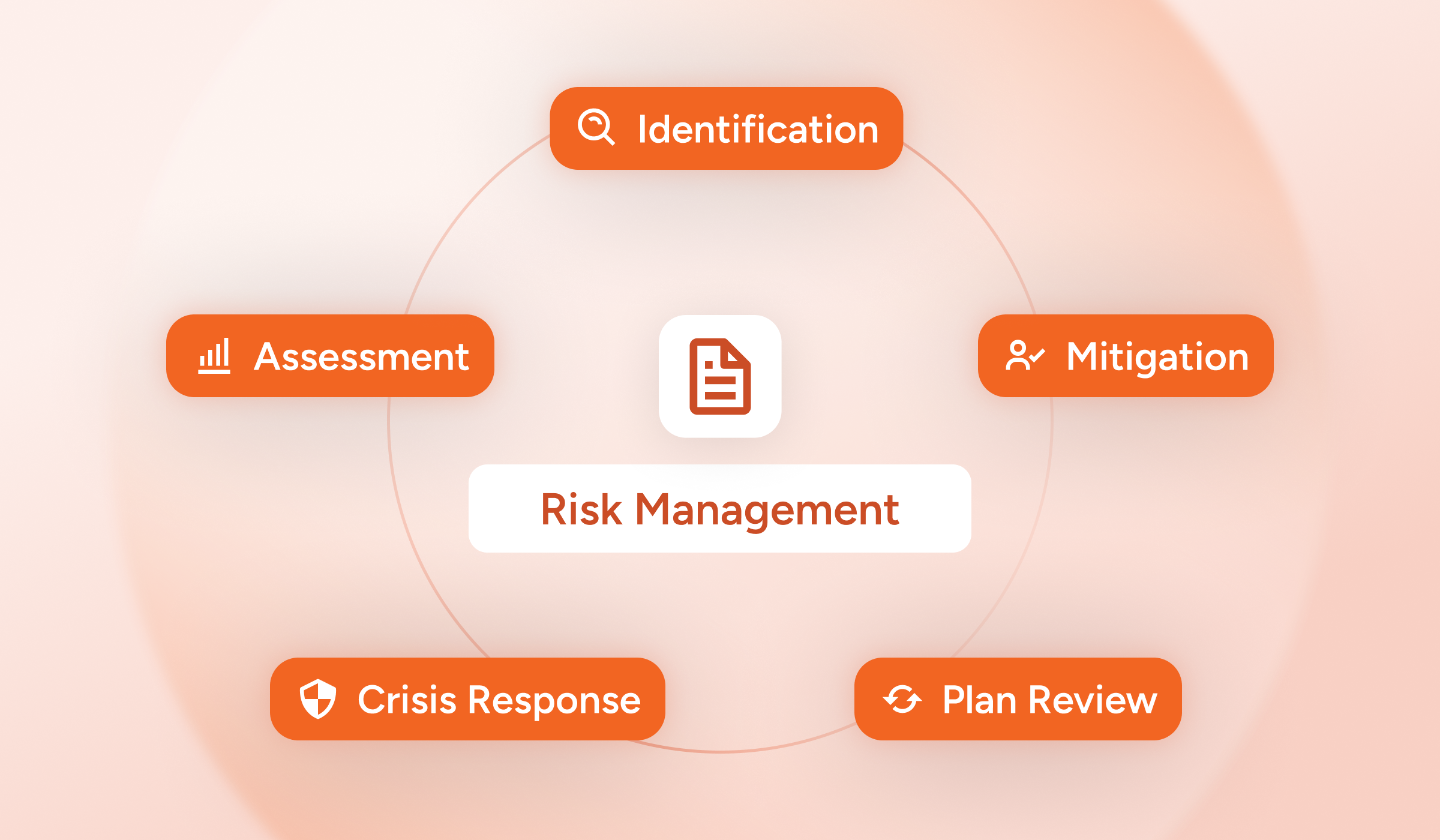
An event risk management plan outlines how your event team will identify, evaluate, mitigate, and respond to potential risks before and during an event. Without an event risk management plan, risk processes are reactive, inconsistent, or undocumented, which greatly increases exposure to legal, operational, and safety concerns.
Why Every Event Needs a Risk Management Plan
Event risk management is about more than just safety; it’s about assuming responsibility for the event’s success. By proactively identifying and addressing conceivable risks, event organizers can limit any negative impact on event attendees and the brand’s reputation. A risk management plan outlines emergency protocols and actions to address identified risks.
With the right risk management plan in place, event planners and organizers can leverage the following benefits.
Types of Risks at Events
Events are susceptible to various types of risks that you must mitigate. These risks can be broadly divided into four categories:
- Operational & Logistical Risks can include parking, transportation, and traffic management, as well as potential technology failures and outages due to heavy crowds.
- Safety & Security Risks encompass hazards such as slips, trips, and falls; crowd-related incidents; structural failures; and fire hazards, as well as security threats such as theft, vandalism, terrorism, and unauthorized access. This area can even include weather conditions, natural disasters, or environmental hazards at outdoor venues.
- Financial & Legal Risks include liability for incidental injuries or accidents, as well as fees from noncompliance with required event guidelines or accessibility regulations.
- Communication & Reputation Risks include any adverse incidents or mishaps that can spread through social media and word of mouth, potentially causing irreparable damage to the event’s brand and reputation.
After considering and addressing all of these types of risks, event organizers can develop exhaustive risk management strategies.
Operational and Logistical Risks
Another reason why it’s essential to focus on creating an event risk management plan is that it helps minimize operational disruptions.
By having a risk management plan in place, event organizers can minimize the impact of unforeseen incidents and emergencies and ensure smooth event operations.
An emergency response plan that includes clear communication channels, designated emergency exits, and trained staff can help mitigate the effects of unexpected incidents. This level of preparedness reduces panic, maintains order, and minimizes the impact on attendees, vendors, and the overall event experience.
Safety and Security Risks
The safety and well-being of event attendees should always be the top priority of any event risk management plan. Implementing a comprehensive risk management plan allows event organizers to identify possible hazards and take proactive steps to minimize the risk to attendees. This includes:
- Evaluating the event venue for safety compliance, fire safety, emergency exits, and access to medical services
- Enforcing crowd management strategies
- Considering possible health risks
An event safety plan protects attendees and establishes trust, credibility, and a positive reputation for the organization.
Financial and Legal Risks
Half-baked risk management can lead your event and organization into substantial legal and financial trouble. In the unfortunate circumstance of an accident or injury occurring at your event, the event organizers can be held legally liable if it is found that they did not take the proper precautions to prevent or mitigate the risk. Legal disputes and financial settlements can result in substantial economic losses and damage the organization’s reputation.
Depending on the type of event and location, you may encounter distinct regulations and industry standards.
Complying with these regulations, which relate to security, accessibility, environmental considerations, and attendee safety, helps event organizers and venues avoid legal ramifications and financial penalties while also demonstrating their organization’s level of social and environmental commitment.
Reputational and Communications Risks
The success and reputation of an event are dependent on attendees having a positive experience. Any negative incidents can quickly spread through social media and potentially cause irreparable damage to the brand.
A positive reputation not only attracts more participants and sponsors but also increases the chances of repeat attendance at future events.
How to Create an Event Risk Management Plan: Step-by-Step
The ideal event risk management plan will anticipate potential challenges, reduce disruptions, and respond effectively when issues arise. No matter what type of event you’re planning and managing, just follow these steps:
Step 1: Identify Potential Risks
The first step is to conduct a comprehensive risk assessment to identify potential risks to your event. Risks can come from any combination of sources:
- Weather
- Venue limitations
- Event security planning
- Technology issues & outages
- Medical emergencies
- Transportation and parking issues
Note: Be sure to review previous events with your team and the venue to identify any recurring challenges. Then, document each identified risk and its conceivable impact across all areas of your event.
This assessment will also help determine the tools, resources, and functionality needed within your event management or custom event app to support risk mitigation strategies and emergency response efforts.
Step 2: Assess Likelihood and Impact
After identifying potential risks, evaluate each one based on its likelihood of occurring and the severity of its impact. Not all risks require the same level of attention, so prioritization is essential.
Classify risks as low-impact (e.g., a sign-up delay), moderate-impact (e.g., a hiccup with your tech setup), or high-impact (e.g., severe weather during an outdoor event), so that event planners can properly prioritize their risk-mitigation resources.
H3 Step 3: Assign Ownership and Mitigation Strategies
After identifying a risk, assign an “owner” to monitor it and execute any necessary actions. Examples include:
- Securing backup vendors
- Arranging for additional security personnel
- Finding technology redundancies
- Purchasing event insurance
Document these strategies and communicate them to all appropriate team members so everyone understands their roles and responsibilities.
Step 4: Build Your Emergency Response and Crisis Communication Plan
Even with thorough preparation, incidents still occur. An emergency response and crisis communication plan is necessary for your team to react quickly and coordinate effectively during crises.
Your plan should include:
- Step-by-step procedures for emergency scenarios
- Key decision-makers
- Available communication channels
- Escalation protocols
- Emergency notifications
- Avenues to communicate with attendees in real-time
Emergency Response Protocols
Emergency response protocols provide clear direction for managing medical emergencies, severe weather, security threats, fires, power outages, and evacuations, specifying:
- Who is in charge
- The chain of command
- What measures need to be taken
- How information will be communicated to attendees and staff
Work closely with venue management, local authorities, security personnel, and emergency responders when developing these protocols. Conducting pre-event training and reviewing procedures with staff and volunteers can help everyone respond confidently in an emergency.
Crisis Communication Plan
A crisis communication plan should:
- Identify approved spokespersons
- Establish messaging guidelines and standards
- Outline the various communication channels for reaching attendees, staff, vendors, sponsors, and the media.
Make sure your updates are timely and consistent across all channels: event apps, text alerts, email notifications, social media, and public announcements.
Step 5: Review, Test, and Update the Plan
A risk management plan should be constantly evolving. Before each event, review the plan to confirm that it reflects venue requirements, staffing availability, and any emerging risks.
Run simulations and emergency drills to test procedures, identify gaps in your event contingency plan, and reveal opportunities to improve response times, communication processes, and team coordination.
Gather post-event feedback on what worked well and where improvements are needed to guarantee your risk management plan remains effective and continues to support safe, successful events.
Event Risk Register: What to Include
An event risk register is used to identify potential risks and assign ownership, allowing event organizers to prioritize funds and efforts towards the risks with the highest impact potential and implement procedures to minimize disruptions.
Risk registers include four key elements:
- Risk Identification: List and categorize potential risks.
- Risk Assessment: Evaluate each risk based on likelihood and conceivable impact.
- Mitigation Strategies: Decide how each risk will be addressed (e.g., prevention, contingency, insurance).
- Ownership and Monitoring: Assign responsibility for each risk or category and regularly review and edit.
Keeping your risk register up to date helps your team stay prepared, respond quickly to challenges, and create a safer, more successful event experience.
Event Insurance and Legal Considerations
Event insurance and legal planning protect event organizers from financial loss and legal action/liability. Depending on the type of event, coverage is likely a general liability insurance policy that includes basic property damage, cancellations, or weather-related disruptions.
Reduce risk and help ensure the event runs smoothly by ensuring you’ve completed or procured any required permits, contracts, waivers, and compliance prerequisites.
How Technology Supports Event Risk Planning
Event management software and custom apps play a significant role in enhancing event risk management practices and provide you with an array of key benefits, such as:
- Real-time updates on potential risks, enabling immediate response and mitigation. These can include weather alerts, security threats, or simple changes in the event schedule.
- Improved communication among event organizers, staff, and attendees with features such as push notifications, emergency alerts, and messaging capabilities.
- Data tracking and analysis: Custom apps can collect and analyze data related to attendee behavior, preferences, and feedback. This information can help organizers identify trends, assess potential risks, and make data-driven decisions to enhance future event planning and risk management efforts.
- Streamlined emergency responses with easy access to emergency contact information, evacuation maps, medical facilities, and other essential resources.
FAQs
An event risk management plan is a formal record/document that helps organizers identify an event’s potential risks and outlines how those risks will be prevented or addressed if they occur. Its goal is to protect attendees, staff, and vendors and to ensure the event’s overall success.
Specific risks vary depending on the size, location, and type of event, but common event risks include:
– extreme weather
– medical emergencies
– technology setbacks and outages
– vendor cancellations
– crowd management issues
– security concerns
– transportation or parking disruptions
1. Identifying anything that could negatively impact your event.
2. Evaluate each risk based on likelihood and potential consequences.
3. Develop mitigation strategies and assign roles to monitor and manage.
Procedures for handling incidents such as:
– medical emergencies
– severe weather
– security threats
– evacuations
As well as clearly defined roles, communication protocols, emergency contacts, and steps for coordinating with first responders.
Event insurance is widely recommended—and often mandatory—for conferences and large events. Venues often require proof of insurance, typically a general event liability policy with at least $1 million to $2 million, to protect against accidents, injuries, and property damage.
Event management teams across the board have successfully utilized event management software and custom apps as part of their risk management strategies. A music festival event can use a custom app to enable organizers to quickly inform attendees about severe weather conditions, allowing for timely evacuation while minimizing the risk of injury. Similarly, a conference app can facilitate efficient communication during a security breach, ensuring attendee safety by providing real-time updates and instructions. There are endless ways a custom app can enhance your event.