RFI vs RFP vs RFQ: Differences & When to Use Each

You and your team need to select a new management software, but the options seem endless. To make an effective shortlist of vendors, you need to know what’s available for your association’s size, which vendors can supply, and how much it’s going to cost.
Sorting through all that information calls for a systematic approach that lets you analyze it and make the best choice. Our association software buyer’s guide covers that approach from the first questions to the final contract.
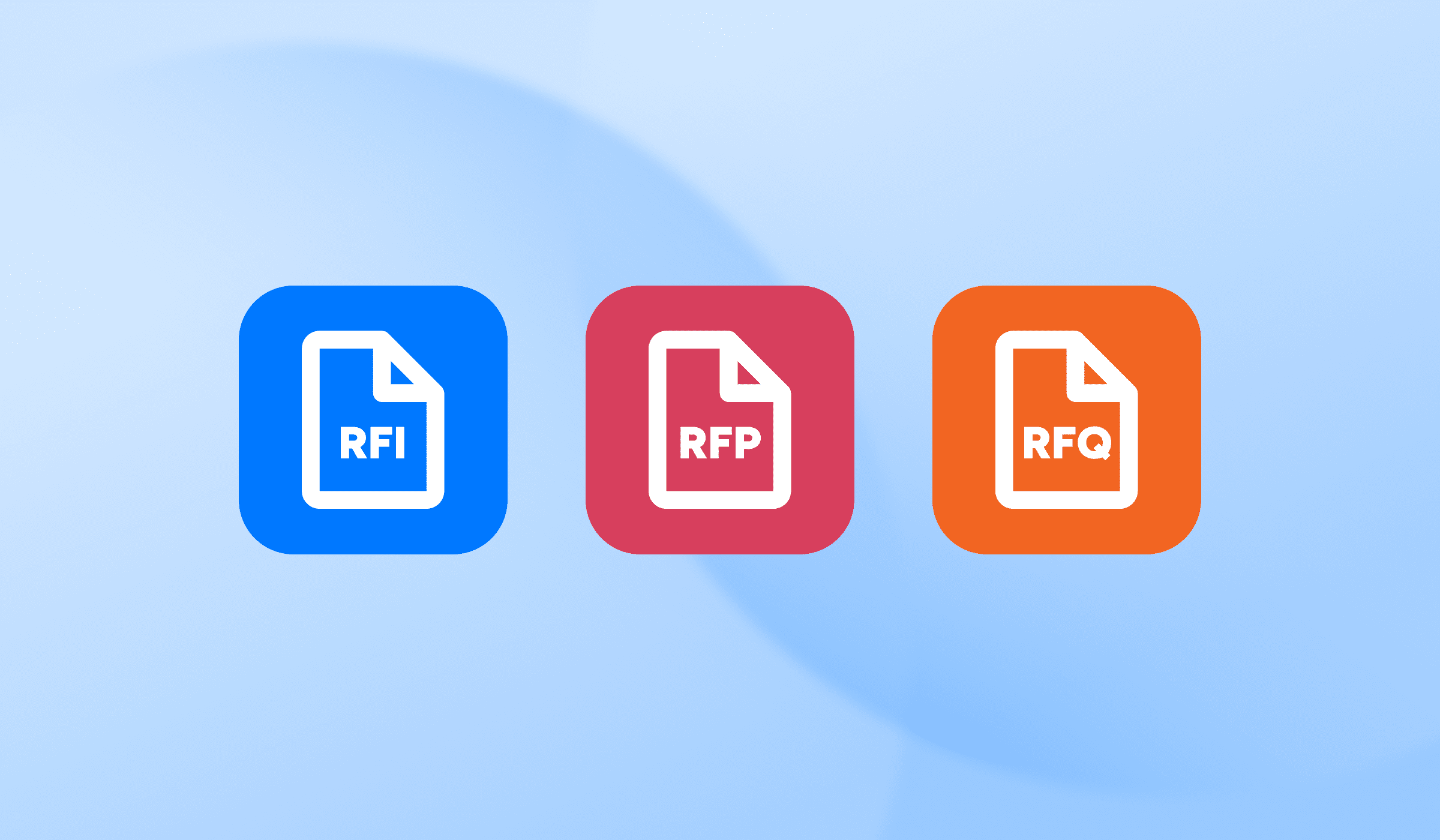
That’s where three common request forms come in: RFI (request for information), RFP (request for proposal), and RFQ (request for quote). Knowing the difference between them and which to use when keeps your shortlist sharp and everyone’s time from being wasted.
Here’s what separates each form from the others, and when to use each one.
What is the difference between an RFI, RFP, and RFQ?
An RFI, RFP, and RFQ each collect different types of data: the RFI gathers information about available solutions, the RFP evaluates how different vendors propose to meet your needs, and the RFQ nails down the price for a specific solution.
These forms get used interchangeably because they all help you gather information before vendor selection. Together, they’re often grouped under the umbrella term RFx process, covering all the RF forms used in procurement. If your organization doesn’t have a written procurement policy yet, settle that before you send the first form.
Using them well means understanding what makes each one different and how they work together to make your vendor search more productive.
What is an RFI (request for information)?
A request for information, or RFI, is an early-stage, fact-finding form you send out when you want to learn what the market can offer for your situation. It helps you gather and organize information from a variety of vendors about the solutions they offer.
Take a membership management team at a small association. They want software that helps them track membership engagement and create better experiences. Rather than researching platforms informally or gathering information ad hoc, the RFI helps them formalize what they collect, so they can compare every vendor the same way. That framework helps the team narrow down options and move to the next stage with better information.
Typically, in an RFI, associations ask open-ended questions related to:
- Capabilities
- Licensing
- Fit for associations of your size
The purpose is to spot trends in market capabilities and understand what your team can expect from vendors. This form works best when you’re new to evaluating this type of market and want to know more about what’s available and how it fits your team.
What is an RFP (request for proposal)?
A request for proposal, or RFP, is the formal request you send vendors for a precise outline of how they’ll meet your business needs. Their responses lay out how they’d deliver the product or service for your specific association, the timeline they’d operate under, and the price they’d charge. What you ask for shifts with the purchase. A conference management RFP, for instance, weighs venue logistics and attendee experience alongside price.
If the RFI is the broadest level of inquiry, the RFP is a step down from it. Here, you’re looking past a general outline of vendors’ capabilities and getting a closer look at how each solution applies to your situation. You have a better idea of what you need at this stage, so that you can outline your expectations for vendors more precisely.
For many nonprofits and associations, this phase also plays a role in audit documentation. Being able to show your vendor selection process and how you compared options matters for running mission-driven organizations.
Since you know more about what you want from vendors at this stage, the questions you ask look different, too. In an RFP, you’ll typically ask vendors to provide:
- How they’ll help you achieve your stated goals
- How they’ll meet your requirements for a vendor solution
- Their implementation plan for your association
- The evaluation criteria you’ll use to compare vendors
These more concrete criteria give you a clearer comparison between vendors. If you’re building one from scratch, a membership software RFP template gives you the requirement categories and a scoring matrix to start from.
What is an RFQ (request for quote)?
An RFQ, the last of the three, solicits detailed pricing from vendors for goods and services you’ve already clearly defined. These requests go to pre-qualified vendors, so they’re less public than an RFI or RFP.
When you draft an RFQ, your form specifies the exact criteria the vendor must meet. By this point, you already know the service you want and what you want it to do. The only real question left is how much a given vendor will charge. Association management software pricing varies more than most teams expect, so comparable quotes matter. The request spells out the obligations the vendor needs to fulfill and the scope of their responsibility. This form works best for standardized or well-specified purchases, like an addition to an existing solution.
The core difference between an RFQ and an RFP comes down to how much creativity and flexibility the vendor gets. In an RFP, vendors have the opportunity to pitch how they’d address your issue and the budget they’d need. With an RFQ, you already know how you want the work done and want comparable costs from a few vendors so you can make your final selection.
RFI vs RFP vs RFQ: Key Differences at a Glance
Here’s a quick-reference summary of the differences.
| Form | Primary purpose | Stage in the process | What you already know | Level of detail | Best used for |
| RFI | Understand the market | Beginning | That you need a solution | Broad explanations, lower detail | Learning capabilities |
| RFP | Evaluating potential solutions | Middle | The capabilities you need | Moderate details | Evaluating solution proposals |
| RFQ | Gathering exact price quotes | End | The proposal you want to adopt | High | Gathering exact prices |
When to Use Each: RFI, RFP, or RFQ
Which form to use depends on where you are in the vendor search.
Use an RFI when you’re at the beginning of the process and want to know what the market offers and which directions could fulfill your needs. If your association is growing and you’re shopping for membership management software, the RFI stage is where you learn what current technology can offer and how it might fit your team, including integrations with donor software or membership events.
Use an RFP when you have a more defined idea of your project and want a clear picture of what vendors will provide and what they will charge. Once our example association knows the capabilities it wants in a membership platform and the integration goals it’s chasing, it’s time to send RFPs. The same holds for a single-purpose buy: an event management RFP narrows the field to vendors who can actually run your annual meeting.
Use an RFQ when you have a narrowly defined project and want to know what a vendor will charge to fulfill it. Once the association knows exactly what it wants from its software and its requirements for a vendor, and needs a price from a pre-qualified vendor, that’s an RFQ.
How the Three Work Together in Vendor Selection
Using these forms in sequence takes you efficiently from initial buying conversations to final purchase. Skipping a step can leave you making a decision with incomplete information. Our AMS software selection guide covers the trade-offs you’ll weigh at each stage, starting with CRM-built versus proprietary platforms. For example, you might miss new market capabilities for managing nonprofit donor contributions and have to backtrack and revise your requirements late in the process.
Likewise, if you skip proposals about how vendors would apply their capabilities to your association, you risk missed opportunities and wasted time.
- Organize your information about vendor options and offerings with an RFI.
- Use the RFI to compare solutions and discuss options with your team.
- Armed with that insight, outline your parameters and solicit proposals with an RFP.
- Compare solutions, determine the software you need, and how you want it to operate.
- Use the RFQ to obtain final quotes from qualified vendors.
- Make your selection and move forward.
The sequence holds no matter what you’re buying. For a learning platform, an LMS RFP template shows how the requirements and the scoring change once you reach step three.
Choosing Software for Your Association or Nonprofit
Each of these forms narrows your options until you land on the software that improves your operations. In evaluating platforms for association management software, they landed on Momentive. Going through each step gave them a clear picture of what the market could provide and how it fit their business needs. That alignment helped them.
Consider how these three forms could sharpen your own vendor search.
See how Momentive products fit into your vendor search.
Frequently asked questions
Each collects different information at a different stage. The RFI surveys what the market offers, the RFP compares structured proposals and costs, and the RFQ locks in an exact price.
When you’re early in the process and want to understand what’s available before narrowing down requirements. An RFI surfaces market trends and options; save the RFP for once you know what you need.
Yes, and most vendor searches use all three at different phases: RFI to learn the market, RFP to compare specific proposals, and RFQ to finalize price.
The RFI. It tells you what vendors can offer before you’ve defined exactly what you need. The RFP comes once you have a concrete idea of what you want from a vendor.
Both touch on price, but differently. An RFP asks vendors for an estimated budget. An RFQ asks for a final, definitive number based on your exact requirements.
Not necessarily. If you’ve already scoped the market or have a well-defined project, you can skip the RFI and go straight to an RFP or RFQ.
Struggling to keep your volunteer program organized? Discover what volunteer management software can do for your organization.