The Engineering Society of Detroit: Giving Michigan’s Students a Head Start on Engineering

The Engineering Society of Detroit, 2026 Bring on Better™ Association of the Year, takes students from sixth grade to college campuses and Michigan employers. See how its academies prepare young people for engineering careers.
In 2017, the Engineering Society of Detroit (ESD) was getting ready to launch a program for girls moving from fifth to sixth grade, and one mother wasn’t willing to let a birthday stand in the way. Her daughter was a year too old. The mother kept asking until Robert Magee, ESD’s executive director, made an exception for her daughter and two other girls. She had a point, he remembers: it wasn’t her daughter’s fault that ESD hadn’t started the program a year earlier.
That daughter will graduate from Columbia University next year with a degree in chemical engineering. She is the only Black woman in her class. When she visited ESD this summer, she told Robert she couldn’t have made it through Columbia without the program. The scholarship money helped, she said, but the knowledge and confidence she brought with her made the bigger difference.
Robert hears that kind of story often, and it explains why ESD exists. The society was founded in Detroit in 1895 and describes itself as the oldest active engineering society in the country. Its mission comes down to three things: developing talent, exposing young people to engineering early, and keeping that talent in Michigan. More than 2,000 members and industry partners support that work, from automakers like GM, Ford, and Stellantis to suppliers like Bosch, ZF Group, and DENSO, along with energy, construction, and aerospace companies.
A Question for the Deans
Robert became ESD’s executive director in 2014. At that point, the only ESD program reaching young students in Detroit schools was the Michigan Regional Future City Competition, part of a national middle school program the society has coordinated for over 30 years. A year into the job, the dean of engineering at the University of Michigan invited Robert to a conference of engineering deans, and he used the chance to ask them what ESD could do to be a better partner for universities.
Their answer surprised him. They wanted more minorities in engineering, especially women. Robert toured several campuses the following week and sat in classrooms of 50 to 100 students, where he counted one or two minority women at best. He kept thinking about it. After meeting with principals in Detroit and the surrounding area, he launched the ESD Girls in Engineering Academy in 2017, with about 30 girls. A few years ago, he started a sister program for boys, because he wants every child, boys and girls alike, to see engineering as a possibility.
A Campus, a Calendar, and Friday Tours
The academy takes place on college campuses, with seven Michigan universities having partnered with the society, so students learn what university life looks like long before they apply. The summer program runs for three to four weeks in July and August. Students are in the classroom Monday through Thursday. On Fridays, a partner company hosts them for a tour, lunch, and a challenge. Companies get 15 minutes to introduce themselves. After that, the day has to be hands-on. By graduation, each student will have visited at least 24 Michigan companies and organizations, and ESD adds a new stop every year. This summer, one of them was Plante Moran.
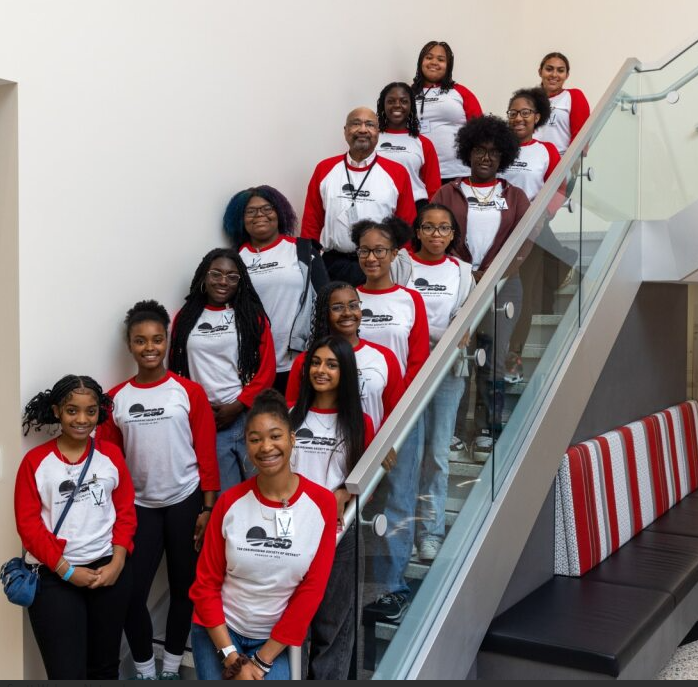
The tours change how students think about their futures. Robert hears from girls and their parents all the time that they had no idea there were so many “lanes” for engineers. Many assumed a mechanical engineer would work in automotive. Then they met mechanical engineers at DTE, at construction firms, and in aerospace. The partners, Robert says, “love” hosting them.
The people teaching the classes are engineering students from Michigan universities, who are close enough in age to be role models. Two college-student teaching aides in every classroom keep an eye out for students who are not straight-A students but have potential and help them catch up. In year three, two professors who were born outside the United States teach the class, so students get used to learning from different perspectives. From late October through May, the cohorts meet on Saturdays, and the lessons can include personal finance and practice for the SAT and ACT.
Getting Ready for the Hardest Class
The program’s results show where its attention goes. Robert points to research showing that 26 percent of Black engineering students did not continue in engineering after their first year (ASEE 2015), with separate research identifying inadequate preparation for college-level mathematics as a contributing factor (ASEE 2023). To address this, ESD students take precalculus with the program in their junior year. In their senior year, ESD pays for them to take Calculus 1 at Macomb Community College, and it encourages them to take it again at their university, so they are comfortable with the pace. Robert wants them to “go in with confidence.” So far, he says, not one girl has struggled in Calculus 2.
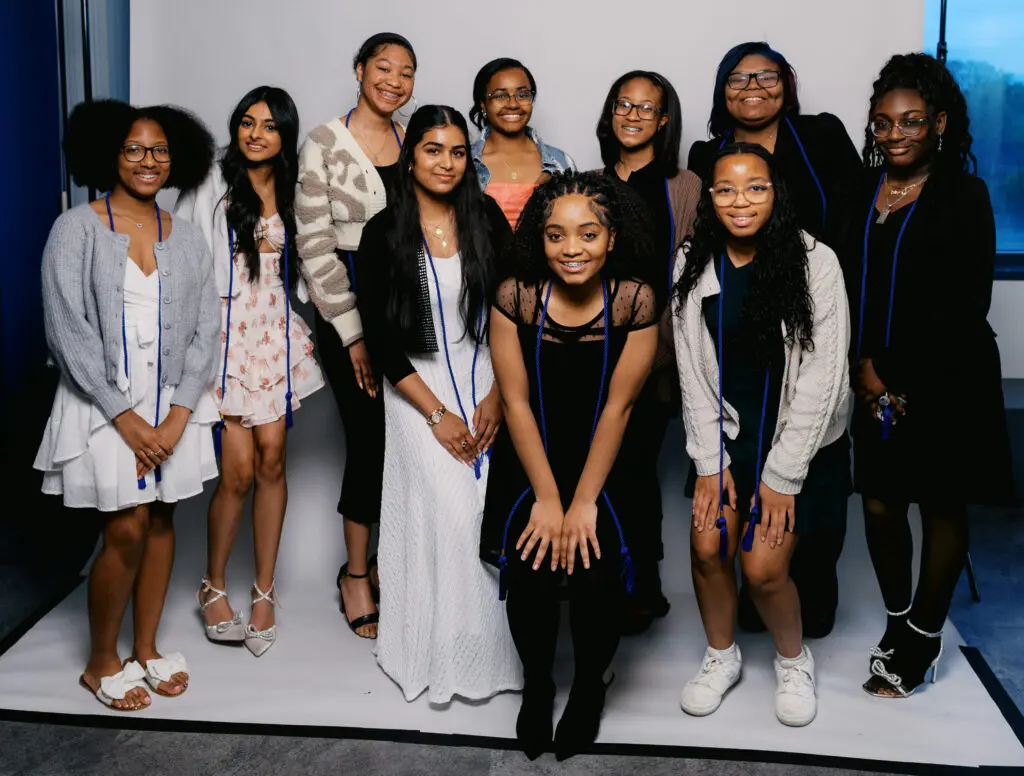
This year, 14 girls graduated from the program, pursuing fields ranging from chemical and industrial engineering to computer science, nursing, pharmacy, and business at universities across Michigan and beyond. Last year, 5 of the 13 graduates attended the University of Michigan, the state’s flagship university. A typical program might send one or two. Robert is just as proud of the girls who discover a different passion, such as law or architectural design. What he wants is for every student to attend the university they want to attend, “not the only school they’ll get accepted into.” Every graduate so far has also taken an internship the summer after her freshman year.
Keeping It Within Reach
The program costs ESD over $7,500 per student each year, and families pay about $400. Robert is firm about that. “We can’t pass it on to the parents,” he says. “They don’t have it.” He has spent years building the funding behind it, including two years of work to bring the state of Michigan on as a partner, which led to a grant of roughly $600,000. This year, state funding ESD had expected did not come, so the team is looking for new sponsors and corporate partners to close the gap.
Students find the program in two ways. Math and science teachers refer fifth graders, and ESD visits entire fifth-grade classes in case a student with potential hasn’t been noticed. Each applicant writes an essay about why she wants to take part, and a committee picks roughly 30 students. In 2023, the incoming cohort had 45 students.
A Small Staff with a Big Program
ESD runs all of this with a small staff, so the way the team spends its hours matters. The society uses YourMembership AMS, Momentive’s association management system, to keep membership records and event registration in one place. That cuts the time the staff spends on routine work such as managing members, registering people for events, and sending communications. Those hours go back to the mission, including building partnerships, working with volunteers, and expanding the ESD Girls and Boys in Engineering Academies. It also helps the team stay close to the members and industry partners who make the programs possible.
What Comes Next
Robert’s hopes for his students are simple and specific. He wants them to get into the university of their choice and to arrive without feeling intimidated by the rigor or the pace. Beyond that, he sees the benefits for the state. Almost all of the students want to come back to Michigan to work, so the companies that invest in the program are helping to build their own future workforce.
ESD is our 2026 Bring on Better™ Association of the Year in the small to mid-size category, and the news caught the team off guard. “I’m extremely humbled and proud of the success of this program,” Robert says. For a society that has been in Detroit for more than a century, the work is still just as personal as it was for one mother in 2017, who wanted her daughter to have the chance.
At Momentive, we’re proud to support clients like ESD, who show what it means to bring on better for the people who will build what comes next.