Strategies to End Homelessness: Helping Families Keep Their Homes Before It’s Too Late

Strategies to End Homelessness, Momentive’s 2026 Bring on Better™ Large Nonprofit of the Year, coordinates a community-wide effort in Greater Cincinnati and uses data to help families keep their homes before an eviction notice ever arrives.
The families who worry Kevin Finn, President and CEO of Strategies to End Homelessness, most are often the ones nobody can see. Parents sleeping in a car with their children tend to stay hidden, because they fear that being found could mean losing their kids. In the Cincinnati area, Kevin’s team has worked hard to reach those families, and what they found surprised even them. The number of families identified as sleeping outside rose from 11 in 2023 to 328 in 2025.
Kevin is honest that two things are behind that number. Housing costs have climbed since the pandemic, and families need larger, more expensive apartments than a single person does. His team has also gotten better at finding families, thanks in part to an outreach program launched in collaboration with Greater Cincinnati Behavioral Health Services in 2024 with support from one of Jeff Bezos’s foundations. Both are true, and both point to the same conclusion. “It’s just sad to not be able to give shelter to everybody who needs it,” Kevin says. “We have to prioritize who needs it the most.”
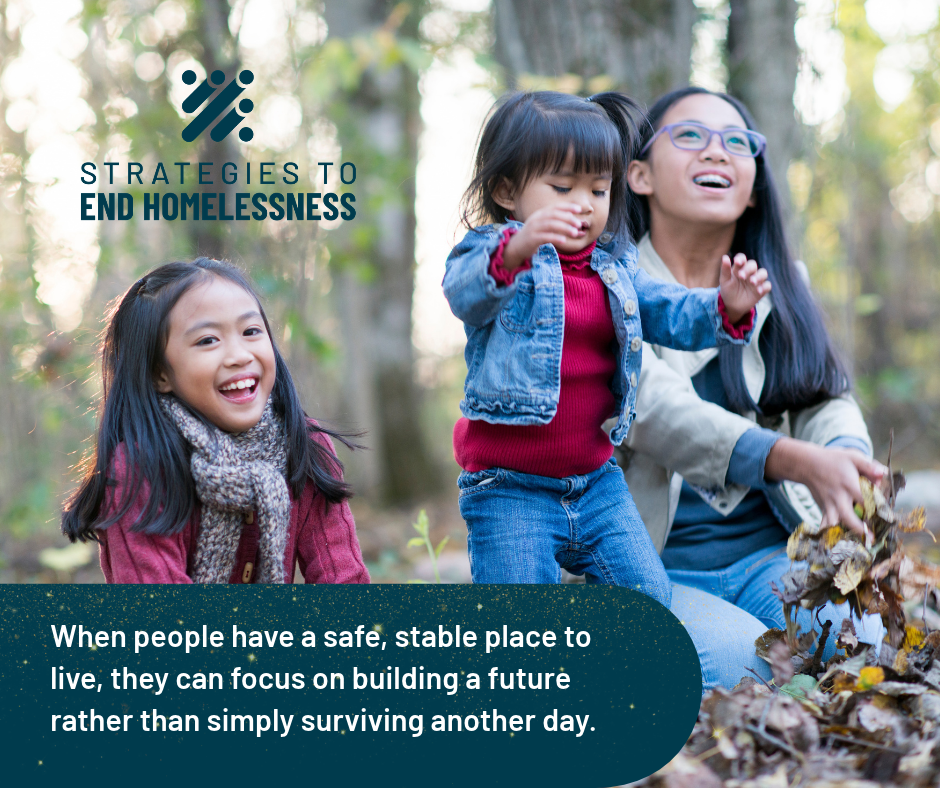
That reality has pushed Strategies to End Homelessness toward a bolder idea. Rather than waiting for families to reach the street, the organization is working to help them keep their homes in the first place.
A Street Outreach Worker’s Big Idea
Kevin’s path began on the street. He spent six years as an outreach worker with homeless teenagers in Cincinnati, and along the way he noticed that many good organizations were doing important work without much coordination. Some services overlapped, while other needs went unmet. In 2007, he started Strategies to End Homelessness to fill that gap. Its mission is to lead a coordinated community effort to end homelessness in Greater Cincinnati.
About eight years later, the organization also began managing the money that supports the system. Last year, it took in roughly $37 million in government funding, and about $34 million of it went right back to partner agencies. Strategies to End Homelessness does not run shelters or housing programs. It coordinates the work of about 30 organizations that do, and it manages federal, state, county, city, and private dollars so they reach the people who need them. Kevin sometimes hears his organization called, “the United Way of homelessness”.
Stopping Eviction Before It Starts
One lesson drives much of the organization’s work today. In an average year, about $33 million in government money goes toward helping people after they are already homeless, while only about $2 million goes toward preventing it. Kevin has a simple response to that imbalance. In one of the organization’s prevention programs, it can help six people for the cost of helping one after they become homeless. The results are better, too. Between 20 and 30 percent of people who experience homelessness become homeless again, while prevention can be 95 percent successful at keeping families in their housing at a sixth of the cost of helping after the family is homeless.
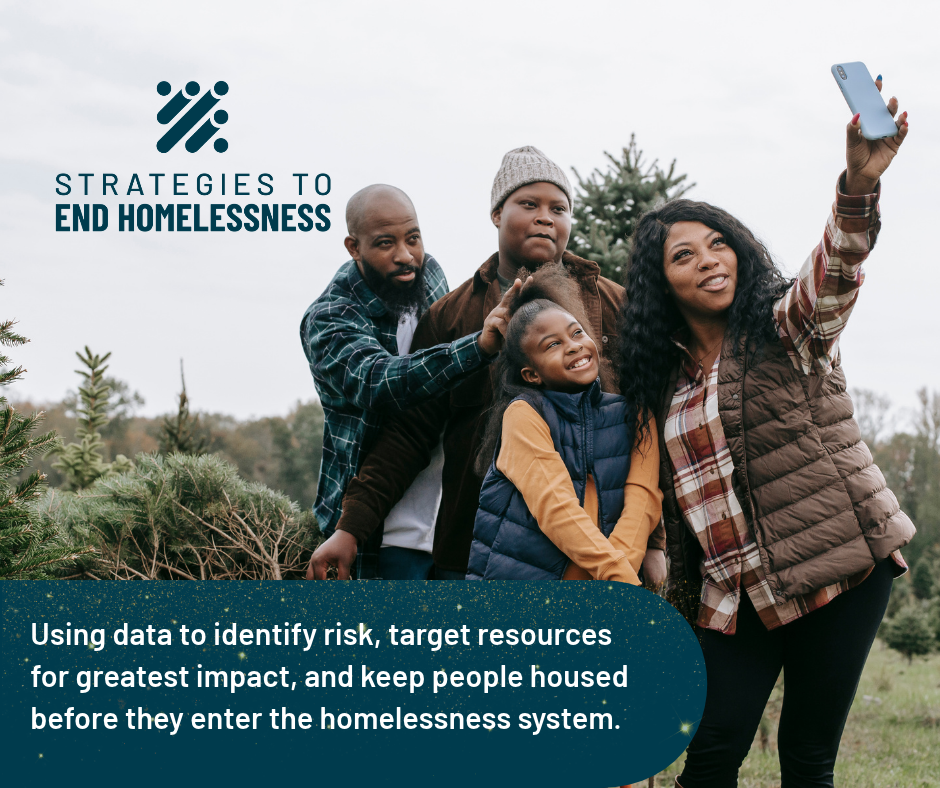
To put that idea to work, the team built something very few communities have tried. It gathers data from local food pantries, emergency assistance agencies, the clerk of courts, the county jail, the 211 helpline, its own helpline, and tenantguard.org, where people can share what is happening with their housing. A data warehouse matches households across those sources, and a predictive model developed with the University of Cincinnati produces a list of households most likely to receive an eviction notice. Then the team reaches out before the eviction notice arrives and offers help. Kevin says Cincinnati is one of about three communities in the world doing this.
The early days were not smooth. Social services are built around people asking for help, and these families had asked for nothing. Many of them hung up, assuming it was a scam, or panicked at the thought of an eviction. So, the team enlisted a marketing and PR firm, which worked pro bono, to rewrite its messaging around helping families stay stably housed rather than warning about eviction. That change made all the difference in whether families would stay on the line.
The households are all families and the stakes for their children are high. A family that is evicted often bounces between friends and relatives, and children may change schools with every move. By stepping in early, the team keeps families close to their jobs, childcare, schools and support systems. Often, the fix is simple. Many households are spending 60 or 70 percent of their income on housing, so one unexpected expense or a cut in hours can push them over the edge. The team helps them through that short-term crisis and connects them to resources like food or free diapers that stretch the family budget a little further.
The Numbers That Changed the Strategy
None of this would have been possible without knowing what each approach actually costs. Strategies to End Homelessness began tracking the cost to serve for each of its programs around the time it adopted MIP Accounting, Momentive’s fund accounting software. Subrecipient agreements with shelter operators and supportive housing providers made it possible to calculate the cost of every stay, and combining that with data on how many people used each service revealed what a person’s path through the system really costs.
What the team learned reshaped its thinking. Helping a family who is sleeping on the last couch available to them costs about half as much as helping the same family after they reach a shelter. Kevin says the team always suspected that prevention was cheaper, but it took the numbers to show how much. “If it’s that much cheaper to do this, how much cheaper would it be if we did something proactive even earlier?” he recalls asking. That question led to the predictive analytics program, which means the insights from MIP were the catalyst for one of the most innovative prevention efforts in the country. “If we hadn’t been able to see that,” he says, “we may never have tried it.”
Kevin puts it plainly: “There’s a lot of insights that came through our work with MIP that made that possible.” He adds, “They are solving homelessness in Cincinnati, whether they knew it or not.”
Sharing What Works
Kevin is proud that his team built the program itself rather than paying a large consulting firm to do it, an option that would have consumed nearly its entire prevention budget. Now he wants other communities to benefit. Strategies to End Homelessness plans to offer its data work to other cities at a fraction of what building it from scratch would cost, and Kevin hopes to partner with a few of them in the next year or two. “There’s no reason why Cincinnati should be the only city to benefit from it,” he says. Any contributions from those partnerships could in turn help the team serve more people at home.
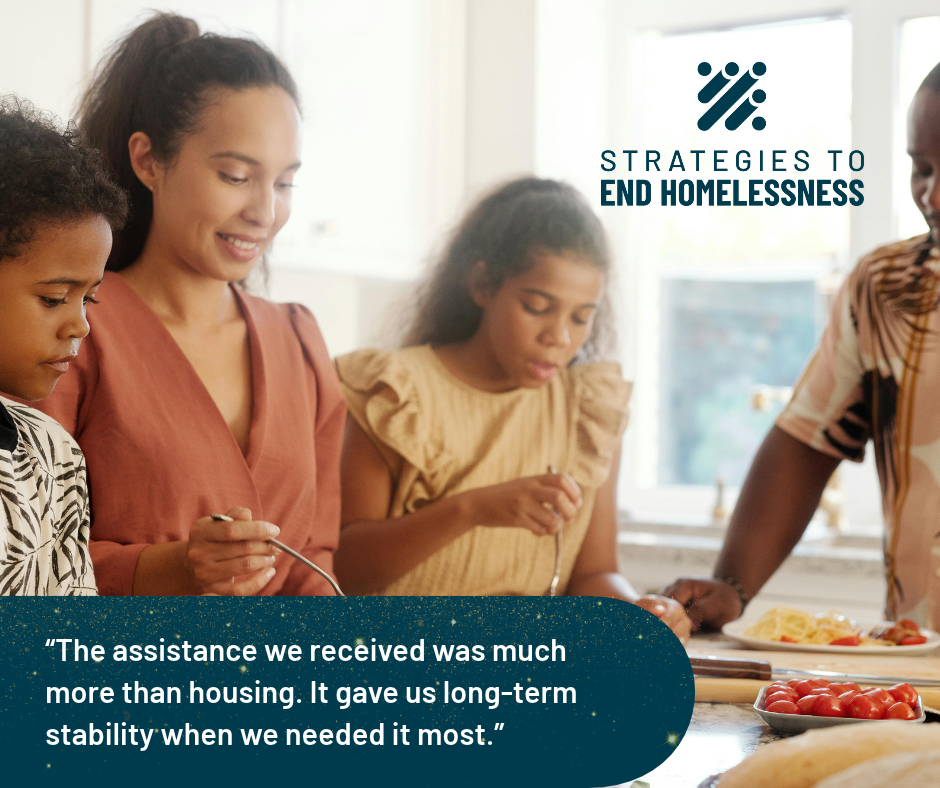
Strategies to End Homelessness is our 2026 Bring on Better™ Large Nonprofit of the Year, and Kevin hopes the recognition helps more people notice the work happening in their own backyard. Cities like New York and Los Angeles have called to learn from Cincinnati, and he would like the business leaders right down the street to know it, too. “Some of the most innovative things around reducing homelessness are happening right here in their hometown,” he says.
At Momentive, we’re proud to support clients like Strategies to End Homelessness, whose data-driven approach to prevention is helping families stay in the homes they love.