
Millennial Member Retention: Why Your Most Loyal Members Are Pulling Away (and 5 Ways to Win Them Back)

In recent years, Millennials looked like one of the safest bets for member retention. They were the most satisfied generation, felt the most connected, and were among the most likely to recommend their associations.
But that has changed.
According to Momentive’s 2026 Association Trends report, Millennials experienced the steepest decline in member loyalty of any generation between last year’s study and this year’s. Their satisfaction, sense of connection, and likelihood to renew all dropped. Millennials were the only generation with significant declines on all four loyalty measures: satisfaction, connection, likelihood to renew, and Net Promoter Score. Gen X also showed a significant drop in satisfaction.
And because many Millennials are now in the middle of their careers, the problem may be easier to miss. They’re past the early-career stage when associations tend to focus heavily on onboarding. Still, they may not yet be involved in the volunteer leadership and board activities that keep more experienced members engaged.
If your retention strategy doesn’t have a clear place for mid-career members, now is a good time to rethink it.
What the Millennial Loyalty Numbers Show
The change in Millennial member sentiment is worth a closer look:
| Member sentiment | 2025 | 2026 |
| Very satisfied | 71% | 54% |
| Extremely connected | 41% | 29% |
| Extremely likely to renew | 54% | 45% |
| Net Promoter Score (NPS) | +55 | +46 |
These aren’t small shifts. The percentage of Millennials who feel extremely connected to their associations dropped 12 points. Those who are extremely likely to renew fell nine points. And satisfaction took an even bigger hit, dropping 17 points.
The takeaway? A member can still see value in an association and be less certain that they want to stay. If you’re only looking at overall satisfaction or renewal rates, you may not recognize the warning signs until members actually leave.
Give members a reason to stay. Get the Member Retention Playbook for ways to improve onboarding, engagement, and renewals, plus a free four-week email course.
Millennials Still Report Career Gains, But Their Satisfaction and Connection Slipped
Before you rework your membership benefits or add another professional development opportunity, consider what research says about the value Millennials get from their memberships.
Millennial members continue to report stronger career outcomes than their nonmember peers:
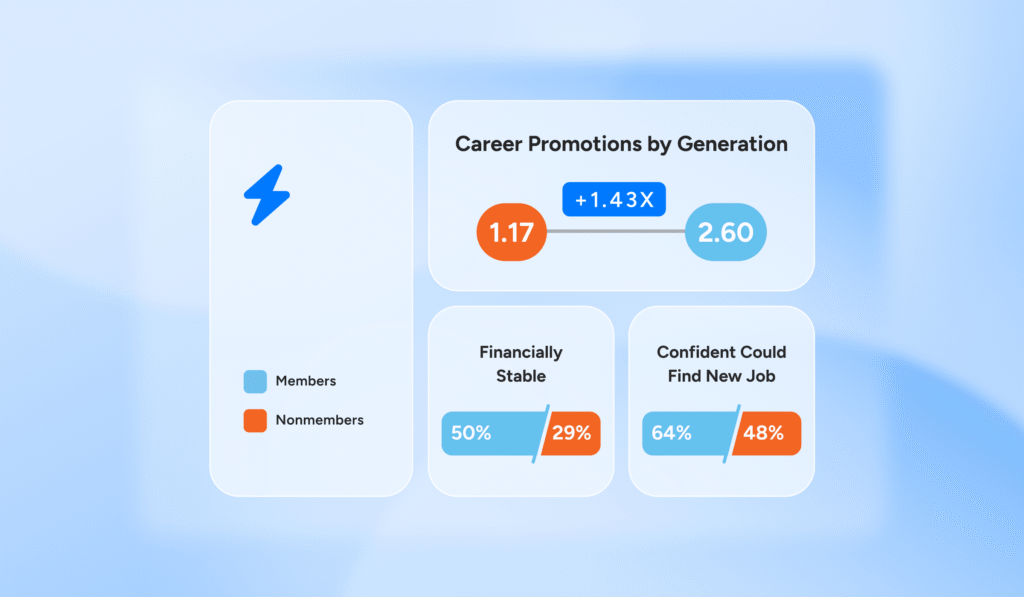
- Financial stability: 42% of Millennial members feel financially stable, compared to 26% of nonmembers.
- Career advancement: 45% of Millennial members say they have been steadily promoted, compared to 23% of nonmembers.
- Career confidence: 65% of Millennial members are confident they could find a new job, compared to 52% of nonmembers.
- Belonging: 54% of Millennial members feel a sense of belonging and community, compared with 31% of nonmembers.
Members still report better career outcomes than nonmembers, yet their satisfaction and connection both dropped sharply. That suggests the relationship deserves as much attention as the benefits. Rather than another reminder of everything included in their dues, think about how you can help them feel more connected to the people and opportunities that make membership worthwhile.
Here are five places to start.
5 Ways to Improve Millennial Member Retention
1. Lead With Belonging in Your Retention Messaging
A typical renewal email often reads like a rundown of membership benefits: access to resources, event discounts, professional development, and networking opportunities.
There’s nothing wrong with reminding members what they receive. But if the issue is a weakening sense of connection, another benefits list probably won’t change much.
Instead, make belonging part of the conversation.
Highlight the professional community they’re part of and the opportunities they have to learn from people who understand their work. Share stories about members who found mentors, made career connections, or discovered new opportunities through the association.
The goal is to remind members that they’re part of a community that supports their professional growth, in addition to the services they receive.
2. Build Renewal Campaigns Around Career Stage
Sending the same renewal message to everyone is convenient, but it doesn’t account for what different members need from their association.
An early-career professional may be looking for mentorship, career guidance, and opportunities to build a network. A mid-career member may be more interested in leadership development, industry influence, or connecting with peers who understand the challenges of advancing in their field. Someone nearing retirement may value legacy opportunities, recognition, and ways to share their experience.
Those are very different reasons to renew.
Start by segmenting your membership database by career stage, using available information such as years in the profession, membership history, job title, or career milestones. Then tailor your renewal messaging accordingly.
3. Give Mid-Career Members Their Own Touchpoint
Mid-career members can be easy to overlook in an engagement strategy.
New members typically receive onboarding emails, welcome messages, and invitations to get involved. More experienced members may have established relationships through committees, volunteer roles, or board service.
Many mid-career members may be balancing increased professional responsibilities, family commitments, and career transitions. They may not have the time or interest to participate in every event, but that doesn’t mean they’ve lost interest in the association.
They might need a reason to reconnect. Consider a mid-career member check-in, a targeted networking event, or a peer discussion focused on challenges like managing teams, advancing into leadership, or navigating industry changes.
You could also ask them directly what they want from their membership at this stage of their careers. A short survey or a handful of personal conversations can help identify gaps you may not see in your engagement reports.
The important thing is to make sure mid-career members don’t feel like they’ve outgrown your programming or fallen between the cracks.
4. Put Millennial Members in the Spotlight
If you want members to feel like they belong, let them see themselves in your association.
Feature Millennial members in newsletters, social media posts, event promotions, and other communications. Share their professional stories, highlight their contributions, and give them opportunities to talk about how they’ve benefited from being part of the organization.
Look beyond the usual board members and longtime volunteers. Include members who are building their careers, leading projects, mentoring colleagues, or making an impact in their industries.
5. Track Renewal and Connection as Separate Metrics
Satisfaction and renewal intent are not interchangeable. A member can be generally happy with their association while feeling less connected to it or becoming less certain about renewing.
If you’re relying on one overall satisfaction score to measure member loyalty, you could be missing an important part of the story.
Track renewal intent and connection separately. Look at how those numbers change by generation and career stage, and compare them with actual renewal behavior.
Pay attention to questions such as:
- Do members feel connected to the association and its community?
- Are they likely to renew, or simply satisfied with their current benefits?
- Which member segments show declining engagement before renewal season?
The goal is to identify members who may be drifting away before they become lapsed members. A few well-chosen survey questions, paired with your existing membership and engagement data, can help you spot patterns earlier.
Make Member Retention More Personal Without Adding More Work
All five strategies share a common challenge: they require more targeted, consistent communication.
Membership teams need to understand which members are at risk, recognize differences between career stages, and reach out with messages that actually speak to those members’ needs. Doing all of that manually, especially with a lean staff, can quickly become overwhelming.
That’s where technology can help.
Momentive’s Membership Assistant, the first MomentiveIQ Agentic Worker, supports your team from converting prospects through renewal. It flags members showing signs of disengagement, surfaces renewal risk before a lapse, and drafts outreach your team approves, so different groups can hear from you in ways that fit them. Actions are logged for your team to review.
With a small team, that can be the difference between knowing who is drifting and acting on it.
Don’t Wait Until Renewal Season to Rebuild the Connection
The Millennial loyalty decline reminds us that retention problems don’t start when a member decides not to renew. Often, the disconnect happens much earlier.
Members may still appreciate the benefits they receive. They may still feel that their association supports their careers. But if they no longer feel connected to the community, they have fewer reasons to stay involved.
The good news is that belonging hasn’t disappeared: 54% of Millennial members feel a sense of belonging and community, compared with 31% of nonmembers.
Now is the time to make that connection more intentional. Look beyond retention numbers, give mid-career members more attention, and make sure your communications reflect what members actually need at this stage of their professional lives.
Keeping members means giving them reasons to feel they still belong, in addition to reminding them why they joined.