
Why workforce clarity, belonging, and technology strategy shape donor loyalty.
Fundraisers are natural communicators. We think carefully about donor journeys, campaign language, and the cadence of stewardship. We refine impact reports until every word reflects our mission, and we invest in platforms that deliver the right message at the right moment. Yet one of the most influential drivers of donor loyalty often begins far from the email subject line or appeal letter. It begins inside the organization.
New data from Momentive Software’s 2026 State of the Mission-Driven Workforce report highlights a reality many leaders sense but struggle to quantify: Workforce communication challenges within nonprofit organizations directly influence stability, and stability is foundational to donor trust.
If staff retention falters, donor retention often follows.
Mission Commitment Is Strong, But It Has Limits
Nonprofit professionals are deeply motivated by purpose. The research shows that 77% accept lower compensation in exchange for mission-driven work.
This statistic reflects the heart of the sector. People choose nonprofit careers because they believe in the mission. They are willing to make financial trade-offs in order to contribute to meaningful change.
However, commitment to mission cannot compensate indefinitely for systemic challenges. Passion without structure eventually erodes under unclear expectations, limited advancement opportunities, or operational strain.
When highly committed professionals leave, the loss reverberates.
The Career Path Gap and Its Ripple Effect
One of the clearest signals from the research is the impact of career clarity.
Among nonprofit professionals surveyed, 65% of employees who see visible growth pathways say they are not considering leaving their organization, compared to just 27% of those without a clear growth trajectory.
Those numbers alone should give fundraising leaders pause. Career clarity more than doubles retention.
Remember too that development work is inherently relational. Major gifts, planned giving, and corporate partnerships depend on trust cultivated over time. Donors often develop loyalty not only to a cause but to the individuals representing it—the fundraiser who remembers family milestones, the program director who provides thoughtful updates, the executive who articulates a consistent vision. Retention preserves those relational bridges.
So, when a frontline fundraiser leaves because they cannot envision advancement, the disruption extends well beyond internal workflow. Donors must be reassigned. New introductions are scheduled. Context must be rebuilt. Even with a well-maintained CRM, institutional memory is never fully transferable. Tone, personal nuance, and shared history do not fit neatly into database fields. Retention comes down to understanding how a donor prefers to communicate, what motivates their giving, and which family member influenced their philanthropic values.
Frequent transitions can unintentionally shift communication from relational to transactional. Instead of advancing long-term philanthropic conversations, new staff may focus on immediate performance metrics. Donors who once felt deeply known may feel like they’ve become just part of a rotation.
However, clarity around growth opportunities signals stability. When fundraisers understand how their role can evolve within the organization, they approach donor relationships with greater confidence and long-term perspective. Multi-year commitments feel realistic, and stewardship plans extend beyond the next fiscal year.
Leaders can close the career clarity gap with practical steps:
• Map potential advancement pathways within development roles
• Communicate expectations for progression openly and regularly
• Connect fundraising performance to broader organizational strategy
• Invest in leadership development for high-potential team members
These actions not only improve morale; they reinforce the continuity donors rely on.
Belonging Is a Retention Advantage, But Not a Guarantee
The study also reveals encouraging news about workplace culture. Eighty-five percent of nonprofit professionals report feeling a strong sense of belonging within their organization.
For fundraising leaders, belonging influences donor experience in meaningful ways. It fosters collaboration, strengthens storytelling, and encourages teams to align on shared mission narratives. When development, programs, marketing, and finance collaborate effectively, impact stories are richer, and campaign themes resonate because they are shaped by diverse perspectives.
Yet belonging alone does not secure retention. Only 43% of employees who report strong belonging say they are not considering leaving their organization.
That gap matters. A healthy culture creates conditions for strong communication, but it must be paired with career clarity and operational efficiency to support retention. Leaders can strengthen belonging while reinforcing retention by:
• Inviting cross-functional teams into campaign planning
• Sharing donor impact stories across departments
• Recognizing collaborative achievements publicly
• Encouraging open dialogue about workload and challenges
When belonging is coupled with visible growth pathways and efficient systems, retention strengthens, and donor experiences become more consistent.
Board Engagement and Donor Continuity
While workforce stability among staff is essential, donor continuity also depends on effective communication between staff and board members.
Board members frequently play a critical role in cultivating major donors, securing corporate sponsorships, and championing in-kind contributions. Many leverage personal networks and professional relationships to advance the organization’s mission.
When board members feel informed and engaged, they serve as powerful ambassadors. When communication falters and they feel out of the loop, disengagement can follow.
Board attrition carries consequences beyond governance. In some cases, support that has been sustained for years can diminish quickly if a board member feels disconnected from strategy or impact.
Clear, consistent communication between staff and board is essential. This includes:
• Regular updates on fundraising performance and campaign progress
• Transparent discussion of challenges and opportunities
• Defined expectations for board engagement in donor cultivation
• Opportunities for board members to see impact firsthand
When board members understand priorities and feel meaningfully involved, they are more likely to remain active champions. Donor relationships built through board networks are more likely to endure.
In this way, board retention mirrors staff retention. Both influence donor continuity and depend on thoughtful communication.
Technology Burnout and the Hidden Cost to Relationships
Technology is indispensable in modern fundraising. CRM systems, marketing automation, event platforms, and reporting dashboards allow us to personalize outreach at scale.
However, technology can also create friction.
Eighty-two percent of nonprofit professionals say disconnected systems contribute to burnout. Among those experiencing technology-related burnout, 63% are actively exploring other opportunities.
For development teams, disconnected systems often mean duplicate data entry, manual reporting, and time-consuming reconciliation across platforms. Every hour spent navigating inefficiencies is an hour spent not building relationships. For an industry that is already burdened with “making do with less,” these inefficiencies are exacerbated. When technology is draining energy rather than enabling strategy, both staff morale and donor engagement suffer.
Consider the impact on stewardship. A fundraiser who spends hours pulling segmented lists or correcting data inconsistencies has less capacity to write personal notes, schedule phone calls, or prepare thoughtful updates.
Technology should create efficiency that frees time for personal outreach. To significantly reduce burnout, leaders should:
• Regularly evaluate whether systems are integrated effectively
• Regularly evaluate whether staff members feel confident using these systems
• Provide training, assure process alignment, and be thoughtful in selecting
platforms
When technology enables rather than exhausts, staff are more likely to remain, and donors are more likely to experience consistent engagement.
Measuring What Matters
Fundraisers routinely analyze donor retention rates, average gift size, and lifetime value. We set benchmarks and evaluate progress quarter by quarter. Workforce stability deserves similar attention. Leaders should consider monitoring:
• Tenure within development roles
• Internal promotion rates
• Career clarity indicators (through staff surveys)
• Board engagement and retention metrics
• Technology satisfaction and burnout trends
These data points can offer early insight into potential donor communication risks. When internal clarity declines or burnout increases, donor relationships may soon feel the effects.
A Sustainable Path Forward
Digital tools will continue to evolve and campaign strategies will shift.
But the foundation remains consistent. Fundraising will always rely on authentic, relationship-based communication. Donors stay when they trust the people who steward their gifts. Those people stay when they see growth, feel valued, and have the tools to do their work well.
When mission commitment is high but structural support is inconsistent, passion alone cannot secure stability. When disconnected systems drive burnout, relational work suffers. And when board members feel disengaged, valuable networks and resources can fade.
Staff retention and donor retention are deeply connected. Both rely on trust, clarity, and consistent communication.
By strengthening internal communication, clarifying growth pathways, integrating technology effectively, and engaging board members intentionally, organizations create the stability donors value.
In fundraising, relationships are our most powerful asset. Protecting those relationships begins with supporting the people entrusted to steward them.
Nonprofit professionals already bring extraordinary commitment to their work. When that commitment is matched with career advancement, meaningful engagement, and the right tools, it translates into something donors feel immediately: trust in the people advancing the mission. And trust is what sustains philanthropy over time.
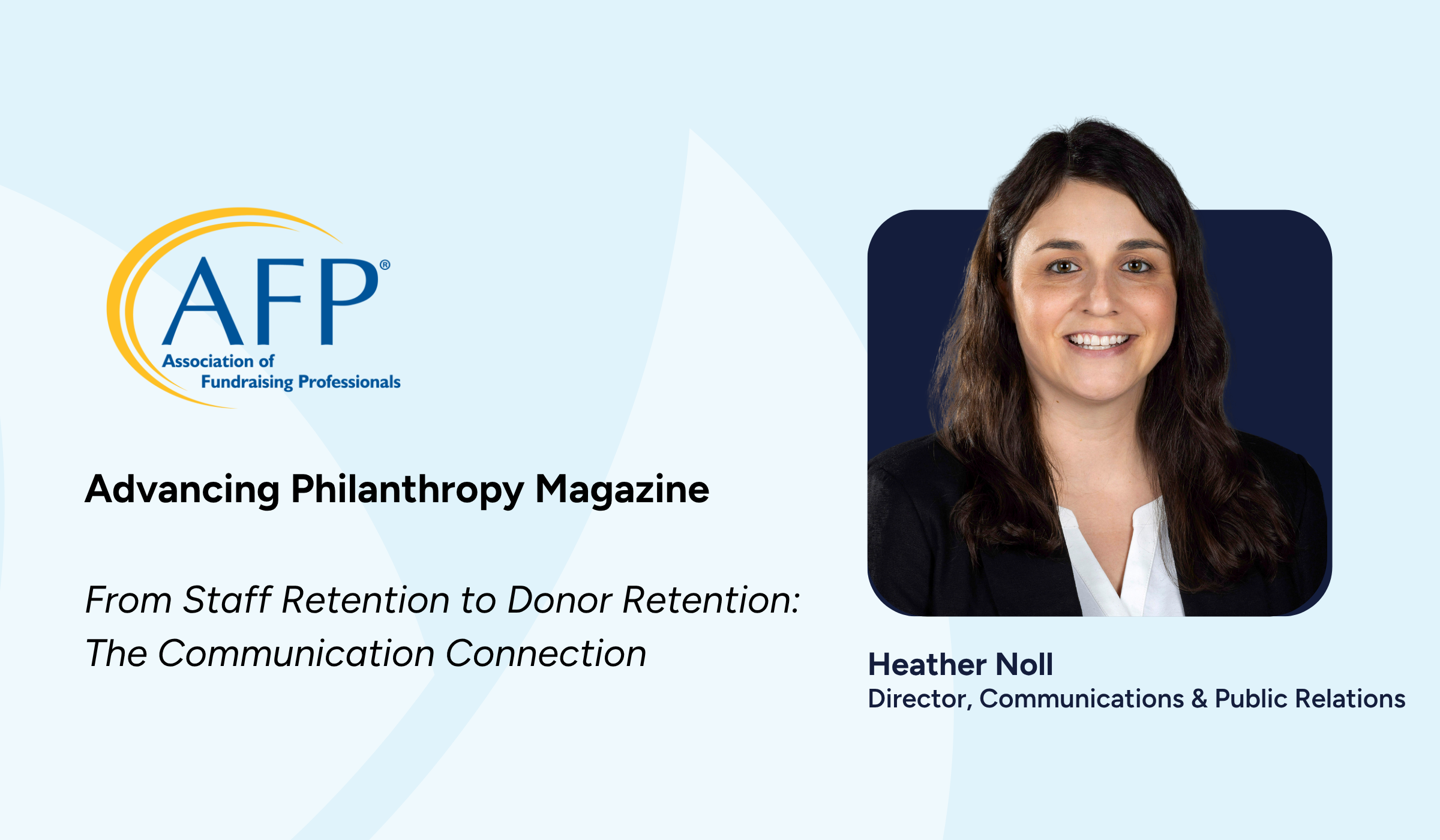
Heather Noll is the Director of Communications and Public Relations at Momentive Software. A results-driven communications and brand marketing professional, she brings more than 15 years of experience in the financial services, nonprofit, and SaaS industries. Noll is known for her expertise in thought leadership, public relations, and aligning storytelling with strategic business goals. In addition to her professional work, Noll serves as President of the Board for York Habitat for Humanity in Pennsylvania, where she has been a dedicated board member since 2016. She is passionate about bringing people together to build homes, communities, and hope and is committed to creating lasting change in her local community.