Caleb Kimmel and the World Baseball Academy: From Tournament Weekends to a Place the Whole Community Plays

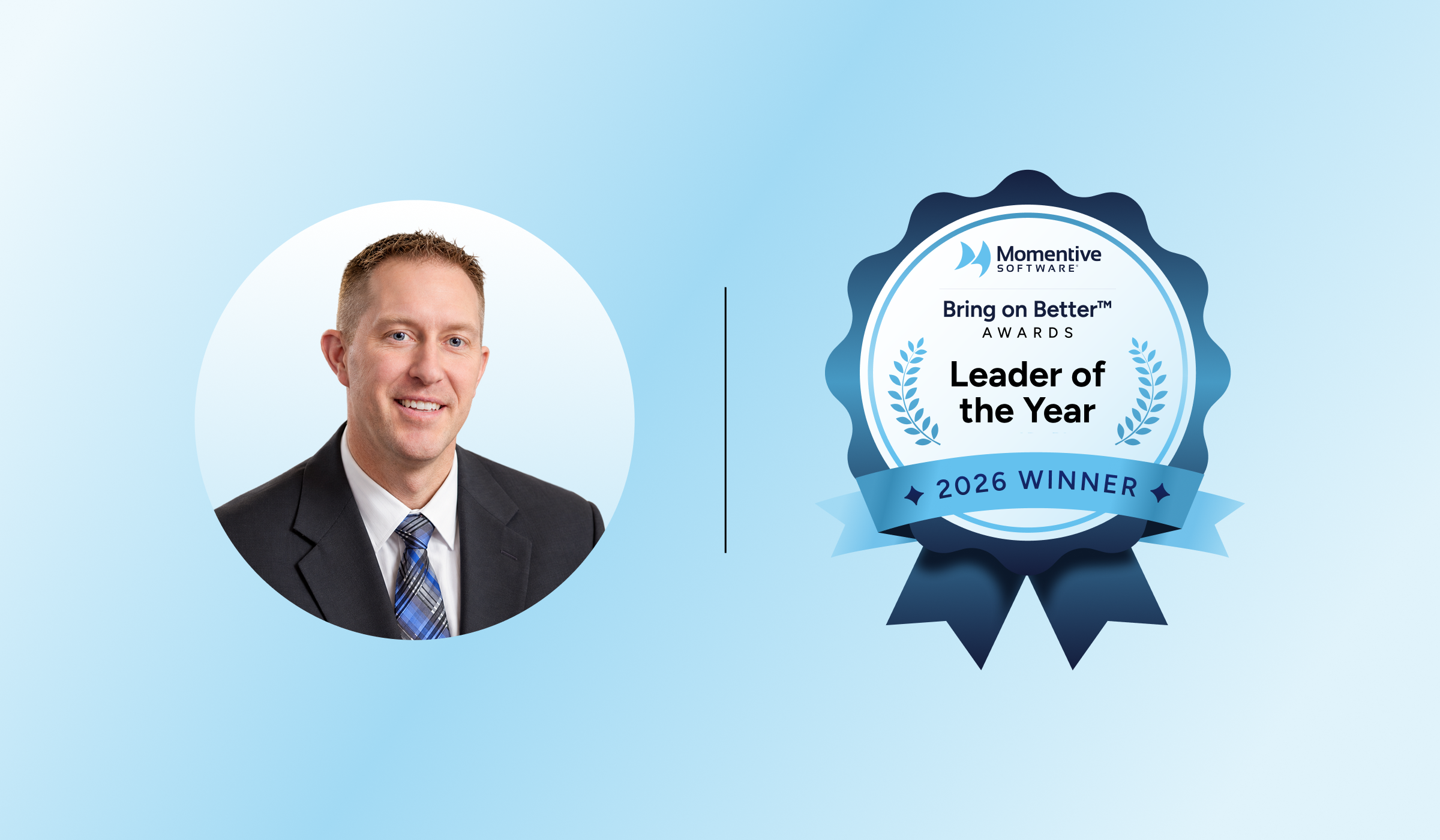
Caleb Kimmel, 2026 Bring on Better™ Leader of the Year, grew a youth baseball tournament into World Baseball Academy, a Fort Wayne nonprofit that mentors at-risk kids and serves thousands each year. Read his story.
When Caleb Kimmel was just 13, his father ran a youth baseball tournament to raise a few hundred dollars so the team could afford hotel rooms for an upcoming weekend. His dad, who worked full-time for the Air National Guard in Fort Wayne and eventually retired as a lieutenant colonel, continued hosting these tournaments all through Caleb’s high school years. Between playing in his own games, Caleb pitched in to help rake and prepare the fields. It would be years before he truly understood the foundation those moments were building for his life.
Later, while attending Valparaiso University on a baseball scholarship and studying marketing, Caleb needed an internship project. He saw an opportunity to turn his father’s tournaments into a small business. The summer of his sophomore year, after his dad underwent major back surgery, Caleb stepped up to run the entire operation himself. This was long before youth tournaments were everywhere, and the events he organized drew some of the finest high school players in the Midwest, alongside professional and college scouts. Navigating those summers taught him how to plan for rain, manage intense on-field conflicts between coaches and umpires, and build a lasting network. “I was getting some great experience at a young age,” he reflects.
A Job He Didn’t Want and a Field He Couldn’t Forget
After graduation, Caleb returned to Fort Wayne, though his future wife, Kristen, was still living a state away. Drawn to a familiar industry, he took his first full-time sales job with the host hotel company that had accommodated his tournaments, having already built great relationships with the general managers while setting up room blocks. While he valued the company, he realized within a few weeks that the hospitality industry wasn’t his true calling. “I found myself talking about shower curtains and bedspreads,” he recalls with a smile, knowing it simply wasn’t the right fit.
Yet, that first job served as the stepping stone to something much grander. It was a routine sales call to an old, weathered 26-acre sports complex that would completely alter the course of his life. The property had been highly popular in the 1980s and early ’90s before going bankrupt, and its new owners were still hosting adult softball tournaments. The moment Caleb walked onto the grounds, he felt an undeniable pull. He looked at the worn fields and realized that with the right renovation, this space could become the central hub for baseball that Fort Wayne and Northeast Indiana so deeply needed.
Around this same time, Caleb crossed paths with two extraordinary mentors who would reshape how he viewed the game. He met Steve Sotir, a local middle school athletic director who had spent decades serving as a global ambassador for international baseball, working alongside legends like Hank Aaron and Ernie Banks. When Caleb asked why no one in town knew about his incredible journey, Steve simply replied, “No one’s asked me.” Steve soon introduced him to Dr. Darin Van Tassell, who would go on to serve as the Technical Commissioner for the 2008 Olympic Games in Beijing.
At 26, deeply inspired by his new mentors, Caleb joined a short-term church mission trip to El Salvador. With their guidance, he found a beautiful way to weave his love for baseball outreach directly into the mission work. That first trip profoundly shifted his worldview—an experience he candidly describes as having “kind of wrecked my life in a good way.”
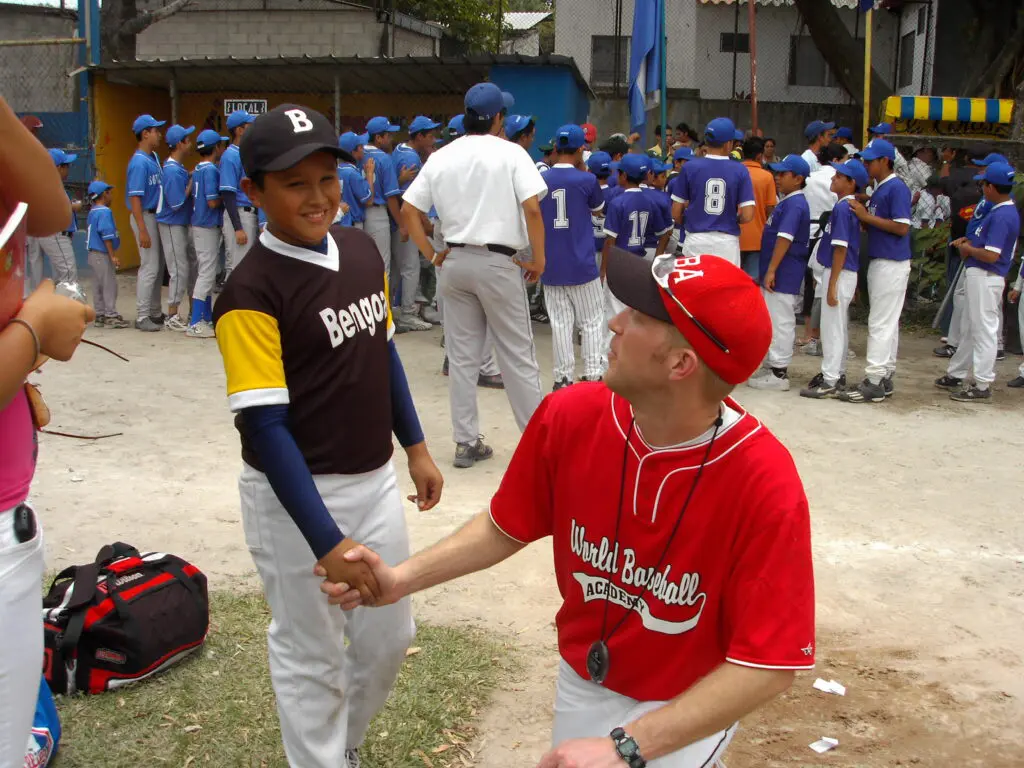
As more trips followed—taking him to Mexico, Lithuania, Bulgaria, Cambodia, Haiti, and the Dominican Republic—his heart and perspective continued to expand. He began to see a much larger, more purposeful vision for the game. Caleb eventually returned home carrying the core question that has anchored his life’s work ever since: how do we bring the mission field back home? As he thoughtfully reflects, “We shouldn’t have to go halfway around the world to meet needs.”
Fourteen Years of Trust
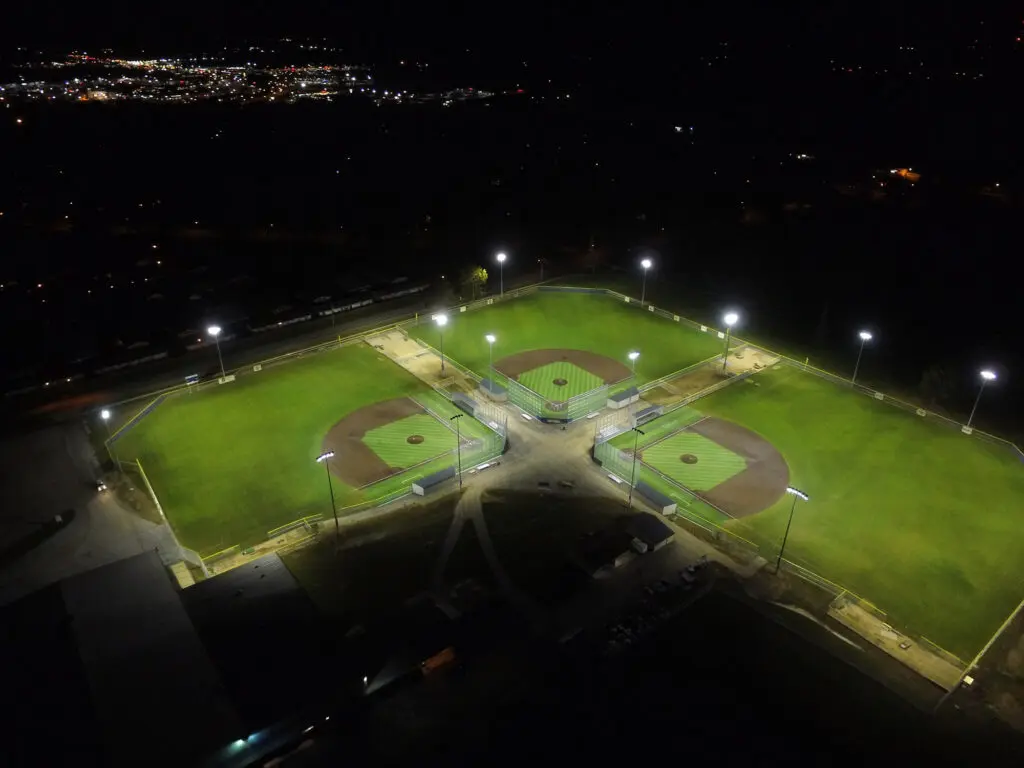
In 2007, the 26-acre campus was given to the organization’s leadership through what Caleb refers to as a “mini miracle.” Through a unique set of circumstances, Tim and Libby Ash—owners of Ash Brokerage in Fort Wayne—made a generous in-kind gift that allowed the team to purchase the property for just $1. The campus was renamed from Tahcumwah to The ASH Centre.
Just two years later, in 2009, Caleb and his team launched a summer camp with the neighboring Boys & Girls Club and officially formed World Baseball Academy as a nonprofit. Their mission quickly expanded beyond hosting tournaments and instructional programs to include both international trips and deeply impactful local mentoring efforts.
While their programs grew, the journey to transform the physical campus became a long lesson in patience. It would ultimately take 14 years from the day they stepped onto the campus to raise the first $3 million needed for major renovations. Caleb admits he started casting his vision early—perhaps a bit too early. By year ten, people in the community began asking if the dream would ever actually happen. “One of our core values is perseverance,” Caleb shares. “That’s not just a cliché. We had to demonstrate that.”
The waiting was incredibly difficult. Fort Wayne’s Legacy Fund ranked their project number one out of hundreds of applications, yet the approval process dragged on for six long years. Because of the delay, several foundations held back their commitments while waiting for a public funding decision. When the city grant finally arrived, it was for $600,000—far less than the $2 million the team had hoped for.
The true turning point came in 2015 through a strategic partnership with the Lutheran Health Network. This collaboration gave local donors the ultimate confidence to pitch in. “It was kind of like drinking out of a fire hose after that,” Caleb says. Momentum built rapidly as the Cal Ripken Sr. Foundation stepped in to help build an all-turf field for adaptive services and at-risk youth, followed by support from Major League Baseball’s Baseball Tomorrow Fund. Ultimately, the heart of the project remained local: the Fort Wayne community has now rallied together to raise nearly $10 million to fully realize the indoor and outdoor campus.
Leaders, Not Just Participants
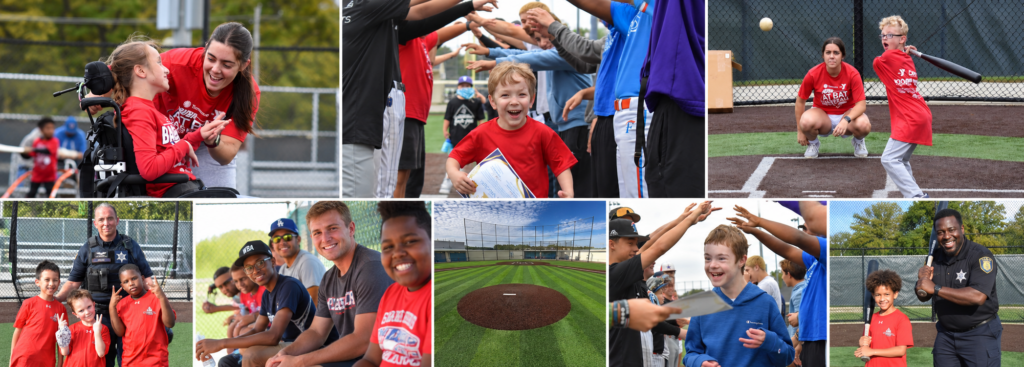
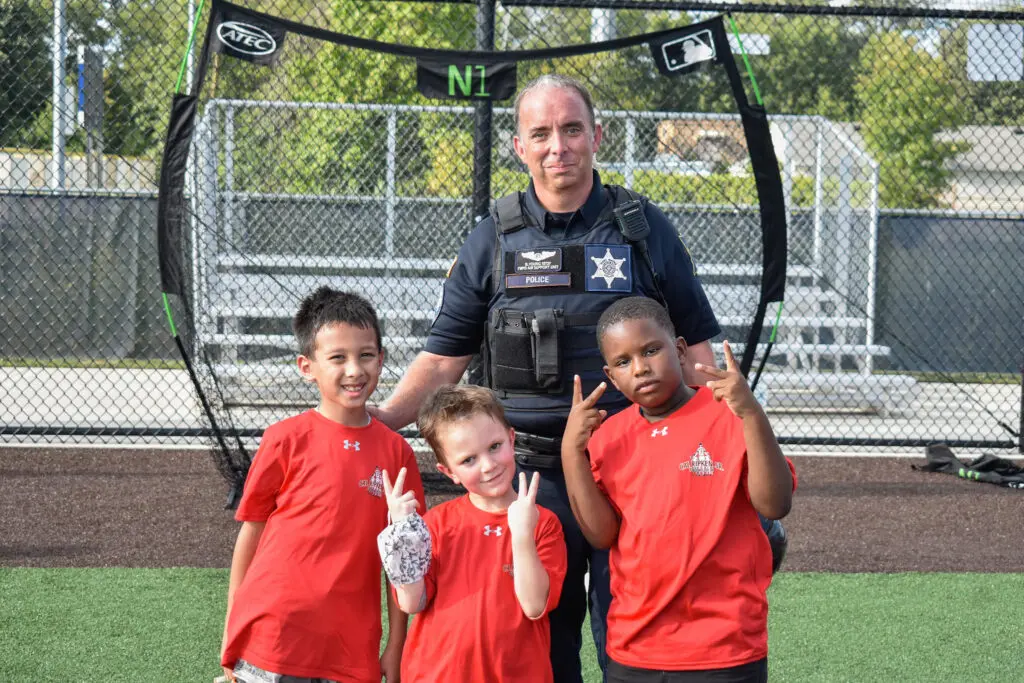
Today, the World Baseball Academy serves about 9,000 children every year. At the heart of this impact is the On Deck Initiative, a series of free mentoring programs that support 1,800 at-risk youth. These include Badges for Baseball, which builds meaningful connections between police officers and urban youth, a free baseball-themed STEM education program for fourth graders, and adaptive programs tailored for children of all abilities. Central to this mission is the Core Program, which focuses on serving young people through one-on-one and small-group mentoring relationships that often last for five to ten years.
Caleb’s approach relies on meeting young people exactly where their passion already lies. “When skill development increases, typically confidence increases as well,” he explains, noting how that newfound confidence positively impacts every area of a young person’s life. Through the game, the WBA staff teaches six core values: initiative, knowledge, discipline, respect, perseverance, and integrity. Learning how to measure this growth was a journey in itself. In its early years, the young nonprofit knew it was transforming lives but struggled to define what leadership truly meant. Over time, they learned to intentionally track skill development, increased confidence, and how students apply these values in their daily lives.
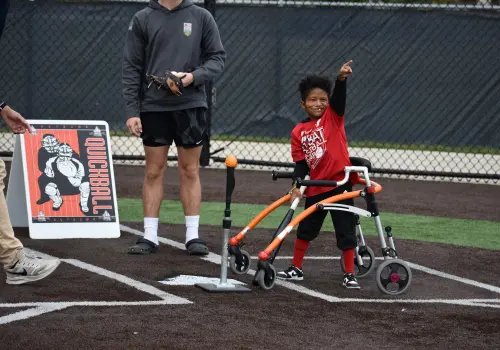
This dedicated investment allows students to naturally transition from participants into confident leaders. Today, older youth volunteer at summer camps, run activity stations for the adaptive programs, and warmly welcome guests at the organization’s annual fundraiser. Some even join a specialized leadership academy, eventually traveling on the very international mission trips that first inspired Caleb’s journey.
Raising What It Takes
Programs like these cost hundreds of thousands of dollars a year. The biggest fundraiser is Dinner on the Diamond, which raises $250,000 to $300,000 each year. Kristen, now the organization’s development director, leads that work. They use GiveSmart, Momentive’s fundraising platform, to run the auction, online giving, a Fund a Cause appeal, and ticket sales. A second event, the Wiffle Ball Spooktacular, uses GiveSmart for peer-to-peer fundraising, with a giving page for each team and a thermometer that works like a leaderboard. It started as a simple event and now raises $50,000 to $60,000.
For a team of eight full-time staff, that matters. Caleb says the platform helps WBA communicate its message clearly and gives donors an easy way to give. It also lets companies that donate auction items show them off to the room.
Built to Last
Now 46, Caleb thinks deeply about what comes after him, driven by a heart for the children and the community he serves. His desire to complete the campus master plan—starting with two much-needed softball fields—is fueled by a longing to meet even more pressing community needs. To ensure that the programming making such a profound difference in the lives of these kids remains stable long after his own tenure, he is building a $6 million sustainment fund, securing their future well beyond the 2031 conclusion of the Lutheran Health Network partnership. Through it all, Caleb and his team remain committed to growing these at-risk programs carefully; they knows that expanding too quickly can sacrifice the deep, life-changing mentoring that defines their work. Because for Caleb, the kids and the enduring relationships will always be the point.
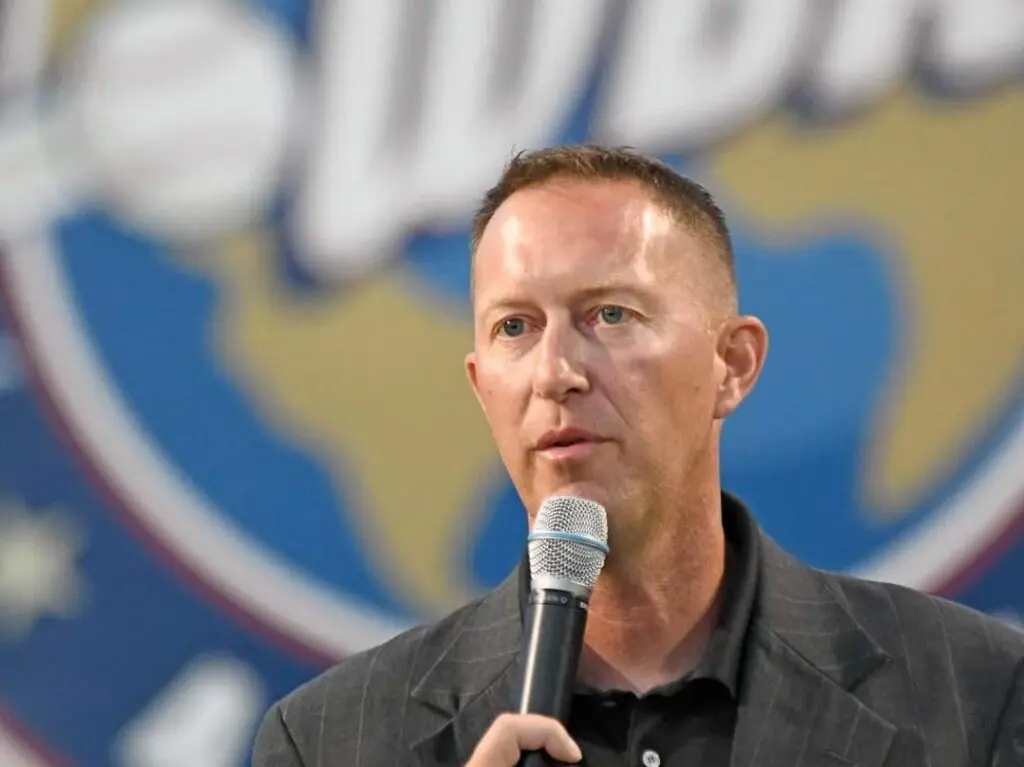
Caleb is our 2026 Bring on Better™ Leader of the Year, and he is the first to admit the credit is shared. “I can humbly say this has truly been a community project,” he says. “A lot of people have put trust in our organization.”
At Momentive, we’re proud to support clients like Caleb and the World Baseball Academy team, who show what it means to bring on better for the young people of Fort Wayne.