How to Win Corporate Sponsorships: 7 Tips for Nonprofit Growth

Corporate sponsorships provide critical financial backing for nonprofit events and programming, and the philanthropic landscape surrounding them has expanded significantly. By combining classic sponsorship packages with powerful workplace giving initiatives, development teams can build multi-channel partnerships that generate predictable, long-term revenue.
We’ll walk you through our top recommendations for winning sponsorship agreements in this guide:
- Understand the evolving landscape of corporate sponsorships.
- Frame workplace giving as a stepping stone for corporate involvement.
- Identify potential corporate champions in your database.
- Prioritize mission and industry alignment.
- Don’t overlook small and mid-sized local businesses.
- Craft compelling, personalized sponsorship pitches.
- Bonus: Streamline corporate sponsor discovery with the right tools.
Securing corporate support can transform your organization’s trajectory, shifting your strategy from reactive fundraising appeals to sustainable long-term revenue generation. By understanding what modern corporate partners value, you can position your organization as a key opportunity for mission-aligned collaboration.
To build a sponsorship program that scales year after year, development teams must refine their approach to prospecting, pitching, and stewarding partners. Let’s begin!
1: Understand the evolving landscape of corporate sponsorships.
In the past few years, corporate fundraising trends have shifted dramatically from prioritizing passive check-writing to dynamic, mutually beneficial brand partnerships. Today, businesses prioritize multi-faceted social impact strategies that engage their employees, align with their core values, and provide clear community visibility. Therefore, winning corporate sponsorships requires viewing businesses not just as funding sources, but as strategic partners with distinct brand objectives.
The organizations that succeed understand how to bridge their community mission with a funder’s business goals. When pitching prospective sponsors, development teams must articulate how the partnership supports the funder’s bottom line through increased employee retention, elevated brand reputation, or progress toward CSR goals.
2: Frame workplace giving as a stepping stone for corporate involvement.
Workplace giving initiatives serve as a vital entry point for larger corporate sponsorships. When a company sees its staff actively engaging with your cause, it validates your organization’s community footprint.
Here are a few of the most common pipelines we tend to see:
- Volunteer engagement: Corporate volunteerism (e.g., employee participation in volunteer grant or VTO programs) can serve as a primary pathway to broader institutional funding. In fact, businesses frequently follow employee service hours with financial contributions or event sponsorships.
- Matched giving: If a company is matching employees’ donations to your cause, it’s already demonstrated a tendency toward philanthropic involvement. Reaching out to business leadership to ‘formalize the partnership’ is a great way to transition from ad hoc employee-directed support into a dedicated CSR sponsorship.
Building momentum through these individual employee touchpoints creates a warm foundation for future asks. When a development team approaches a company claiming that dozens of its employees already donate or volunteer (with the real data to back it up), the request shifts from a cold pitch to a noteworthy investment.
3: Identify potential corporate champions in your database.
Finding the right sponsors requires looking closely at your current network and surrounding community. Luckily, your organization’s CRM functions as an invaluable corporate treasure map.
Donors, volunteers, board members, and other supporters in your database hold the key to opening doors at major businesses. They may be willing to introduce your team to CSR managers or even serve as passionate internal advocates on your organization’s behalf. This allows development professionals to turn organic employee involvement into major institutional partnerships while saving hours of cold outreach and increasing conversion rates.
Key takeaway: Analyzing existing employment insights allows nonprofits and schools to target companies where warm relationships already exist.
4: Prioritize mission and industry alignment.
Businesses tend to focus on nonprofit partnerships that closely mirror their own CSR goals, company values, or industry footprint. Therefore, targeting the right prospects (i.e., those with significant mission and industry alignment) preserves development teams’ bandwidth and drastically increases approval rates.
In other words, look for companies whose core products, services, or skills directly serve your cause.
Here are a few examples:
- A commercial construction firm or home improvement retailer is a natural fit for supporting housing rehabilitation initiatives.
- A local animal shelter partnering with a pet supply retailer for event sponsorships, adoption drives, or supply donations creates an immediate brand alignment that resonates with its customer base.
- Tech firms may prioritize funding initiatives that narrow the digital divide and build future talent pipelines.
As you conduct your research, it’s a good idea to review a company’s pre-defined philanthropic pillars. Corporate giving guidelines often restrict funding to specific cause areas, such as STEM education, environmental sustainability, workforce development, or healthcare. When a CSR funder spots an initiative that closely aligns with their philanthropic criteria, approving the proposal becomes a straightforward operational decision rather than a speculative risk.
5: Don’t overlook small and mid-sized local businesses.
While Fortune 500 corporations command large philanthropic budgets, small and mid-sized local businesses often offer high-converting, agile sponsorship opportunities. Establishing direct relationships with regional banks, law firms, auto dealerships, and independent grocery chains can yield immediate event sponsorships, in-kind donations, or programmatic support.
It’s also worth noting that local businesses’ decision-making processes tend to be fast and straightforward, rather than requiring complex, multi-tiered grant committees or rigid annual application cycles. Not to mention, regional firms and local business owners tend to be deeply invested in their communities, actively seeking ways to demonstrate corporate citizenship and support local impact.
6: Craft compelling, personalized sponsorship pitches.
Winning sponsorship proposals are increasingly moving away from rigid, one-size-fits-all sponsorship decks in favor of flexible, multi-tiered, and collaborative partnerships. Instead of relying solely on rigid, old-school sponsorship tiers, present options that allow companies to engage through multiple avenues.
For example, you might include a combination of…
- Financial support (Direct event sponsorships, programmatic grants, or time-bound challenge match pools)
- In-kind contributions (Product donations, venue space, marketing support, or pro bono professional services)
- Employee involvement (Dedicated group service days, turnkey volunteer opportunities, or workplace giving campaigns)
Businesses need clear qualitative and quantitative KPIs to justify their philanthropic investments. Therefore, clearly define your expected outcomes, audience reach, and public recognition channels. Additionally, including real-world impact metrics, such as community members served or milestones achieved, provides partners with compelling insights to share with their own stakeholders.
Recommended resource: Download free sponsorship request templates here!
Bonus: Streamline corporate sponsor discovery with the right tools.
Finding the right sponsorship opportunities used to mean sifting through 10+ pages of Google search results to locate the best-fit programs for your organization. Today, utilizing a centralized research directory (such as Double the Donation’s corporate giving database) allows development staff to surface potential initiatives, filter prospects by mission focus or type of giving program, and access eligibility guidelines and application links.
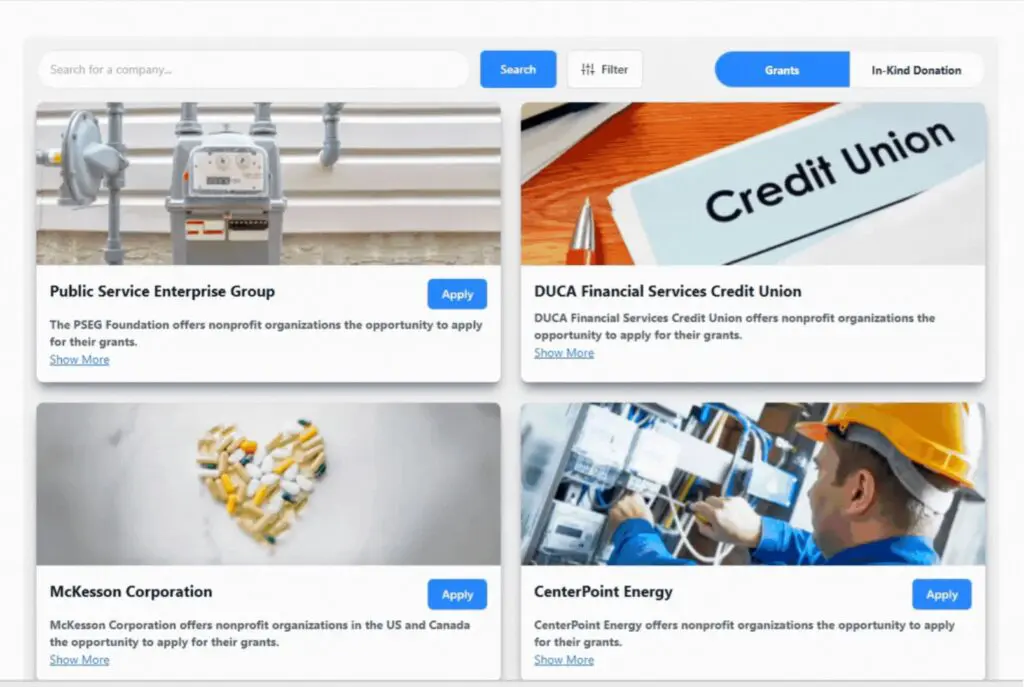
This makes the application process quick and easy, and ensures that your team’s resources are directed toward high-potential, high-converting, and high-impact opportunities.
Next Steps for Successful Sponsorships
In today’s day and age, winning corporate sponsorships requires moving beyond traditional logo placement to build holistic, value-aligned partnerships. By leveraging donor employment data, mapping local business priorities, and offering flexible engagement options, your development team can establish scalable corporate revenue streams.
Start by auditing your current database, identifying potential advocates within your existing network, and pitching collaborative initiatives that advance both your community mission and your partner’s strategic goals.
Good luck!