
The Strategic Architect: How CFOs Drive Long-Term Nonprofit Growth

The days of crunching finances only are behind us: it is time for the nonprofit CFO to move beyond the ledger and take a permanent seat at the strategy table.
In a complex fiscal and political climate, the nonprofit CFO’s role is no longer just a numbers game. The CFO is crucial for providing strategic direction informed and influenced by the organization’s fiscal health.
To navigate this, today’s CFO is equipped with a blueprint of financial data to beat uncertainty and move the organization forward.
Beyond the Ledger: CFO Role in Strategic Planning
The finance office is becoming the hub for predictive modeling and organizational strategy. Strong financial leadership is the brain behind every strategic decision.
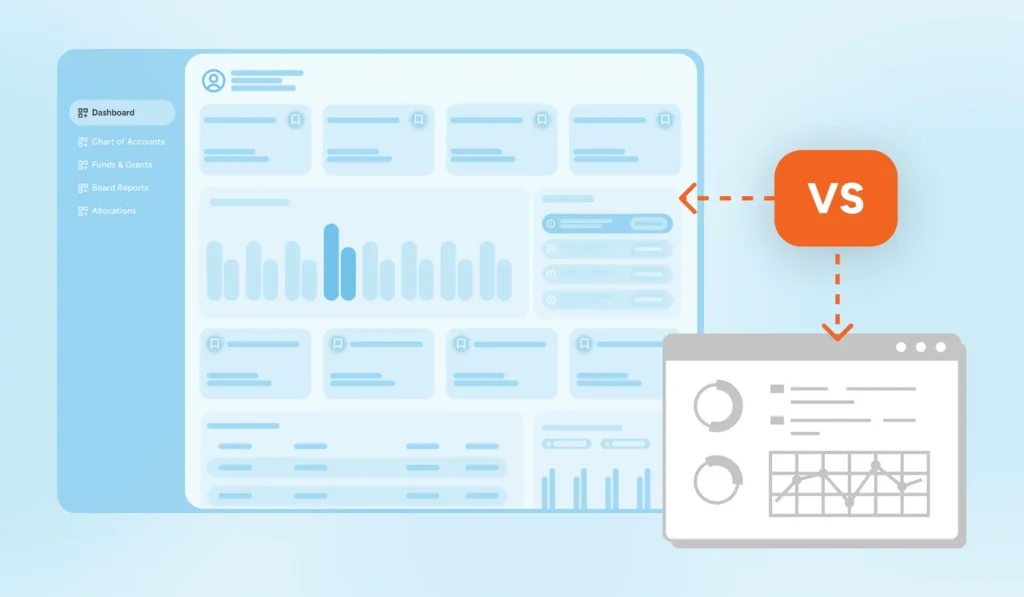
Where analyzing and presenting past finances was the focus, today’s CFO uses predictive budgeting and real-time financial dashboards to anticipate organizational needs.
The CFO’s role has moved from backward-looking reporting to forward-looking strategy. Seeing both the small and big picture, a high-performing CFO leverages insights to understand and communicate what has happened, what is happening, and what can be done to advance. Fundraising, operations, grant management, board engagement, and more, it’s all fair game.
They’re doing this with comprehensive reporting tools. Reporting is no longer just about staying compliant; it’s the number one way for CFOs to scale organization impact. An organization’s data is key to its overall health.
Data-Driven Sustainability and Forecasting
Moving beyond the balance sheet requires a fundamental shift in how leaders leverage information, ensuring that data is used to influence every stage of the organizational lifecycle.
Data should be used to influence:
- Research and discovery
- Opportunity assessment
- Strategic planning
- Collaboration
- Gaining buy-in
- Execution
Whether planning for new strategic initiatives or discussing how to optimize existing operations, it’s crucial to have the right scope and depth of data available. The CFO is not only telling the organization’s financial story, but is writing the next chapter in real time.
Technology with embedded intelligence and predictive analytics transforms raw financial data into a comprehensive narrative that provides the clarity needed to move from reactive reporting to proactive leadership. By surfacing deep insights across an entire organization, technology empowers nonprofit leaders to make high-stakes decisions with the confidence that their strategy is backed by a unified and accurate data source.
Driving data-backed decisions is only one half of the blueprint; however, the other is based on collaboration.
The Power of Cross-Functional Collaboration
To drive an organization forward, CFOs must embrace collaboration as a strategic necessity rather than a one-off task. While data serves as the great unifier, the CFO is the driving force behind the cross-departmental relationships that turn that data into action.
In donor-backed organizations, fundraising is the pulse that keeps the mission alive. This makes the partnership between the finance office and the development team a critical pillar of fiscal health.
Whether providing development directors with accurate financial projections or sharing real-time dashboards that track campaign performance as donations arrive, the finance office must be an open resource. The days of fundraising and financial strategy operating in separate silos are over.
See the power of unifying accounting and fundraising in real-time.
Watch Unifying Accounting and Fundraising for Greater Mission Impact to see how nonprofits leverage these tools together.

Financial health influences campaign strategy, and donor data provides the insight necessary for long-term fiscal planning.
To be successful, the CFO and development director must work in tandem. From supplying the narrative behind why donors give to highlighting the urgency of a funding gap, collaboration between fundraising and finance is the key to creating sustainable, high-impact campaigns.
In turn, these campaigns provide the narratives needed to tell your organization’s financial story.
Financial Data Storytelling: From Spreadsheets to Narratives
Financial storytelling is the CFO’s greatest tool. Taking complex finances and turning them into compelling narratives that resonate with a board or external stakeholders is what takes the operative blueprint and turns it into a freestanding structure.
As the head of the table, it’s the CFO’s job to show how finance is influencing operations. From the fundraising that made it possible to the fund allocation that made it possible, telling your organization’s story shows how it meets its mission and humanizes the data driving decisions.
To make this storytelling possible, it’s crucial to have technology that makes it easy to create reports and tell your story.
The ability to translate complex financial data into a mission-driven story requires reporting tools that are both flexible and precise. By utilizing a robust accounting platform designed for the unique needs of nonprofits, finance leaders can seamlessly pull the data points that matter most and present them in a way that resonates with every stakeholder at the table.
From defining how your organization allocates resources to highlighting operations as the year progresses, reporting is how a CFO can advocate for more resources to the board and stakeholders, tell your organization’s story to sponsors and partners, and demonstrate how your organization meets its mission.
Leading the Future of Predictive Finance
The CFO’s role has evolved beyond the ledger to influencing organizational growth with a full suite of financial tools at their side. Whether through predictive budgeting, cross-functional collaboration, or the art of telling an organization’s fiscal story, the modern finance leader must serve as the primary strategic partner to drive lasting impact. By embracing this evolution, CFOs do more than just manage the present; they architect the mission’s future.
Struggling to keep your volunteer program organized? Discover what volunteer management software can do for your organization.