

Let’s talk tipping.
Do you find yourself tipping more nowadays than ever before? From the dry cleaners to the florist to the local coffee shop, tipping is on the rise. How are your supporters feeling about the donor tipping model on your free fundraising platform?
Online fundraising platforms offer a valuable way for nonprofits to raise funds, with a few rookie softwares providing free fundraising software. These free platforms often use a revenue model that heavily relies on a donor tipping model. While this approach allows platforms to operate without charging nonprofits directly, it also has implications for donors and their overall experience. Read on to learn how tipping can impact nonprofits and donors.
What is the Donor Tipping Model in Fundraising?
During the donation process, the platform may ask the donor whether they would like to add a tip. The tipping usually covers the platform fee and is paid to the software company.
Additional fees are incurred to cover processing and transaction costs. Free fundraising platforms usually default to a tip rate of 10-19%. If an organization turns off the tipping option, it will incur a platform fee.
How Tipping on Free Fundraising Platforms Affects Nonprofits and Donors
With donor retention rates down, the donor experience is more important than ever before. Tipping fatigue remains a battle for all industries. For fundraising platforms, tipping can have a negative impact on donors at a crucial time: they’ve heard your stories and impact and are now deciding whether to provide financial support. Encountering an unexpected fee during the donation process may change your donor’s mind.
Perceived Lack of Transparency
When tipping is set to a high rate, donors may feel the platform is trying to take advantage of their goodwill, especially if the tipping option isn’t immediately obvious or easy to adjust.
The nonprofits that choose to use these platforms risk being associated with a lack of transparency, as donors may question how much of their donation is going to the intended cause versus covering platform costs. If donors are unaware that a portion of their donation goes to platform costs through tipping, they may feel misled once they realize it. As a result, this can lead to a decrease in trust towards both the platform and the nonprofit. Instead, platforms should clearly explain why the tipping system exists and provide donors with an easy way to opt out or adjust the tip percentage.
Impact on Donation Decisions
High default tip percentages can discourage donations or prompt donors to reduce their donations, especially if they perceive tipping as excessive or mandatory. Nonprofits could lose out on potential donations if donors are put off by these practices.
Extra Work for Nonprofits
Navigating the tipping landscape on free fundraising platforms can be challenging for nonprofits. Although tipping can help sustain these platforms, it often leads to confusion or friction among donors who may not want to pay more than they planned.
To mitigate this, some nonprofits are proactively clarifying their tipping policies and guiding donor behavior to align with their goals and supporters’ interests. This creates more work for the nonprofit that could have been spent on its actual mission. It is also cumbersome for the donor to navigate, and unneccasry steps increase donation abandonment.
Here’s one example of how one nonprofit has tried to navigate the conversation around donor tipping:

Donor Confusion
Donors might be surprised and confused by the request to tip a fundraising platform. When they donate to a nonprofit, they generally expect their entire contribution to go toward the cause they support. A request for an additional tip can leave donors unsure about the true impact of their total gift, leading to confusion, dissatisfaction, and abandonment.
Reactions to Tipping on Free Fundraising Platforms
While the donor tipping model is attractive for nonprofits seeking to minimize overhead, it introduces a potential complication: how donors perceive these tipping requests.
Based on anecdotal evidence, here’s an expanded view of the potential impact of tipping on nonprofit donations.
When donors are asked to tip without a clear explanation of how the tipping system works or where the tip money goes, concerns about transparency arise. This lack of clarity can leave donors unsure whether their full gift supports the cause, eroding trust and potentially reducing retention and future contributions.
Here are some experiences highlighting the frustration and confusion nonprofits shared after using free fundraising platforms:
- “Sometimes it’s confusing for our users about what [free fundraising platform] calls their tip. Users aren’t sure if that’s going to us (a nonprofit).”
- “Didn’t like the automatic tipping set at either 12-15% of purchase. Some guests didn’t realize this was happening until after they purchased. I think the option to tip [free fundraising platform] is great but that it shouldn’t be already set at a certain percentage. Set it at zero with the option of the customer to choose to tip. Some guests felt they were swindled into the tip.”
- “Additionally, the ‘Tipping’ function can be frustrating. Many donors have thought they were covering the processing fee, but they were actually ‘tipping’ [free fundraising platform]. We shut that functionality off and pay the associated fees so our donors don’t have to deal with that. We think it feels wrong to donors when they give $1,000 and then are asked to add a $100 ‘tip’ to [free fundraising platform]. We do ask donors to cover processing fees, and most are happy to do so.”
- “We also did not like the Tips feature, which if activated removed their platform fees. Essentially, if you leave the Tip feature on then at checkout it provides the donor with the option to also tip [free fundraising platform]. We felt that this was confusing to our donors, who may not understand what [free fundraising platform] is, and that those funds would not be included as part of their gift to our organization. We would instead prefer to have a flat platform fee, but realize this probably means [free fundraising platform] would make less money.”
Donor Tipping Vs. Platform Fees
Donor tipping and platform fees operate very differently and carry very different implications for your nonprofit and your donors.
The Donor Tipping Model
As discussed, the donor tipping model means your donors are essentially asked to pay your organization’s operating expenses in addition to their gift. Tipping models can also stack on top of standard credit card fees, meaning donors face multiple add-ons before their transaction is complete. Over time, this can quietly chip away at donor goodwill and reduce the likelihood of repeat giving.
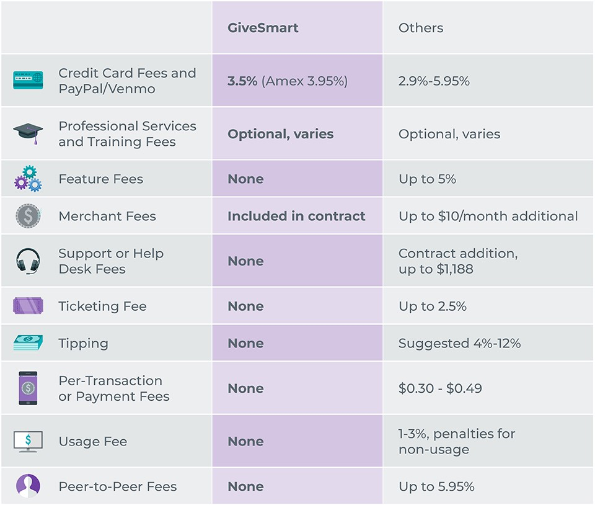
Free fundraising platforms that use a tipping model may still charge nonprofits for features like Apple Pay, auctions, or support, making the true cost far murkier than it first appears.
Platform Fees
A straightforward platform fee is transparent and predictable. It keeps the donor experience clean. With a platform fee model, nonprofits pay a set subscription cost. This covers software access, security, compliance, platform updates, and support. There are no hidden surprises or shifting costs onto donors. There is also no guesswork in budgeting.
Standard credit card processing fees, typically a fixed percentage per transaction, are a normal and expected part of any payment processing arrangement. These cover encryption, security, and the cost that the card networks charge processors. Reputable platforms apply the same rate regardless of donation size or volume, so nonprofits can accurately forecast net revenue. Many platforms, including GiveSmart, also give donors the option to voluntarily cover credit card fees, allowing the nonprofit to keep more without putting pressure on the giving experience.
Fixed platform fees, inclusive of core features, paired with optional donor fee coverage, give nonprofits the financial clarity they need and protect donors from being nickel-and-dimed at checkout. When a platform is upfront about what it costs and why, that transparency reflects well on your organization, too.
Are Free Fundraising Platforms Worth It?
When nonprofits use a donor tipping model on a free fundraising platform to cover costs, it can cause confusion and frustration. We did the math: if a nonprofit were to turn off donor tipping on the free fundraising platform to avoid donor frustration, here’s how much they would pay the platform per campaign:
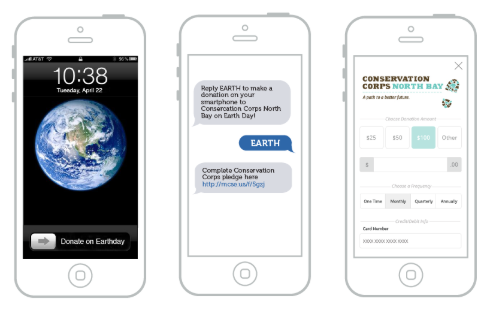
Nonprofits run an average of four fundraising activities per year with GiveSmart, each raising approximately $47,000. If these nonprofits opted instead for a free fundraising platform, but disabled tipping, they face an additional 1-5% of compensation fees per campaign, plus processing and transaction fees.
The $12,596 in fees with a free platform is almost 30% MORE than the cost of using GiveSmart for the same fundraising campaigns. Plus, with GiveSmart, you receive top-rated, secure technology with unlimited use for one annual subscription fee, and no additional charge for ticketing or transaction fees, as you’ll experience with many free fundraising platforms.
Leave Donor Tipping Behind with GiveSmart
Don’t let tipping confusion hold your organization back. Join countless trusted nonprofits and partner with GiveSmart to boost donor trust, maximize your mission’s impact, and enjoy peace of mind with reliable, all-in-one fundraising technology. Experience the GiveSmart difference and elevate your fundraising.