Your members joined for a reason. The question is whether you’re giving them a reason to stay.
Retention isn’t just a renewal campaign. It’s every interaction a member has with your organization — from the welcome email on day one to the renewal notice months later. The associations with the strongest retention rates treat the membership lifecycle as an ongoing strategy, not an annual event.
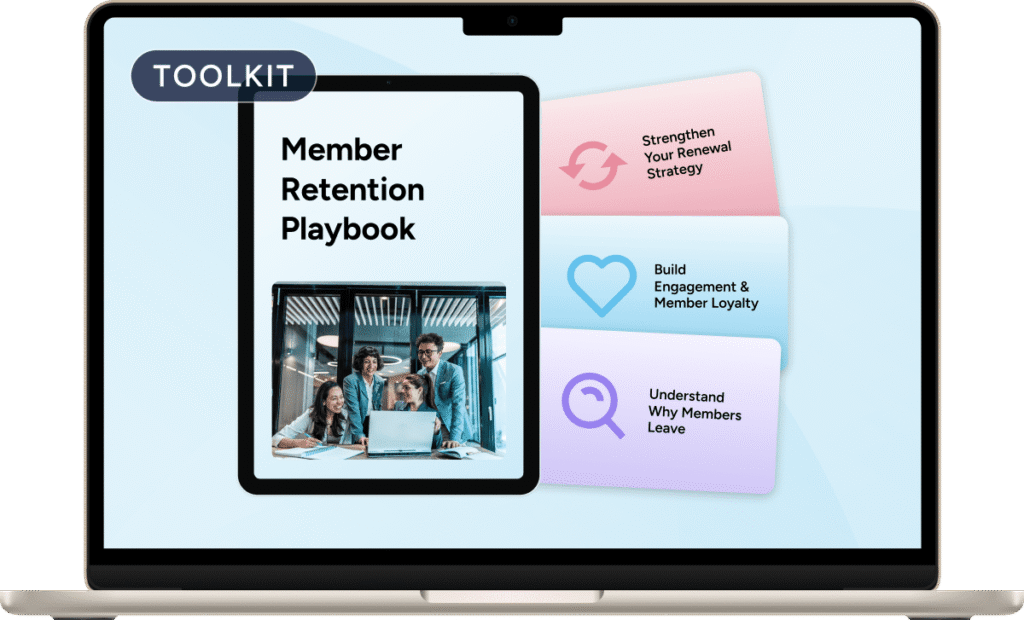
This playbook breaks it down in three sections.

Acquiring a new member costs significantly more than retaining an existing one. High churn forces your team into a constant cycle of replacing lost members rather than deepening relationships with the ones you have. It also erodes your community — fewer long-tenured members means weaker peer networks, less institutional knowledge, and diminishing returns on every program you run.
Most associations target a retention rate of 75%–90%. If you're falling short, the gap rarely comes down to a single failure. It's usually the accumulation of small misses across the membership lifecycle: a weak onboarding experience, irrelevant communications, a complicated renewal process, or benefits that don't match what members actually need.
The good news: each of those is fixable — and the resources in this toolkit show you how.
Loyalty isn't built at renewal time. It's built every time a member logs in, attends an event, opens an email, or finds something through your organization that they couldn't get anywhere else. Your job is to make those moments happen consistently — and make sure members notice them.
Members who quickly connect to benefits and build habits are significantly more likely to renew. Those who don't often drift without ever returning. Start strong with a targeted welcome sequence that surfaces benefits relevant to each member's profile, a personal invitation to their first event or community discussion, and a clear guide to your member portal. The goal isn't just to inform — it's to make membership feel indispensable from day one.
Career development resources, networking opportunities, and on-demand education consistently rank among the top reasons members cite for renewing. Surface those benefits proactively rather than waiting for members to find them on their own. Segment your communications so each member sees content relevant to their career stage, industry focus, or chapter. Relevance drives engagement. Engagement drives renewal.
Not every at-risk member announces themselves. Engagement scoring in your AMS lets you track activity patterns over time and set alerts when a member goes quiet. When engagement drops below a threshold, that's your signal to reach out — long before the renewal window opens and well before they've made a decision.
Even a highly engaged member can lapse if the renewal experience is confusing, inconvenient, or poorly timed. A strong renewal strategy removes friction, reinforces value, and starts far earlier than most associations realize.
Strong renewal campaigns begin well before the expiration date — not when a final notice lands in someone's inbox. By that point, the decision is already half-made. An early, personalized outreach that summarizes what a member engaged with over the year reminds them of the value they're getting and sets a positive tone before you make the ask.
Complicated renewal processes create involuntary churn — members who intended to renew but got tripped up by the process. Reduce friction: minimize form fields, offer multiple payment options, and enable auto-renewal wherever possible. Proactively addressing expired payment methods before they cause a lapse is one of the easiest wins your team can execute right now.
Not every lapsed member is gone for good — but not every lapsed member should get the same message. A member who lapsed six weeks ago needs a direct, easy path back. A member who's been inactive for two years needs a reintroduction to what's changed and why it matters to them now.
Survey your lapsed members. The patterns you find will improve not just your win-back campaigns, but your entire retention strategy for active members.
When you unlock this toolkit, you'll also be enrolled in a month-long email course built for association professionals who want to put these strategies into practice — not just read about them.
Each week, your inbox gets one focused lesson covering a different phase of the retention lifecycle. Think of it as having a coach in your corner — one who breaks down the plays, cuts the noise, and keeps you moving forward.
No fluff. No overwhelming to-do lists. Just one play a week, ready to run.