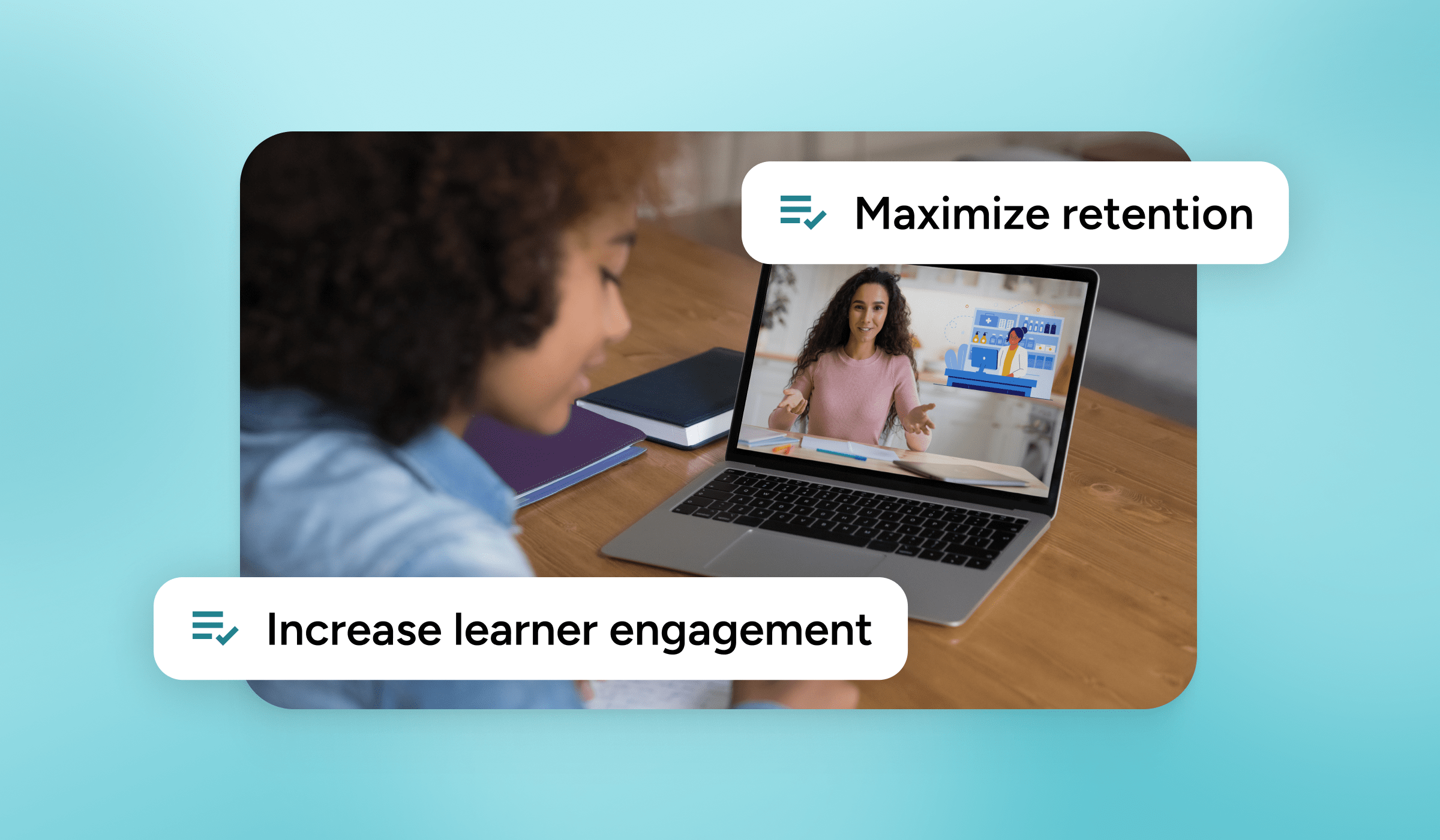

Nonprofit and association leaders are currently rethinking how to engage with staff and educate members. The latest learning trends show a clear shift toward personalized, technology-enabled, and mission-driven professional development.
In 2026, organizations that invest in modern learning strategies will be better positioned to retain talent, demonstrate value to members, and adapt to rapid change. This guide breaks down the most important learning trends that are shaping nonprofit education, and tips to turn them into practical action.
Key Challenges for Organizations
Before diving into modern learning strategies, it’s important to understand the environment shaping nonprofit learning trends.
Staffing and resource pressures
Nonprofits continue to face high turnover, lean teams, and increased competition for skilled talent. Learning programs must now serve dual purposes: onboarding quickly and supporting continuous growth without adding administrative burden.
Budget and sustainability concerns
Rising costs and unpredictable funding make long-term training investments harder to justify, yet more critical than ever. Leaders are prioritizing learning initiatives that show measurable outcomes and can scale efficiently.
Evolving member and staff expectations
Today’s workforce and association members expect learning to be flexible, personalized, mobile-friendly, and relevant to their goals. Static, one-size-fits-all training no longer meets expectations.
Economic and policy uncertainty
Shifting regulations, funding models, and economic conditions require nonprofits to reskill faster and respond to change with confidence.
Staff & Member Learning Trends
These nonprofit learning trends reflect a growing focus on engagement, relevance, and long-term relationships—not just content delivery.
Personalization and segmentation in training programs
Organizations are using data to tailor learning paths based on role, tenure, interests, and skill gaps. Learning management solutions help organizations personalize learning opportunities to help members increase completion rates, improve knowledge retention, and help staff and members see clear value in participation.
Recognition and appreciation initiatives
Certificates, digital badges, public recognition, and milestone celebrations are becoming standard features of modern professional development for nonprofits. Recognition reinforces progress and supports motivation in high-burnout environments.
Year-round storytelling and impact communication
Learning programs are increasingly tied to mission impact. Training modules now incorporate real stories, case studies, and outcomes to help participants connect their growth to organizational success.
Feedback loops (“you said, we did”)
Surveys, quick polls, and post-course feedback tools allow organizations to demonstrate responsiveness and improve learning experiences continuously. Closing the loop builds trust and participation.
Market & Economic Trends Impacting Learning
External forces are reshaping how nonprofit training programs are funded and delivered.
Budget constraints and economic uncertainty
Nonprofits are prioritizing implementing learning management solutions to deliver high-impact, low-cost learning formats such as virtual workshops, microlearning, and reusable content libraries.
Shift toward sustained, value-driven learning programs
Rather than isolated courses, organizations are building ongoing learning ecosystems that support career growth and long-term engagement.
Storytelling and transparency to boost engagement
Clear communication about how learning investments support the mission helps justify spending and increases buy-in from boards, staff, and members.
Innovation, Learning Models & Gamification in Education
Innovation and creativity in learning programs
Associations are experimenting with blended learning, scenario-based simulations, peer instruction, and interactive multimedia to increase engagement and accommodate different learning styles.
New learning models and recurring programs
Subscription-style learning libraries, cohort-based programs, and continuous credentialing are replacing one-time seminars. These models promote habit-building and consistent skill development.
Gamification as an engagement trend
Points, leaderboards, challenges, and progress tracking make learning more motivating—especially for volunteers and younger professionals. Gamification supports accountability without increasing management overhead.
Major Learning & Professional Development Trends
Nonprofit and associations are implementing comprehensive learning programs to prepare their team to be future-forward. These are some of the most influential learning trends reshaping mission-driven organizations today:
Long-term learning cultivation
Successful nonprofits are treating learning as a continuous journey, not an annual task. Structured development pathways help staff and members plan growth over months or years.
Data-driven identification of skill gaps
Learning analytics reveals where teams struggle and which programs drive results, enabling smarter investment decisions.
Transparency and recognition in staff and member development
Clear communication about expectations, progress, and outcomes builds credibility and strengthens retention.
Artificial Intelligence Learning Trends
AI is becoming a practical tool, not a futuristic concept, in nonprofit education strategies.
Practical AI use cases
- Automated content recommendations
- Skills gap analysis and reporting
- Course scheduling and administrative support
- Project and resource planning assistance
Modern platforms now integrate AI-powered capabilities to reduce manual work while improving learner experiences, such as those found in advanced nonprofit-focused learning systems.
AI for personalization, segmentation, and prediction
AI models analyze behavior and performance to deliver targeted content, predict dropout risk, and optimize course sequencing.
AI supports humans—it doesn’t replace them
When implementing an AI program the goal is augmentation, not automation of expertise. Trainers, managers, and subject-matter experts remain central to learning design and mentorship.
Risk-Taking & Strategic Growth Opportunities
Innovation requires thoughtful experimentation. Any of these three strategies can elevate your learning program to the next level:
Pilot programs and experimentation
Short-term pilots allow nonprofits to test new learning formats, tools, and technologies before scaling.
Smart risk frameworks
Clear goals, metrics, and timelines help leadership evaluate success objectively.
Sustainable growth through calculated learning risks
Organizations that invest gradually in modern learning infrastructure outperform those relying on outdated systems.
Key Takeaways for Organization Leaders in 2026
- Adopt a member-first and staff-first mindset in learning design
- Embrace innovation and responsible AI adoption
- Collaborate across HR, IT, education, and leadership teams
- Balance short-term adaptability with long-term learning strategy
Modern platforms make these strategies achievable by combining course management, analytics, personalization, and engagement tools in one system.
For example, nonprofit organizations increasingly rely on learning management software to centralize training, automate reporting, and scale professional development. Advanced tools now also offer AI-enhanced learning design and analytics to personalize experiences at scale.
Content development has become faster and more accessible with integrated course-building features. And engagement-focused functionality helps sustain participation over time. Some organizations are also extending learning access as a member benefit to strengthen learning retention.
Turning Learning Trends into Action
The most successful nonprofits in 2026 will be those that treat learning as a strategic investment—not a cost center. From personalization and gamification to AI-powered insights and continuous development models, today’s learning trends emphasize flexibility, engagement, and measurable impact.
By modernizing training programs and adopting the right technology, organizations can build stronger teams, deliver greater value to members, and advance their missions more effectively.
FAQ
What are the key learning trends shaping nonprofits in 2026?
The most important learning trends include personalized training paths, microlearning, gamification, AI-assisted content delivery, and data-driven professional development for nonprofits. These approaches improve engagement while keeping costs manageable.
How do nonprofit learning trends affect staff development trends?
Nonprofit learning trends directly influence staff development trends by prioritizing flexible formats, role-based training, recognition programs, and continuous upskilling. This helps organizations retain talent and maintain operational resilience.
How are association education trends changing professional development for nonprofits?
Association education trends now emphasize recurring programs, digital credentials, cohort learning, and on-demand access—making professional development for nonprofits more accessible and aligned with career growth.
What role does AI play in nonprofit training trends?
AI supports nonprofit training trends by enabling personalized learning recommendations, predictive analytics for engagement, and automation of administrative tasks, all while keeping human instructors central to the learning experience.
How does online learning for nonprofits support long-term engagement?
Online learning for nonprofits allows organizations to deliver flexible, scalable education year-round, supporting volunteers, staff, and members regardless of location while reducing travel and facility costs.
How can organizations measure success in professional development for nonprofits?
Metrics include course completion rates, engagement levels, knowledge retention, skill application, satisfaction surveys, and long-term impact on retention, productivity, and mission outcomes.