University Fundraising: A Complete Guide for Development Teams

University fundraising is the organized effort by colleges and universities to solicit and manage philanthropic support. Generous support often comes from alumni, donors, corporations, and foundations and is used to fund a variety of on-campus needs, including operations, scholarships, research, and campus initiatives. However, most higher educational institutions rely on just annual appeals and a major event, leaving support on the table.
This guide covers every layer of a high-performing university fundraising program and shows development teams how to build and strengthen each one.
What Is University Fundraising?
University fundraising is the structured effort to secure voluntary philanthropic contributions that support a higher education institution’s mission, operations, and growth. It encompasses everything from a first-year student’s $25 class gift to a $50 million capital campaign for a new research center.
Universities fundraise because they cannot rely on a single revenue stream. Tuition alone carries significant risk since enrollment fluctuations directly affect operational budgets. Federal and state funding is subject to policy changes that can shift from one fiscal year to the next. Private philanthropy provides the financial cushion that allows institutions to grow their programs, support students, and operate with greater stability.
As a result, many universities have teams that work together across campus to support fundraising across core revenue categories.
Who is typically involved in university fundraising?
- Development or advancement offices: Focused on building relationships with high-impact donors and managing major gift portfolios
- Alumni relations programs: Responsible for engaging the full alumni community and building the pipeline of annual donors
- University foundations: Separate legal entities that many larger institutions use to manage and invest philanthropic assets
- School or department-level fundraising: Colleges within universities may run their own giving campaigns alongside the central advancement effort
What are the three core revenue categories of university fundraising?
| Revenue Categories | What Each Revenue Category Includes: |
| Individual giving | Alumni gifts, major gifts, planned/legacy gifts, peer-to-peer donations |
| Institutional giving | Corporate partnerships, foundation grants, matching gift programs |
| Endowment returns | Annual distributions from invested funds for scholarships, programs, and operations |
A well-structured university fundraising program draws from all three categories and is well supported by fundraising teams, building resilience against drops in any single source.
What Are The Six Core University Fundraising Strategies?
A strong program doesn’t rely on one or two tactics, it layers multiple strategies across the donor lifecycle. Here’s an overview of the six core approaches and what each is designed to accomplish.
| University Fundraising Strategy | Primary Fundraising Goal |
|---|---|
| Annual giving | Broad alumni participation, operating funds, donor pipeline |
| Major gifts & capital campaigns | Transformational institutional funding |
| Giving days & peer-to-peer | Donor acquisition, alumni activation, urgency-driven giving |
| Corporate partnerships & matching gifts | Matching revenue, research funding, named scholarships |
| Planned giving & legacy programs | Long-term estate contributions, legacy society cultivation |
| Events & experiential fundraising | Relationship deepening, donor cultivation, campaign visibility |
1. Annual Giving Programs
Annual giving is the backbone of most university fundraising programs. These are unrestricted gifts, typically smaller in size, that recur year over year and form the broad base of donor relationships from which development teams can identify major and planned gift prospects.
Annual fund programs typically use a combination of direct mail, email, phone outreach, and digital campaigns to solicit gifts from alumni. There are two goals to annual giving programs: first, to raise operating funds, and second, to maintain donor relationships that can be cultivated over time. A consistent annual giving program also generates the participation data that helps advancement teams identify which donors are ready to give more.
2. Major Gifts and Capital Campaigns
Major gifts (typically defined as gifts of $25,000 or more, but varies by institution) require a fundamentally different approach from annual giving. The process is relationship-driven, highly personalized, and measured in progress over months or years.
Capital campaigns are structured, time-limited major gift efforts organized around a specific institutional goal: a new building, an endowment expansion, or a scholarship fund. They typically follow two phases:
- Quiet phase: Where lead gifts are secured from top prospects before public announcement
- Public phase: Where the campaign is announced with substantial momentum already in place
3. Giving Days and Peer-to-Peer Fundraising
University giving days have become one of the most effective tools for growing alumni participation and acquiring new donors. Usually 24-hour campaigns built around a school-branded hashtag and a specific fundraising goal. These campaigns create urgency, leverage social proof, and turn donors into ambassadors.
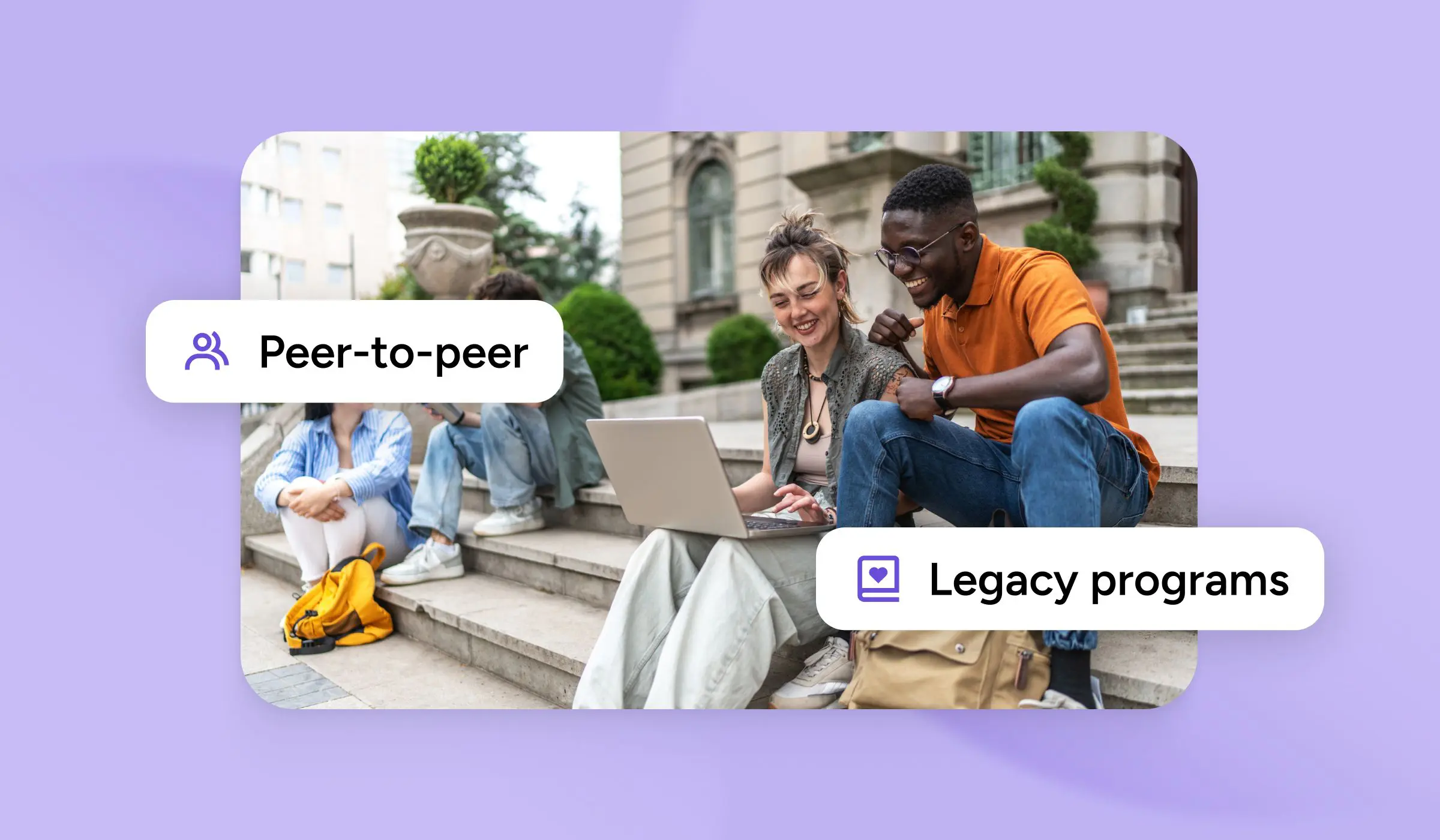
Similarly, peer-to-peer fundraising extends giving day reach by empowering alumni, students, and faculty to create personal fundraising pages on behalf of the institution. These campaigns work especially well for recent graduates, who may not be in a position to give large amounts themselves but who can mobilize their own networks effectively.
Based on giving day campaigns run through GiveSmart by Momentive, universities that pair peer-to-peer fundraising pages with a live challenge match see significantly higher donor participation rates than those running giving days without a match component. The match mechanic sustains giving urgency well into the final hours of the campaign.
4. Corporate Partnerships and Matching Gifts
Corporate matching gift programs, where employers financially match employee donations to eligible nonprofits and educational institutions, represent one of the most underutilizedrepresented sources of university fundraising revenue. When a donor’s employer offers a matching program, a $500 gift becomes $1,000 with minimal additional effort from the university.
Beyond matching, corporations can also fund research partnerships, sponsor events, establish named scholarships, and contribute to capital campaigns in exchange for naming rights or visibility. Universities with strong alumni networks in particular industries have a natural advantage in developing these relationships.
5. Planned Giving and Legacy Programs
Planned gifts represent some of the largest philanthropic contributions universities receive. Unlike major gifts, which are made from current assets, planned gifts are made through a donor’s estate plan, often as a bequest, making them accessible to donors who don’t have significant assets available today.
In the same vein, legacy societies are the standard vehicle for cultivating and recognizing these donors. These named groups of donors who have committed to including the institution in their estate plans. Membership in a legacy society is often the first step in a planned giving relationship, built over many years of stewardship.
6. Events and Experiential Fundraising
Fundraising events serve multiple strategic purposes beyond the funds they directly raise. They deepen existing donor relationships, introduce prospective donors to the institution, and create content and visibility for broader campaigns. They can range in size and theme: think galas, silent auctions, alumni weekends, and athletic events.
For universities, events are particularly effective when tied to existing campus moments: homecoming, graduation, reunions, and named lectures. These occasions bring alumni together naturally, lowering the barrier to event attendance and creating organic opportunities for giving conversations.
How Do You Engage Alumni for University Fundraising?
According to The National Alumni Survey (February 2026), only 26% of alumni have given to their alma mater at some point post-graduation. That means roughly 74% of contactable alumni are not currently giving to their alma mater, representing a significant opportunity for institutions willing to invest in engagement.
Alumni are the most direct connection between an institution’s past and its future. The best university fundraising programs treat alumni engagement as a year-round discipline, not a seasonal ask.
Segment your alumni community
Recent graduates face different financial realities than mid-career professionals or retired alumni. A compelling ask for a 26-year-old managing student loans looks very different from an appeal to a 55-year-old executive at the peak of their earning years.
Segment by class year, giving history, event attendance, and volunteer engagement. Then build communications that speak to each group’s specific relationship with the institution.
Communicate year-round, not just during annual giving season
Alumni who hear from their alma mater only when money is being requested are far less likely to give and far more likely to opt out of communications entirely. Build a communication cadence that delivers genuine value: alumni achievements, campus news, career networking opportunities, volunteer invitations, and event access. Giving should feel like a natural extension of an ongoing relationship, not an interruption.
Build reunion giving programs
Class reunions, particularly milestone reunions (5th, 10th, 25th, 50th), are among the highest-yield alumni engagement moments available to development offices. Reunion giving programs set class-level goals, recruit volunteer committee members to solicit their peers, and often generate gifts significantly above a donor’s annual fund average. They’re especially effective when connected to a named fund or tangible impact goal.
Develop digital channels like email, social, and SMS
Nearly 60% of alumni respondents in Hanover Research’s 2022 alumni giving survey cited email as their preferred communication channel. Social media, particularly Facebook and Instagram, support brand presence and event promotion. Text-to-give has become increasingly effective for giving day campaigns, where immediacy is a key driver of participation. Segment your alumni and direct messaging to the digital channel they use most.
Use matching gifts as an engagement multiplier
Communicating matching gift opportunities to alumni, especially during giving days, meaningfully increases both participation rates and average gift sizes. Prospects who see their gift doubled creates a tangible sense of impact that standard appeals just can’t replicate.
What Are the Best Practices for University Fundraising Programs?
The strategies above build the structure of a university fundraising program. These best practices determine how well that structure performs over time.
Integrate AI-powered prospect scoring where your tools support it
A growing number of CRM and advancement platforms now offer AI-powered donor scoring and automations that analyze giving patterns, engagement signals, and demographic data to surface prospects who may not yet be in a major gift portfolio but who show behavioral signals of readiness. For institutions managing alumni populations in the tens of thousands, this kind of automated prioritization makes a meaningful difference in how development officers allocate their time.
The Council for Advancement and Support of Education (CASE) publishes research and benchmarking data on fundraising trends across higher education. It’s a useful resource for teams evaluating how peer institutions are approaching prospect identification and advancement technology.
Make the donor journey legible and intentional
Every donor should be able to trace a clear path from where they are to where they might go:
First gift → Recurring annual fund → Mid-level gift → Major gift consideration → Legacy conversation
That path doesn’t happen automatically. It requires intentional stewardship moves, regular touchpoints, and progress tracked in your CRM.
Steward donors with specificity and show actual impact
Generic thank-you letters are not stewardship. Effective stewardship means connecting the donor’s specific gift to a specific outcome: the scholarship their gift funded, the student it supported, the research it enabled. Specificity builds the emotional connection that sustains long-term giving. Without it, even satisfied donors drift.
Understand how the U.S. News ranking change affects your alumni strategy
In May 2023, U.S. News & World Report removed alumni giving rate as a factor in its college rankings. For development teams, this is a strategic inflection point worth understanding internally. The case for alumni engagement no longer rests on ranking points — it rests on the long-term donor pipeline value that broad alumni participation creates.
If your institution previously used rankings as an internal argument for alumni giving investment, now is the moment to reframe that conversation around donor lifetime value, major gift pipeline development, and legacy giving cultivation. The fundamentals of why alumni engagement matters haven’t changed; only the external pressure point has.
How Technology Supports University Fundraising
The right technology doesn’t replace a development strategy, it extends it. Here are five platform categories to build or improve in your tech stack.
1. CRM and donor database
A central CRM is the operational foundation of any advancement office. Look for a system that tracks giving history, communication touchpoints, event attendance, and relationship notes. It’s a must that any CRM integrates effectively with your other platforms, so data is organized and connected when you need it most.
2. Event and campaign management
For universities running galas, silent auctions, alumni weekends, and giving day events, an event management platform that handles registration, ticketing, mobile bidding, and donor tracking significantly reduces administrative overhead and improves the donor experience.
3. Giving day and peer-to-peer tools
Giving day campaigns require platforms that can handle real-time donation processing, donor leaderboards, social sharing tools, and challenge match mechanics. Peer-to-peer fundraising adds individual fundraiser pages to the mix. Look for tools built for the pace and volume of a 24-hour campaign.
4. Text-to-give and mobile giving
Mobile giving has become a standard component of university giving day strategy. Text-to-give allows donors to contribute in the moment from their phones. It’s particularly effective during live events, athletic games, and alumni gatherings.
5. Reporting and analytics
Development teams need to be able to report on participation rates, average gift size, donor retention, campaign ROI, and prospect movement through the pipeline. Platforms that surface this data clearly, without requiring a data analyst to interpret every report, give advancement staff more time for relationship work.
GiveSmart’s event fundraising and campaign management tools are built for the pace of university giving days, silent auctions, and alumni events.
Frequently Asked Questions: University Fundraising
University fundraising is the organized effort by colleges and universities to solicit and manage philanthropic support from alumni, individuals, corporations, and foundations. These funds support operations, scholarships, research, campus facilities, and institutional programs that tuition and government funding alone cannot cover.
Alumni giving rates vary significantly by institution type, size, and engagement program maturity. According to The National Alumni Survey (February 2026), only 26% of alumni have given to their alma mater at any point post-graduation, this means roughly three-quarters of contactable alumni represent an untapped opportunity. Institutions with strong year-round engagement programs, reunion giving structures, and digital outreach consistently outperform this baseline.
A capital campaign is a structured, time-limited fundraising initiative organized around a specific institutional goal: a new building, an endowment expansion, a scholarship fund, or a research initiative.
Capital campaigns typically begin with a quiet phase, where lead gifts from top major gift prospects are secured before the campaign is publicly announced. The public phase launches with that momentum built in, often with a stated goal and deadline that creates urgency for broader giving participation.
A university giving day is a 24-hour (or sometimes 36- or 48-hour) fundraising campaign, organized around a branded hashtag and a specific dollar goal. They use challenge matches, real-time progress tracking, peer-to-peer fundraising pages, and social media to drive urgency and broad alumni participation. Giving days are particularly effective for acquiring first-time donors and re-engaging lapsed alumni who respond to the energy of a time-limited campaign.
Planned giving refers to charitable contributions made through a donor’s estate plan. It’s most commonly a bequest in a will, but also charitable trusts, gift annuities, and beneficiary designations.
Universities cultivate planned gifts through legacy societies, where donors who have committed to including the institution in their estate plans are recognized and stewarded. Planned gifts often represent the largest contributions an institution receives, and they are accessible to donors at all income levels, not only the very wealthy.
Higher education advancement offices typically use a combination of a donor CRM (to manage relationships and giving history), an event and campaign management platform (for galas, giving days, and silent auctions), peer-to-peer fundraising tools, email marketing platforms, and wealth screening software. Larger institutions may also use AI-powered donor scoring tools to prioritize prospect outreach at scale.