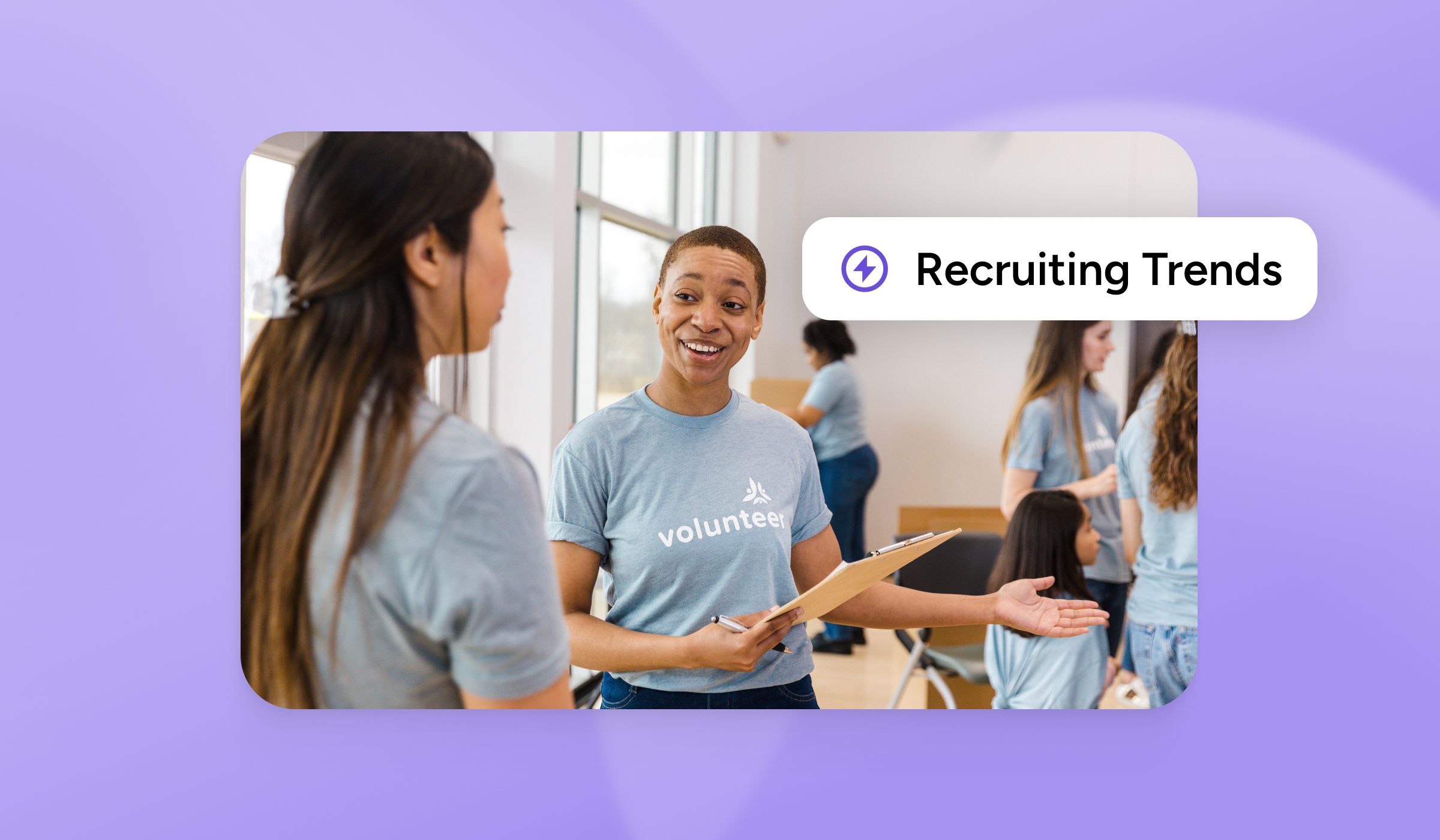
Recruiting Trends 2026: What Organizations Need to Know

Mission-driven organizations are navigating a complex recruiting market where specialized talent is in high demand, and hiring is incredibly competitive.
To succeed in such a market, organizations must move beyond traditional job postings and hiring tactics toward a complete approach that emphasizes data-driven acquisition and authentic hiring interactions.
Recruiting is about building a better, more informed workforce from candidate selection to final placement in your organization, and in 2026, recruiting is defined by diverse talent pipelines and leveraging technology to enhance the candidate experience.
To be successful this year, it’s crucial to use a recruiting strategy anchored by technology and centered on transparency and flexibility. Let’s explore the key challenges, top recruiting trends, and technology available to drive recruitment success.
Recruiting trends that organizations need to know for 2026:
- Key Challenges Facing Recruitment in 2026 for Organizations & Associations
- Top Recruiting Trends in Organizations and Associations
- Technology and Innovation Transforming Staff Recruitment
- Retention and Engagement Trends for Mission-Driven Organizations
- Future Outlook for Organization and Association Recruiting
- Key Takeaways for Organization Leaders and HR Teams
- Take the Next Step in Your Recruitment Strategy
- Frequently Asked Questions
Key Challenges Facing Recruitment in 2026
Forecasts for the 2026 labor market are similar to those for 2025. They are based on the idea that businesses are operating in a “low-hire, low-fire” environment, according to the Society for Human Resource Management.
This means competition for talent is high, as economic and political uncertainty spur caution, and job openings will be highly competitive for high-quality talent.
In this environment, your organization will need to maximize its hiring budget and focus on retaining and empowering the team you already employ. Replacing an employee can cost 50% to 200% of their annual salary.
Empowering employees is about reducing micromanagement, viewing team members as partners, being emotionally intelligent, streamlining processes, providing autonomy, and supporting people—so your team is best positioned to succeed in their own careers and in working for your organization.
Efficiency has always been critical to operational success, and streamlining HR processes has become even more necessary based on the current hiring landscape.
These trends are even more pertinent for mission-driven organizations, like nonprofits and associations.
Top Recruiting Trends in Nonprofits and Associations
As we move through 2026, the most successful nonprofits and associations are moving toward a “people-first” recruitment strategy, positioning mission-driven organizations to attract and secure the talent necessary to drive their goals forward.
Remote and Flexible Work Opportunities:
Flexibility has evolved from a “perk” to a fundamental requirement. Organizations are increasingly adopting work-from-anywhere policies or asynchronous schedules to compete with the private sector. By removing geographical barriers, you can tap into a global talent pool, ensuring you find the best specialized skills regardless of zip code.
Data-Driven Talent Acquisition Trends:
Organizations are trading gut feelings for analytics. By leveraging data from association management software or career board software, leaders can track metrics such as “time-to-fill” and “source of hire” to determine which channels yield the most mission-aligned candidates. These platforms let your organization take a surgical approach to recruitment, ensuring limited budgets are spent where they have the most impact.
Employer Branding and Storytelling:
In a competitive market, your mission is your greatest recruitment asset. 2026 is the year of storytelling, where organizations use video, social media, and testimonials to show prospective hires how their work contributes to a larger cause. Your mission is a lighthouse for candidates who prioritize purpose over a paycheck.
Diversity, Equity, and Inclusion (DEI) Initiatives:
Diversity is no longer a checkbox; it is a core recruitment pillar. Organizations are implementing “blind” resume reviews and diverse interview panels to mitigate bias. Candidates in 2026 are looking for proof of an inclusive culture rather than just a formal statement on a website.
Volunteer and Board Member Recruitment Strategies:
The lines between staff and supporters are blurring. Associations are now using sophisticated “talent pipelines” to transition high-performing volunteers and board members into professional roles. This strategy ensures that new hires are already deeply familiar with the organization’s culture and mission, significantly reducing onboarding time and turnover risk.
Recruitment technology makes it easy for your organization to stay ahead of these terms and consider the full employee journey in the process.
Technology and Innovation in Staff Recruitment
Technology is the great equalizer for excelling in recruiting in 2026. From allowing small HR teams to compete with large corporate entities to automating the administrative “heavy lifting” to focus on building genuine human connections, how your organization leverages technology will be key to driving success.
Artificial Intelligence:
The modern applicant tracking system has evolved into a strategic hub powered by generative AI. AI screening instantly matches candidates to role requirements and predicts future hiring success based on skills-first data.
Tools like automated resume parsing and AI-driven assistants handle the initial sifting process, allowing your team to skip the manual weeding out phase and move straight to engaging the most qualified, mission-aligned talent.
Digital Outreach and Social Recruiting:
While general job boards serve a purpose in the industry, in 2026, your most qualified candidates will be using specialized career centers. Rather than just posting to a general job board, associations are working with employers to find passive candidates on platforms like LinkedIn or within their own specialized career centers with highly targeted job boards.
This targeted outreach gets your position in front of a group of highly specialized candidates. Plus, this outreach helps your organization highlight its unique impact, effectively turning your recruitment efforts into a high-conversion marketing campaign.
Tip: See how career center software can help your organization revolutionize its hiring processes and grow non-dues revenue.
Automated Screening and Candidate Engagement:
Gone are the days of one-sided communication. One of the greatest risks to your employer brand is “candidate ghosting.”
To get ahead of this, organizations need to use automated engagement sequences and 24/7 chatbots to keep applicants informed at every stage. These tools automatically schedule interviews, answer common questions about benefits, and send personalized updates based on where a candidate sits in the funnel.
Not only does this show a commitment to candidate engagement, but even if you don’t hire a candidate, they will leave the process with a positive impression of your mission and professionalism.
Technology is just one half of the puzzle; even with the tools in place, it’s crucial that your organization has the data and analytics necessary to track hiring effectiveness, influence retention strategies, and make data-informed decisions to refine the process.
Retention and Engagement Trends
From tracking candidates throughout the hiring journey to influencing engagement after a person joins your team, technology is shaping retention and engagement.
Analytics for Workforce Planning and Retention:
Predictive analytics can identify burnout risk, enabling your team to intervene before it leads to turnover. Additionally, connecting your recruiting software to your organization’s other systems, such as an AMS or accounting tools, provides a clear picture of your cost-per-hire and the long-term ROI of different recruitment channels, ensuring every dollar spent is a strategic investment in your organization’s future.
Employee Recognition Programs:
In an environment where retention is as important as hiring new team members, employee recognition is crucial. Regularly take time to recognize the achievements of employees. Whether through callouts in team meetings or even monetary bonuses for peak performance, let your team know they’re valued.
It’s also crucial to create opportunities for better communication, stronger relationships, and more effective problem-solving among your team. Consider implementing a platform with secure, bi-directional messaging that allows employees to communicate confidentially and directly with HR, and revisit vacation policies to include provisions for mental health and self-care to show your dedication to your teammates.
Professional Development Opportunities:
No matter where your team is on its career journey, it’s important to regularly offer professional development and training opportunities. From encouraging skill development to training on new technology or systems, supporting your team is one way to prevent burnout and retain the quality talent you already have on board.
Developing and implementing these core concepts is crucial to excel in recruiting in 2026 and lay the foundation for continued success in the years beyond.
Future Outlook for Nonprofit Recruiting
Success in the future nonprofit landscape will be determined by how well organizations can anticipate change rather than simply responding to it.
Strategic Workforce Planning:
Strategic workforce planning has become the bridge between an organization’s mission and its operational reality. To set up a successful future, your organization should develop a three-to-five-year talent roadmap. Consider how funding shifts or new community needs could impact your team and make sure your hiring budgets align with long-term strategic goals.
Emerging Roles and Skill Needs:
Mission-driven organizations are in the middle of a digital transformation. From analytical specialists to AI specialists, these roles ensure your organization stays competitive in a digital-first landscape.
Talent Pipelines and Succession Planning:
Forward-thinking organizations are building internal talent pipelines, identifying high-potential staff early, and providing them with stretch assignments and board exposure.
Gone are the days of emergency success planning. By formalizing mentorship programs and knowledge-transfer protocols, organizations protect their institutional memory and ensure that a leadership transition becomes an opportunity for renewal rather than a cause of organizational chaos.
Key Takeaways for Nonprofit Leaders
It’s clear that in order to succeed in 2026, nonprofit and association leaders should prioritize these three strategic pillars:
- Adopt Tech-Enabled Recruiting: Invest in integrated applicant tracking systems and career center software to automate screening and engagement, so your HR team can focus on the human side of hiring.
- Prioritize Your Mission: Highlight the mission-driven work your organization performs and show that a new candidate is joining a team that’s making a difference in our community.
- Invest in Professional Development: Retention is the most cost-effective recruiting strategy. Create clear pathways for growth, offer mental health-inclusive benefits, and provide the training necessary to help your current team master emerging technologies.
Take the Next Step in Your Recruitment Journey
Enhance your organization’s recruitment strategy—discover how Momentive Software’s career center software helps organizations build a more resilient, mission-aligned workforce today.
FAQ
A “people-first” strategic model defines the 2026 landscape. Key trends include the normalization of remote and flexible work to tap into global talent and the shift toward data-driven hiring, where leaders use analytics rather than gut instinct. Additionally, there is a heavy emphasis on authentic employer branding through storytelling, robust DEI initiatives that move beyond simple statements, and the creation of strategic talent pipelines that transition high-performing volunteers and board members into professional roles.
In a “low-hire, low-fire” environment, organizations must leverage their mission as their greatest asset. Successful organizations use compelling storytelling—including video testimonials and social media—to show prospective hires the tangible impact of their work. Beyond the mission, offering flexible work options and leveraging social recruiting within specialized industry career centers enables nonprofits to reach passive candidates who are seeking purpose-driven careers rather than just a paycheck.
Technology acts as a force multiplier for mission-driven organizations. Applicant Tracking Systems (ATS) powered by generative AI now handle automated resume parsing and skills-based matching, freeing HR teams from manual sifting. Furthermore, digital engagement tools such as 24/7 chatbots and automated communication sequences prevent “candidate ghosting,” ensuring a professional, transparent experience that protects the organization’s employer brand.
Retention is the most cost-effective recruiting strategy in 2026. Mission-driven organizations should invest in professional development and clear career pathways to prevent burnout. Implementing recognition programs—ranging from public callouts to performance bonuses—and creating secure feedback loops that allow employees to communicate directly with HR ensures that staff feel valued. Additionally, mental-health-inclusive vacation policies show a modern dedication to employee well-being.
Success is measured by connecting recruitment data to long-term organizational health through career center software. Leaders should track core metrics, such as time-to-hire and the effectiveness of specific recruitment channels (e.g., specialized career boards vs. general job boards). Beyond the hire, monitoring retention rates, diversity representation, and employee engagement levels provides a clear picture of the long-term ROI of their talent acquisition strategy.