
Fundraising Strategy: A Guide to Seasonal Campaigns and Finance Alignment

Sustainable funding is not the result of a single brilliant email or a lucky donor match; it comes down to a formulated fundraising strategy.
Nonprofit fundraising strategies should be based on year-round planning, targeted seasonal execution, and deep financial alignment throughout an organization.
No one department should be the flagbearer for fundraising success; instead, your entire organization needs to support your strategy. From planning to execution, when your organization wholeheartedly commits to its fundraising strategy, it creates a sustainable revenue stream that grows year after year.
This guide outlines how to build a resilient, multi-channel nonprofit fundraising strategy with actionable steps, key performance metrics, and a framework to drive sustainable revenue.
What is a fundraising strategy?
Your organization’s fundraising strategy is a comprehensive roadmap for how it will raise money to support its mission objectives. That roadmap should be a holistic, year-round strategy that involves multiple operational departments.
Typically, your fundraising strategy is developed and owned by your accounting and development departments. With those departments working together to create a year-round roadmap with realistic funding goals that fuel mission success.
Building your fundraising plan
Before you start sending appeals, make sure you have a strategy that sets your campaign up for success. A strong fundraising plan combines clear goals, smart segmentation, consistent storytelling, and frictionless giving experiences, all designed to convert generosity into impact.
These best practices should define your strategy:
Set clear goals
Decide what success looks like early. Review your performance from last year and set targets for:
- Total revenue
- Number of donors
- Average gift size
- Recurring gift percentage
Use these metrics to build realistic goals that align with your mission and resources. Establish daily or weekly benchmarks to measure progress and pivot quickly when needed.
Segment and personalize
Your campaign should tell one cohesive story across every channel. Center it on the real people and outcomes behind your mission. A clear, emotionally grounded theme helps donors connect and remember why their contribution matters.
Carry that story through your emails, social posts, donation forms, and thank-you messages to maintain consistency and trust.
Keep in mind that while your campaign is telling a story, it needs to be personalized and segmented into groups such as major donors, mid-level givers, first-time donors, lapsed supporters, and recurring donors, with tailored communication for each group.
For example:
- Major donors want updates on impact and strategic outcomes.
- First-time donors respond to personal stories and tangible results.
- Recurring donors appreciate acknowledgment and reminders that their ongoing support matters.
A segmented approach ensures every message feels personal, relevant, and worth reading, while supporting the overall narrative.
Optimize donation interface
Your fundraising platform is the gateway for supporters to contribute to your cause. Test it thoroughly to ensure it can handle increased traffic without technical glitches. It’s also essential to implement a mobile-responsive design to cater to donors who prefer to give via a smartphone or tablet. Simplify the process as much as possible and offer multiple payment options to accommodate your donors.
Leverage Peer-to-Peer Fundraising
Peer-to-peer fundraising is a powerful strategy to amplify your efforts. Encourage your supporters to advocate for your cause by setting up their own fundraising pages and rallying their networks. You can provide participants with the tools they need, such as templates for fundraising messages, helpful infographics, and talking points to effectively engage with friends and family.
You can use gamification to incentivize and recognize top fundraisers. Offer prizes or recognition for milestones, such as reaching a specific fundraising goal or recruiting a certain number of donors. Publicly celebrate and acknowledge your peer-to-peer fundraisers’ efforts to foster a sense of community and competition.
Prepare Thank You Messages
Acknowledging your donors after a donation is essential. Plan how you will recognize and thank them, such as through personalized messages. You want donors to feel like their contributions are seen and appreciated, and saying thank you goes a long way in donor retention and increasing the number of repeat donors.
Complete a Post-Event Analysis
It’s essential to review and assess the overall outcomes of your campaign. Determine whether you met your fundraising goals and targets, and gather all relevant data and information related to finances, donors, social media engagement, website analytics, and other key metrics. Analyze the overall results of your #GivingTuesday campaign to identify what worked well and what could be improved, then use these insights to inform future fundraising events and initiatives.
Following these best practices creates a complete fundraising plan with informed strategies and analysis baked in, but with so much fundraising being seasonal, how do you accommodate that?
Executing seasonal fundraising: From #GivingTuesday to EOY appeals
Year-end fundraising campaigns are some of the most successful. From #GivingTuesday to year-end appeals, targeting these four months is crucial for sustained success. This Year-end Fundraising Checklist is based on best practices your accounting and fundraising departments can use to create a dedicated campaign:
Year-end Appeal Fundraising Calendar
September
1. Review last year’s EOY campaign(s)
Pull financial reports that include dollars raised, number of donors, number of donations, number of new donors, number of repeat donors, and average gift size to drive your goal-setting for the upcoming fiscal year and campaigns.
2. Develop your key personas
Donor personas are central to successful fundraising because they can help you understand who your donors are, what they expect and value, and what ties them to your mission. Once you’ve developed your personas, you can segment your database and target meaningful and relevant appeals.
3. Conduct a website audit
Have your marketing team audit your website and incorporate feedback from volunteers, board members, family members, and others.
Ask your auditors/testers to evaluate:
- Donation forms
- Email list(s)
- The about you section
- Other actions relevant to your site or campaign
October
4. Build a donor journey based on personas
Each donor’s experience should feel personal, depending on their persona. For example, the giving process for a major donor to a zoo who has a passion for red-eyed tree frogs should look and feel different than the process for your $50 donor who likes polar bears.
5. Create campaign-specific donation forms
You’ll want to continue the campaign theme through the giving process, including your forms. This keeps the conversation going in the donor’s head, which is a much better scenario than sending them to a generic donation form right after reading a unique, relevant story.
6. Write emails, direct appeals, and EOY thank you letters
Make sure your thank you messages match your personas and continue your stories. After all, your meaningful, relevant stories piqued donors’ interest, so keep it going through the thank-you and even the follow-up next year.
November
7. Final campaign approvals and finalize campaign assets
It’s almost go-time, so campaign approvals should be signed, sealed, and delivered!
8. Test, test, test
Get your staff and volunteers involved in campaign testing. Use as many variables as you can.
9. Send pre-#GivingTuesday email notices
#GivingTuesday is always the Tuesday after Thanksgiving, so consider sending out a note the week before and the week of Thanksgiving.
Momentive Software’s #GivingTuesday hub is the catch-all resource for best practices and strategies to achieve GivingTuesday success.
10. Send #GivingTuesday email solicitation on #GivingTuesday, the Tuesday following Thanksgiving, and post on social media.
GivingTuesday is a major EOY fundraising campaign for your organization. Use all the tools at your disposal to get your name, mission, and ask on the donor map.
Facebook, X, LinkedIn, Instagram, or whatever other social media channels you use should come alive on #GivingTuesday. Be sure to include the #GivingTuesday hashtag and a link to your donation page in posts and your profile description.
December
11. Execute your multi-channel editorial calendar
Time for the rush! Provide year-end campaign updates, thank donors, and interact on social media early and often throughout the month. If you have followed this monthly plan so far, December will not be the fire drill that it has felt like in years past. Dedicate your primary website homepage imagery, banners, and call-to-action buttons entirely to your campaign to eliminate friction for visiting supporters.
12. Deploy the final direct mail drop by December 15
December 15 is a good target for a direct mail drop deadline. Based on your audience and the distance your appeals have to travel, such as within the state versus internationally, you may consider a shift in either direction. Continue making personal thank-you phone calls alongside these physical mailers as contributions roll in.
13. Review performance and optimize holiday week emails
Analyze open and click-through rates from your initial winter appeals, then adapt your strategy. Schedule a targeted email solicitation for the holiday week to capitalize on the traditional downtime between Christmas and New Year’s Day, when donor generosity and tax-deductible awareness are exceptionally high.
14. Turn employee out-of-office messages into campaign assets
Instead of a standard automated message, ask all employees to reinforce your year-end campaign in their out-of-office auto-replies. Provide a simple script for staff to cut and paste that links directly back to your campaign page.
15. Send a final last-chance appeal and launch a welcome series
Deliver an urgent digital appeal on December 30 before the midnight tax deadline. In the heat of the moment, remember that securing these dollars is just the beginning. Treat each donation as the start of a meaningful relationship by immediately entering these supporters into a dedicated new donor welcome series.
Once your year-end campaign wraps up and the final December donations are secured, the focus shifts to analyzing that data and ensuring your fundraising records align perfectly with your accounting team for the upcoming year.
Aligning your fundraising strategy with your accounting team
Whether you’re in the planning, execution, or analysis stage of your campaigns, it’s crucial to ensure your fundraising and accounting teams are aligned. From planning to post-campaign analysis, clear visibility into finances not only influences future campaigns but also provides the narrative your development department can use to raise more funds.
Here is how purpose-built accounting software directly supports your fundraising efforts:
- Seamless Data Integration: Your finance team can easily import individual donor and fundraising transactions directly into the accounting system. This eliminates manual data-entry errors and ensures both departments are viewing the same numbers.
- Fund Tracking and Compliance: A unique, flexible Chart of Accounts enables finance to track an unlimited number of donations, funds, grants, services, projects, and locations. This capability enables the creation of highly tailored reports that are deeply meaningful for you, your board, and your stakeholders, all while remaining strictly compliant with state, county, and federal audit reporting standards.
- Strategic Campaign Evaluation: With access to specialized fund accounting tools, finance can help development review actionable insights from historical fundraising campaigns and events. This data helps steer your future nonprofit fundraising strategy and ensures organizational resources are directed toward the highest-ROI activities.
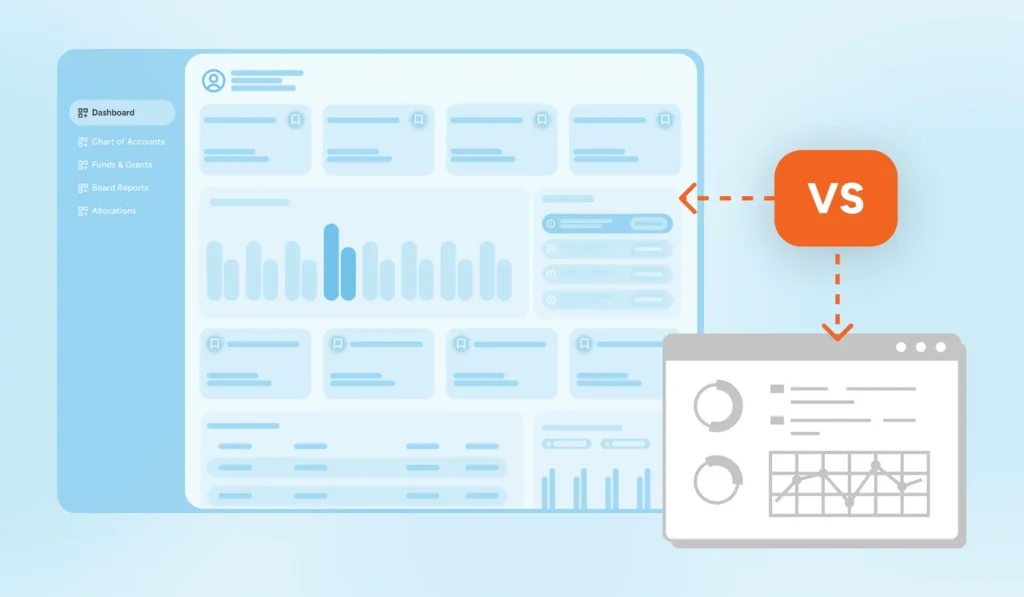
- Full Visibility and Forecasting: At-a-glance dashboards and comprehensive financial reports give your entire leadership team full visibility into the organization’s true financial health. This shared transparency makes it simple to plan for what-if or what-could-be scenarios, allowing fundraising teams to pivot quickly when new opportunities or economic shifts arise.
- Complete Reporting: Using a drag-and-drop report editor, the finance team can generate critical reports directly within their software, without relying on slow third-party solutions. They can pull from hundreds of robust, dynamic report templates to develop the real-time data they need exactly when a grant deadline or donor meeting approaches.
See how purpose-built accounting software levels up your fundraising efforts. Watch now to learn more about MIP Accounting.
Measuring fundraising strategy success
With insights from your accounting department, your fundraising team can run more effective, better-informed campaigns. With the support of purpose-built fundraising software, you can elevate those campaigns to another level:
Moving from insight to action
Bring the numbers to life with Donor Scoring that guides segmentation and stewardship. Tracking all of your supporters’ activities in a single source of truth within your donor CRM lets you see the full picture of their involvement, as well as their affinity and capacity for deeper involvement. Use these collective insights to identify untapped potential, drive stewardship strategies, and target your donors and supporters based on their specific interests and potential.
Being able to view giving potential through true data on your donors ultimately allows you to align your financial and fund accounting goals with confidence through an easy connection from your fundraising platform to your accounting system.
Understanding donors
Donors appreciate and expect to experience personalized giving experiences that meet their preferences. Using integrated fundraising and fund accounting tools for more insightful, collective reporting means you will learn how to steward your donors in ways that are best for them, ultimately deepening their support for your mission.
A modern fundraising solution offers customizable forms, text-to-donate, peer-to-peer giving, auctions, voting contests, and more, enabling you to meet your donors wherever they are. Offering alternative giving options with all digital activities, such as Apple Pay and Google Pay, makes it easier than ever for donors to give in ways that are convenient for them.
Increase donor retention rates
Automated thank-you letter tools prompt you to acknowledge donors right away when gifts are entered. Donors who are thanked within 48 hours of receiving their gift have a nearly 20% higher retention rate. The right technology platform makes it easy and impactful to quickly show your donors appreciation.
Ready to break down the silos between your development and finance teams? Watch our exclusive webinar on Accounting and Fundraising Alignment to discover how integrated systems drive sustainable, year-round fundraising growth.
One Platform to Create Continued Success
Prioritizing an agile fundraising strategy ensures that your financial plans are directly linked to mission delivery, allowing you to quickly pivot in response to changing donor preferences or grant restrictions and ultimately secure the long-term sustainability of your organization.
The key to fall fundraising success? Properly leveraging your organization’s technology. Using fundraising and accounting technology together gives your team the tools to achieve sustained fundraising success.
Momentive Software is proud to provide the tools to nonprofits and associations to make this possible. When every dollar counts toward your purpose, our solutions eliminate administrative hurdles and provide the data needed for proactive fundraising. By automating manual tasks and unifying your data, we free your team to focus on strategic planning and achieving maximum impact.
Ready to see how Momentive Software can transform your mission delivery? Meet GiveSmart and MIP Accounting.
GiveSmart fundraising software is a full-featured fundraising and donor management solution trusted by over 8,000 organizations. GiveSmart is invested in nonprofit success with a complete platform that combines event and fundraising efforts with a Donor CRM for a 360° view of development success.
MIP Accounting is a cloud-based accounting software built specifically for mission-driven organizations. For over 40 years, MIP has helped thousands of organizations track every fund and follow every dollar. Efficiently run core accounting workflows, create, and collaborate on unlimited budget versions, and integrate HR and payroll into accounting.
Ready to level up your fundraising efforts? See how Momentive Software helps nonprofits plan for and create continued fundraising success.
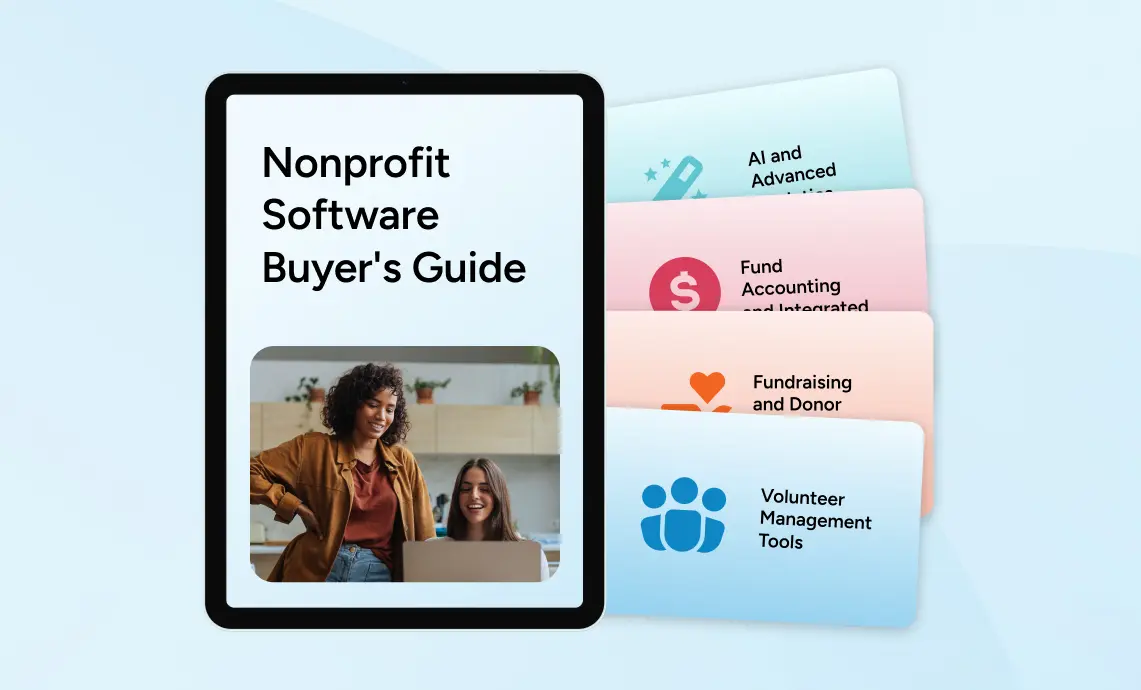
Nonprofit Software Buyer’s Guide
See how the right technology helps your nonprofit focus on scaling your impact and deepening your community’s trust.
Frequently Asked Questions
A comprehensive fundraising strategy rests on four essential pillars: data-driven goal setting, targeted donor segmentation, cross-departmental alignment, and robust multi-channel execution. By focusing on these core areas, an organization can transform isolated, reactive campaigns into a reliable, sustainable revenue stream that grows year after year.
Building your annual fundraising plan starts with a deep dive into historical campaign data to review total revenue, donor retention rates, and average gift sizes. From there, you establish clear benchmarks and map out a multi-channel calendar that tracks key tasks across major milestones, such as website audits in autumn, digital solicitations on GivingTuesday, and urgent last-chance email appeals in late December.
A digital fundraising strategy is a targeted framework that leverages modern online tools to meet donors wherever they are. This approach includes using fundraising software that optimizes mobile-responsive donation forms, launching peer-to-peer campaigns, using text-to-donate tools, and offering convenient alternative payment options like Apple Pay and Google Pay to capture digital generosity seamlessly.
True alignment between fundraising and accounting means treating development and finance as co-owners of the organization’s financial roadmap. During the planning phase, finance helps establish realistic funding goals, while during the execution and post-campaign analysis phases, they provide clean, integrated data tracking via a flexible Chart of Accounts to ensure all restricted funds, pledges, and grants are strictly compliant.
Completing a post-event analysis allows your development and accounting departments to see the true financial health and outcome of your efforts. By reviewing metrics like donor acquisition cost, donor scoring analytics, and timeline performance, your organization gains the vital narrative and insights needed to refine donor stewardship and build better, more informed future campaigns.
Segmenting your database into specific groups, such as major donors, first-time givers, lapsed supporters, and recurring contributors, allows you to personalize your messaging based on what each group values. When donors receive relevant stories and prompt, automated appreciation within 48 hours of their gift, they feel truly seen, which directly increases donor retention rates by nearly 20 percent.
Struggling to keep your volunteer program organized? Discover what volunteer management software can do for your organization.