

4 Steps to Volunteer Vetting/Onboarding

We recognize the tremendous value that volunteers bring to our organizations. They can contribute in many capacities including working events, fundraising, advocacy, program and service delivery, and board leadership.
We recognize the tremendous value that volunteers bring to our organizations. They can contribute in many capacities including working events, fundraising, advocacy, program and service delivery, and board leadership. With each type of volunteering, comes the necessary process of properly vetting and onboarding our volunteers. We must make sure they are the right people for the job and have the right skills and training to be effective and safe.
Establishing good policy is critical to the success of any workforce. However, good policy is nothing without proper implementation, enforcement and auditing.
One of the tenets to an extraordinary volunteer experience is eliminating barriers to engagement – getting volunteers to work as quickly as possible so they can make an impact. However, we also want to make sure volunteers have been properly vetted and trained. Lower barriers but improve quality and safety. Are those concepts diametrically opposed? They don’t have to be – especially when you leverage good systems. So how do we do that? We have broken this down into four simple steps essentially.
Give your mission the tools to thrive. See how volunteer management software can support recruitment, scheduling, and reporting in one place.
1. Identify Volunteer Profiles
Most volunteer organizations have different types of volunteer opportunities that work with different populations and require different responsibilities, skills, and varying degrees of autonomy. A volunteer policy profile groups various volunteer jobs that have similar application, onboarding and policy requirements.
2. Define Credentials
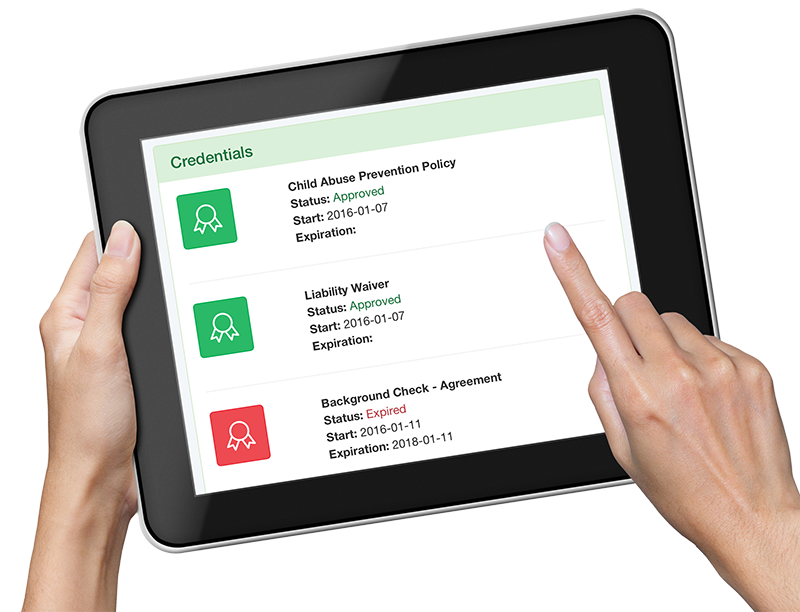
We define a credential as any element a volunteer must submit or earn in order to be eligible to volunteer for their assigned role. These often include:
- Application Form
- Waivers or Agreements
- Background Checks
- Certifications
- Interviews
- Training
3. Assemble Your Team
Doing a great job at volunteerism does not need to be a singular effort. The best of the best have many people at different levels supporting the value volunteers bring to our organization. With that in mind, the key to an excellent team is defining clear roles and responsibilities. If you are a smaller volunteer organization, you may have a small team or even a team of one. In that case, you can consider each role as a different hat you must wear to bring your best. Roles to consider for vetting/onboarding include:
- Project organizer (manage day-to-day tasks related to recruiting, scheduling, coordinating, communicating, and thanking volunteers)
- Credential Administrator (review and approve the credentials required to volunteer for specific jobs)
- Policy Advisor (defining, auditing and updating application and onboarding policy)
4. Assign the Tasks
Team members involved in the application, onboarding and policy compliance for your volunteer workforce have tasks they must perform based on their role. Each role has a mix of proactive and reactive tasks. Proactive tasks are typically performed in anticipation of some event and require planning and foresight by the team member. Reactive tasks are those activities where we have been prompted to do something. In an ideal world we would like to have systems that automate most tasks, prompt our team members when there is something to which they must react, and make it easy to respond in quick order.
Struggling to keep your volunteer program organized? Discover what volunteer management software can do for your organization.