Raffle Fundraising Guide

If you’ve ever been to a charity event, church picnic, or community gathering, you’ve likely taken part in a raffle. A raffle, or raffle fundraising, involves a game of chance in which participants purchase numbered tickets for a chance to win prizes. The winning ticket is selected by random drawing, and all entries have an equal chance of being chosen.
Raffles consistently perform well as fundraisers, as they offer low setup costs (a roll of tickets is inexpensive, and prizes are often donated), broad appeal (depending on the price of the tickets, usually anyone can participate), quick participation (takes very little time away from the rest of the event), and easy integration (raffles can be easily added to any event, from a 5k to a fancy gala).
Raffle Best Practices
- The first step toward a successful raffle is to define the cause and set a clear fundraising goal.
- With the financial goal in mind, set the ticket pricing and identify distribution points.
- Create a secure, transparent method for ticket salesand consider using online platforms.
- Remember to use eye-catching designs and add legal disclaimers to enter the raffle.
- Promote the raffle through social media, flyers, and word of mouth to maximize participation.
- As sales progress, update participants directly and through online channels about the growing prize pool or which raffles have the most entries — they may want to purchase more tickets for a better chance to win.
- Throughout, ensure there is adequate record-keeping for financial transparency and IRS document submissions.
Successful Raffle Formats: 50/50 Raffles
As far as fundraising ventures go, the 50/50 raffle stands as a time-tested and efficient method. From philanthropic events to community projects, this charity drive gives participants a chance to win a substantial cash prize with minimal effort on the part of the administering team.
A 50/50 raffle is a simple and effective way for charities, schools, and other organizations to raise funds. Participants can purchase as many tickets as they wish for a chance to win half of the total proceeds. The more tickets they buy, the greater their chances of winning. For example, if tickets cost $5 and 1,000 are sold, the sales total $5,000. The winner of the raffle would receive a cash prize of $2,500. The remaining half of the profits go toward the fundraising cause.
The appeal of the 50/50 raffle is that the prize pool grows with every ticket sold. As individuals purchase tickets, the total funds increase proportionally, creating excitement and motivation for even more ticket sales. This virtuous cycle maximizes fundraising potential and can engage a larger audience, as the allure of a substantial prize grows.
Benefits of Hosting a 50/50 Raffle
Hosting a 50/50 raffle offers many compelling benefits. It is a simple, reliable strategy with a broad appeal thanks to its prize potential. As the possibility for prize money grows, so does the anticipation of everyone involved. This involvement strengthens community bonds, leading to long-term support for the cause or organization beyond the raffle.
Here are some other benefits that nonprofits can look forward to when they run a 50/50 raffle:
- Proven return on investment (ROI): The costs to start a 50/50 raffle, which often means purchasing raffle tickets, are substantially lower than the profits generated by the raffle, leading to a great ROI.
- Connection with a new audience: The prize money appeal attracts a diverse audience, which increases fundraising potential.
- A good option for all kinds of fundraisers: This type of event is versatile and works well within communities, whether in-person or online.
- Boosts community engagement: The event’s dynamic nature creates buzz, encouraging word-of-mouth and social sharing.
- Low entry cost: Tickets priced at $1, $5, or $10 appeal to a broad audience.
How to Price 50/50 Raffle Tickets
Pricing 50/50 raffle tickets requires a strategic yet straightforward approach. Consider the fundraising goal, target audience, and minimum prize value. Moderate ticket prices encourage broader participation. Higher prices can lead to a more substantial prize pool.
Evaluating the audience’s financial capacity to determine a reasonable ticket fee is a good idea. You can also research similar raffles for pricing references and assess local regulations to ensure compliance.
Boost sales by offering ticket bundles and discounting multiple-ticket purchases to accommodate different budgets. An enticing pricing structure will encourage more ticket sales and improve the chances of winning. The pricing should balance affordability with the potential for a significant prize pool. Here’s a formula that might help with your planning:
- Gross organizational earnings = (Raffle ticket price * Quantity of tickets sold) / 2 – Expenses
How to Host a Virtual 50/50 Raffle
There are a few easy steps to hosting a virtual 50/50 raffle:
- Select a reputable online platform to manage ticket sales and payments securely. The convenience of multiple payment options will encourage more people to purchase tickets.
- Customize the raffle page with compelling visuals, clear instructions, and legal disclaimers.
- Promote the raffle via direct links to ticket sales on social media, on the organizer’s website, and through email marketing. Drive interest in participating through video content and testimonials to build trust with the target audience.
- Post regular updates on the growing prize pool and start an online countdown as the draw date approaches. Conduct the draw on live video to maintain fairness and transparency.
Hosting a fruitful online 50/50 raffle needs a tech-savvy process, clear communication, and adherence to legal guidelines.
A 50/50 raffle combines effective fundraising, community engagement, and transparency, making it a favorable strategy for organizations seeking an impactful and engaging way to raise funds for their cause. Integrating technology, clear communication, and efficient processes can enhance participant engagement and fundraising impact.
Successful Raffle Formats: Balloon Pop Raffles
Looking for a fun spin on a raffle? Give a balloon pop a try!
This louder-than-life revenue enhancer is attention-grabbing and engaging, with a low barrier to entry for your event’s guests. With over $16.8 million raised via raffles and games of chance in GiveSmart in 2022, raffles are a worthwhile revenue enhancer that you and your team should consider.
To start, determine your price point and the number you’d expect to sell based on your guest list. Think about what your prizes will be, as well. Not every balloon is a winner! The takeaway could be a thank-you card from a constituent, a lower-value gift card, a grand prize, or a “better luck next time” note.
After you figure out the initial logistics, you set up helium-filled, weighted balloons in a high-traffic area. All balloons have a paper slip inside with a number on it. That number corresponds to a prize list.
Purchasers can either pop their balloons on the spot, or you can create a moment with a countdown and have everyone pop at the same time. Logistics, your program plan, the number you sell, and what you put on the paper slips are determined by what makes the most sense for your event.
Tips for a Successful Balloon Pop Raffle
- You can set up your inventory via GiveSmart so guests can donate via their phones and/or at a point of purchase at your event.
- If the idea of having hundreds of people go up on stage to pop balloons wouldn’t work, some organizations have chosen to have a select number of large, higher-priced balloons as the grand-prize opportunities. Those 20 or so people go on stage to do a countdown and then pop their big balloons all at once.
- You can use the balloon pop as an included benefit for early bird or VIP tickets, and don’t forget to consider filling out your prizes with things that are “free.” Prize options like swag, drink tickets, premier dessert options, another chance at the balloon pop, and naming rights are just a few of the options you have!
- Don’t forget to use thicker balloons, so that they don’t pop accidentally!
- It might seem obvious, but don’t forget that helium-filled balloons float. Make sure to use a low-ceiling space, in case a balloon gets loose. To make an impact and garner interest, display them in a location visible to all guests.
- Consider offering this lively area as a sponsorship opportunity, underwriting the balloons, helium, and even prizes. Given how engaging it is for the crowd, any company would have a captive audience.
- When you make your promo videos for your event, consider filming your board president, honoree, or students popping a balloon at the end. Make your promotions memorable!
Successful Raffle Formats: Reverse Raffles
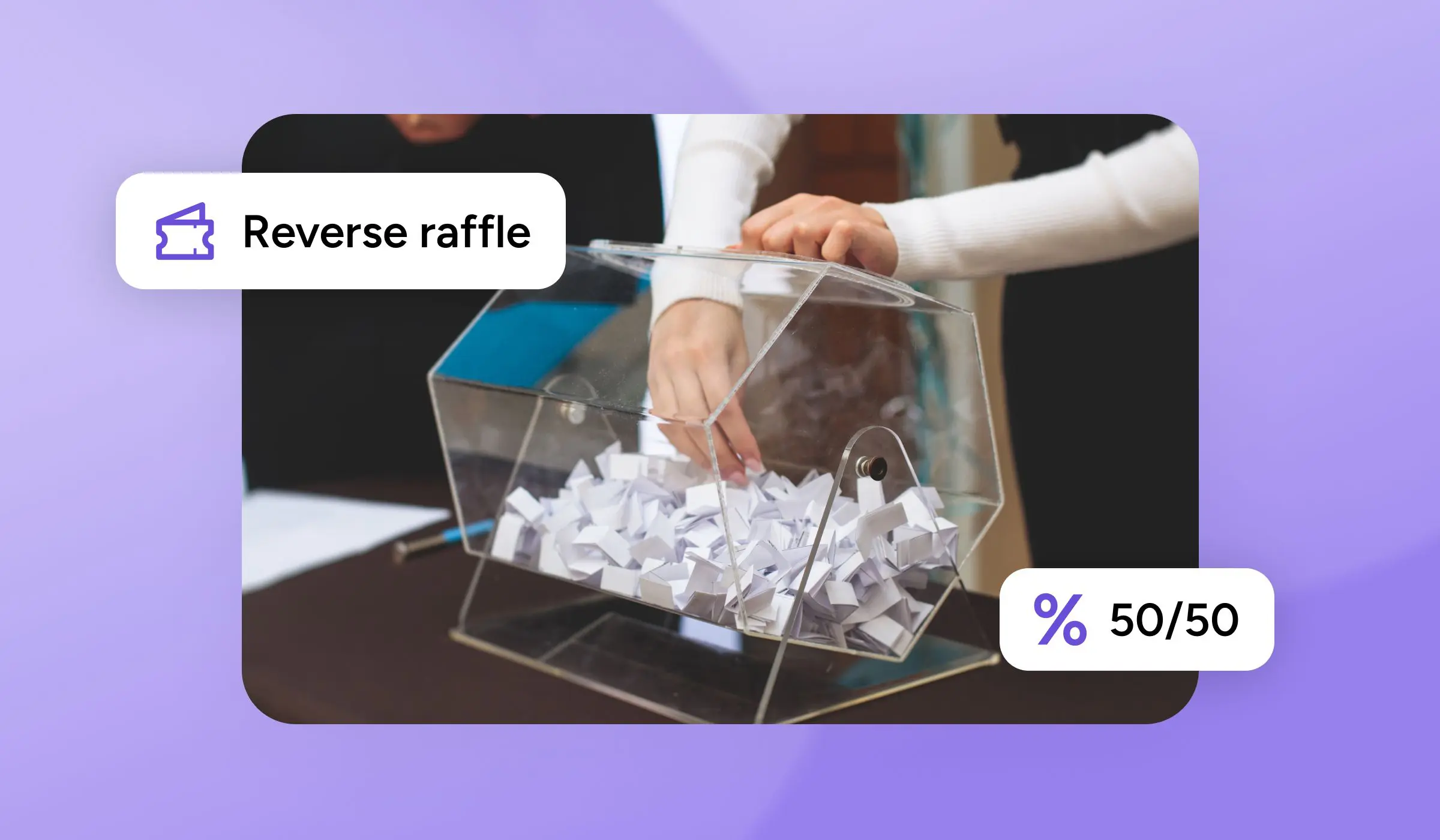
When hosting fundraising events, it is essential to find new ways to engage your participants and get them excited to donate. A reverse raffle could do just that, especially for small-scale fundraisers with fewer than 100 people.
When organizing a reverse raffle, you can follow the same steps as you would for traditional one. However, the key difference is that the grand prize in a reverse raffle goes to the person whose ticket is drawn last, whereas in a regular raffle it goes to the person whose ticket is drawn first.
A reverse raffle requires someone to draw every submitted ticket until the final remaining ticket is drawn as the winner. This builds anticipation and encourages your guests to stay longer at your fundraising event.
When it comes to prizes, your nonprofit can decide how many winners you want. It is common for organizations to give small gifts to the final nine people drawn and a grand prize to the person with the final ticket, but you can decide on how many winners you want to celebrate.
Reverse Raffle Best Practices
Follow these steps to hold a successful reverse raffle fundraiser for your nonprofit:
- Gather your prizes: When organizing your prizes, consider whether your event has a theme and how valuable you want the grand prize to be. Your organization can seek donations from local businesses or from dedicated donors. If your organization is paying for the prizes, be sure to align your budget and goals before making any purchases. You never want your event to break even, so choosing items you know will be a hit with your participants is vital for boosting your fundraising efforts.
- Sort out the event details: Make sure to find a suitable location that accommodates the number of people you’ve invited. Choose a date and time that works with as many of your participants’ schedules as possible. Sort out the number of volunteers you’ll need at the event and who will be in charge of doing the raffle drawing. Choosing an engaging emcee for a reverse raffle can be beneficial because the person in charge of the drawing will likely need to read off many names, and you want to keep any fundraising event as entertaining as possible.
- Get the raffle tickets: The next step is to pick them up. Depending on your organization’s needs, you can choose between physical or digital tickets. A key to having a successful reverse raffle is limiting your ticket sales. Every ticket will be drawn and called, so if you distribute too many, your event will take too long, and your guests will get bored. Instead, consider selling fewer tickets and asking for higher donation amounts.
- Distribute the tickets and ask for donations: Before handing them out, be sure to price them based on your fundraising goals, event expenses, prize expenses, and the number of tickets. This will help your organization ensure that it profits from the event and that things run smoothly. Whether you use paper tickets or fundraising software for digital tickets, you should encourage people to be present for the drawing when distributing them. The longer people stay at your event, the more likely they are to donate.
- Hold the drawing: Now for the fun part – holding the drawing. To enhance the reverse raffle event, your organization can hold it in conjunction with other activities, such as a wine tasting or a trivia night. You can also offer milestone prizes, i.e., gifts that occur at the halfway point or 25% through, or corresponding to a number linked to your organization. The more engaging the event and drawing are, the better!
One way to make your event more exciting is by having a charismatic emcee draw the tickets. The more involved your guests are in the event, the more they’ll want to participate. Having a host who can keep the energy up can make your fundraiser more profitable.
Another way to enhance the group’s excitement is by choosing unique or valuable prizes, especially for the grand prize. Consider sports memorabilia, a night with a personal chef, big-game tickets, cooking classes, a weekend getaway, or a spa day to increase excitement and engagement.
You could also implement a theme for your reverse raffle. You could incorporate themed decor and prizes to make the event more immersive and memorable. Possible themes include casino, movies, sports, or music. Whether you go with a theme or not, engage your participants and make them eager to donate to your cause.
Legal Considerations
When dealing with any raffle, you must familiarize yourself with the laws regarding events that sell raffle tickets. Every state has its own regulations governing events involving these tickets, and you must abide by these rules to have your event legally.
Some state regulations prohibit the sale of raffle tickets, and you must give them away for free while asking for a donation.
According to the IRS, all raffles are a form of lottery. Raffle laws vary by state — some do not allow online raffle ticket sales. Nonprofits must file Form W-2 to report winnings and federal income tax withheld. Organizations must submit Form 1096 and send a copy to the raffle winner.
Individuals pay taxes on raffle winnings as income. However, if the prize money surpasses $5,000, the nonprofit must legally withhold 25% of the winnings or pay withholding tax.
Discover How GiveSmart Can Help
When planning your next fundraising event, consider implementing GiveSmart’s industry-leading donor management and fundraising software. Our solution helps your nonprofit stay connected with your donors and centralize your fundraising in a single management system for all your needs.
With our platform, you can organize your events and campaigns while managing event ticket sales and distribution entirely electronically. When it comes to your donors, GiveSmart has the CRM for all your management needs, from automated tracking to sending out thank-you notes.
Are you interested in learning more about our fundraising software? Request a demo from GiveSmart today!
FAQs
Boost sales by offering ticket bundles and discounting multiple-ticket purchases to accommodate different budgets. An enticing pricing structure will encourage more ticket sales and improve the chances of winning. The pricing should balance affordability with the potential for a significant prize pool. Here’s a formula that might help with your planning:
– Gross organizational earnings = (Raffle ticket price * Quantity of tickets sold) / 2 – Expenses
fundraisers with fewer than 100 people.
When organizing a reverse raffle, you can follow the same steps for a traditional one. However, the key difference is that the grand prize in a reverse raffle goes to the person whose ticket is drawn last, whereas in a normal raffle the prize goes to the ticket drawn first.
A reverse raffle requires someone to draw every submitted ticket until a winner is determined by the final remaining ticket. This builds anticipation and encourages your guests to stay longer at your fundraising event.
For larger prizes, consider sports memorabilia, a night with a personal chef, big-game tickets, cooking classes, a weekend getaway, or a spa day to increase excitement and engagement.
Smaller prizes can go along with the theme of the night (music theme = headphones, etc.), or be “free” to you prizes, like the best seat in the house for an event, first in line at the bar/buffet, or even additional raffle tickets to try their luck again.
According to the IRS, all raffles are a form of lottery. Raffle laws vary by state. When dealing with any type of raffle, you must familiarize yourself with the laws regarding events that sell raffle tickets. Every state has its own regulations governing events involving these tickets, and you must abide by these rules to have your event legally. Some state regulations prohibit the sale of raffle tickets, and you must give them away for free while asking for a donation.
To start, determine your price point and the number you’d expect to sell based on your guest list. Think about what your prizes will be, as well. Not every balloon is a winner. After you figure out the initial logistics, you set up helium-filled, weighted balloons in a high-traffic area. All balloons have a paper slip inside with a number on it. That number corresponds to a prize list.
Purchasers can either pop their balloons on the spot, or you can create a moment with a countdown, and everyone pops at the same time.
Struggling to keep your volunteer program organized? Discover what volunteer management software can do for your organization.