
First is impact, then ask, then food.
Explaining your organization’s mission to attendees and guests prior to your appeal so they know more about the organization before donating is invaluable. Make sure your story is short, sweet and impactful. Whether delivered via a video or in person, the testimonial needs to tug at those heartstrings and make a case for support.
Secure full buy-in from your board. When your leaders are seen giving, your guests will respond positively. Ensure you market the Live Appeal during the event, set clear expectations, and prepare your guests to give. Most importantly, remember to say, “Thank you!”
Schedule for Your Live Appeal
Every moment is an opportunity to share your mission.
- Use signage at check-in, images of clients or impact, quotes, and program information to showcase your organization throughout the event.
- Encourage your board members to mingle during the cocktail hour, engaging new faces and sharing facts about your organization.
- As guests enter the main ballroom, the welcome can begin.
- After the welcome, there can be a brief impact message, then the speaker can present, or the impact video can play.
- Directly after that impactful moment is the ask/appeal.
- After that is dinner, then the honorees, any other speakers, and any thanks you need to include.
If you opt for a buffet, fundraising should still come first, and make sure to offer heavy hors d’oeuvres. Steps 4 through 6 should look a little different.
4. Be seated, give your welcome talk about the mission (client speaker or impactful video), and deliver your appeal.
5. Then, let people get up to get food. If you are having an auction, you can sell the rights to be the 1st table to get food as a cute change-up.
Each event and guest is different. Having a great sound system ensures everyone can hear your mission and appeal. Surround sound is best. Your lead person on stage must be engaging and remind everyone why they are there. It also helps to dim the lights, which draws attention to the stage.
When the live ask is tied to performances, the best timing is to schedule it between performances rather than at the very beginning or very end of the program. Your audience is looking forward to being entertained as part of their evening, so you want to make sure they get that first once they move into the theatre. Once the audience has been captivated, it is nice to break up the evening with a thank you from the organization, then move right into the fundraising portion. Make sure you save the most exciting performances for last after the fundraising has concluded, so none of your guests sneak out early.
Your audience needs a clear understanding of what they are giving to and the impact of successful fundraising. You only need to speak about one program, service or need to tie the story into your mission, without going into too much detail. After a successful Live Appeal, your audience will be buzzing with excitement and inspiration. Then you can celebrate your honorees and sponsors!
Keep your program short and sweet. The longer the program, the less guests care. The later the night, and the more drinks are served, the chattier your guests become and the more likely they are to forget event etiquette.
Building the Golden Goosebumps in the First 10 Minutes
You can start to build a goosebumps moment from the first greeting. What is at the front door? Who is doing the check-in? What imaging is in the hallway?
One example is an organization that invites kids to line the red carpet as guests arrive from their cars. They get high fives and see the faces of the impact. As guests enter the ballroom, the images on the screens, the music, the lighting, and the focus on mission across all areas align with this moment.
You need to get everyone focused and ready to give. Your fundraising conductor can capture the attention with many different tactics. A “Family Photo” of everyone holding their paddles in the air lights up the room as they take their giving tool in hand. Lights, music, and video are also great ways to capture attention.
Appeal vs. Auction
When you have a great speaker and a great video, utilize both before the paddle raises. As long as the content is engaging and the guests’ attention is captivated, a speaker and a video can work well together.
You get the same emotional draw from using an electronic platform as from “raising the paddle.” By using a visual display alongside a text-message donation appeal, organizations can see donations coming in in real time on the big screen. The auctioneer can introduce the donation moment and speak about the cause just like a traditional paddle raise. Instead of spending all the airtime calling out paddle numbers, the auctioneer can thank donors whose names appear on the screen and speak in more detail about the mission. Electronic appeal moments have the same emotional draw as a traditional paddle raise, with the added benefits of efficiency and automation!
Typically, donors come to events with a set amount in mind they’d like to spend. If you typically have a high participation rate in your live auction, it’s likely a good idea to make the ask after the auction so those who missed out can make a direct donation.
How Many Live Auction Items Should We Have?
Quality is more important than quantity in a live auction. What we see most commonly in the industry is no more than 10 live auction items. The typical sweet spot is 5-7 items. With a smaller number, you can really focus on the details, highlighting why each item is such a great package/experience. It will certainly help to keep the attention in the room as well!
When Do We Introduce Matching Donations?
There are many factors to this placement:
How big is the match?
What levels do you have the capacity for, but previous years have not reached?
What type of donor is in your room, and how will you incentivize?
Are you looking for more major-gift donors or more guests to become donors?
Are you using a professional math person, aka an auctioneer (fundraising conductor)? You may need someone quick on their feet with numbers if there is no technology to help.
The simplest answer is to use the match where it will be the most impactful to your audience.
Texts and Hands and Paddles, Oh My!
It is up to you whether you use actual paddles or have people raise their hands. Look into how you’ve done things in the past. If donors like the tradition of paddles, go for it! If donors find them cumbersome to carry around, go for the hand raise. TIP: If you’re doing a hand raise at your appeal, make sure you have a team large enough to cover the room so they can approach all donors with raised hands without missing any donations.
If you opt for physical paddles, it’s best to assign them at registration so that you can attach each guest’s bidder number to their profile (phone, email, and credit card) for the evening. When distributing these paddles, let guests know that the number is attached to their credit card, so it’s best not to misplace it. If getting them lost in the shuffle is still a concern, have your team write names on the paddles at check-in.
If you’re having a paddle raise, guests will raise paddles like they always do. If you’re also incorporating text-to-donate, it’s important that the tech company and person conducting the live ask are on the same page. Make it clear to donors that they can raise their paddle to give OR donate via text message. If text is an option, be clear about the instructions for doing so. Giving donors the option to donate with a paddle or via text makes the moment of giving more inclusive, as text donations allow guests to give any amount and remain anonymous.
If you haven’t used paddles in the past, and you’re able to manage with a hand raise, then stick with what works.
It’s important to be very clear with donors about how paddle raises and electronic giving will work. Talk to your electronic giving provider and ask if they have suggested verbiage (they should). Then, whoever is conducting the live appeal should read these instructions verbatim so that donors know they can give with a paddle or via text message.
Live Event Thermometers & Displays
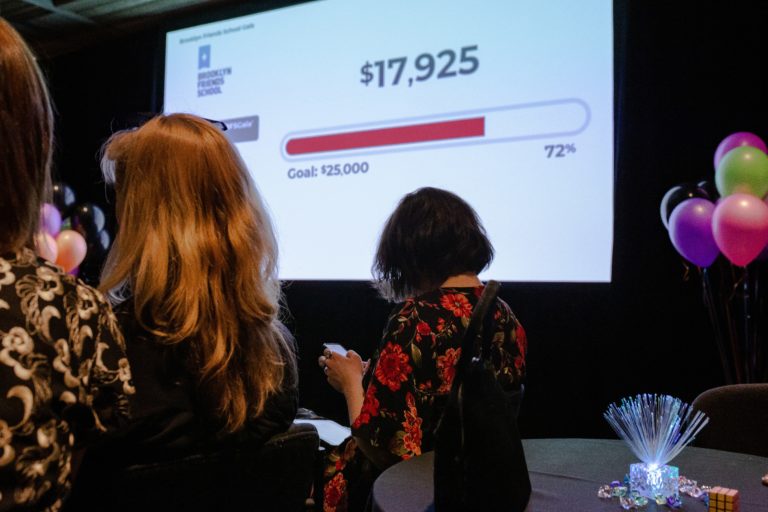
The more information in your live appeal, the better! Having a fundraising thermometer visible during an appeal can replace the momentum a traditional paddle raise brings, but with less manual entry! It lets the crowd truly become a fundamental part of the fundraising efforts and see a real-time update of the money being raised. You can always choose not to show your ultimate fundraising goal, so they have the visual of the thermometer, but don’t walk away saying, “Oh, they only raised 15k out of 30k.” They can instead walk away saying, “They hit 50% of their goal, let’s help them to hit 100%!”
You can give a shout-out on the thermometer or donations display by having the donors’ names scroll across the screen. During this time, the MC can also choose to shout people out verbally. We have also seen that when someone donates, a balloon (or another attention-grabbing item) is placed on the back of their chair, with the goal of filling the room with balloons! Plus, it’s a fun and encouraging way to get others at the table to give.
Emcee, Auctioneer, or Fundraising Conductor?
Should your live auctioneer be the Emcee for the entire evening’s program? Or should they just handle the auction and paddle raise? Or should someone from your organization handle the appeal and then transition to the auctioneer? Honestly, it depends on the people.
Some auctioneers or fundraising conductors are fantastic emcees, while others do not do well at it. You want to make sure your emcee isn’t reading 100% from their script. Make sure you have read-throughs and rehearsals with whomever you use, and let them know where and when they can have creative license. Most will charge extra for this service, so make sure you’re getting someone who keeps the night moving and has a great personality.
Rehearsal is crucial. Both the fundraising conductor or emcee and the speaker from your organization need to know the flow of the Live Appeal and what will be said when. It is best to use a brief transition from the Mission Story into the Live Appeal, then make the ask.
There are some organizations that have someone who can tell a great story, tie in the mission, and engage an entire room. They might also be great at making an ask and following through with the fundraising. The risk is that, especially with schools, if the “Asker” is seen every day by the parents/donors, there may be awkwardness or resentment.
Other times, if the “Asker” has a relationship with the audience and knows the financial/social status of the donors, they might guilt that donor into giving. One example would be, “Bill, I know you’re a millionaire, and you can afford it.” Meanwhile, Bill may have had a terrible day in the market, or a lawsuit just happened, etc. This again leads to donor resentment.
Use a combination of stories and statistics, and make sure to read the room. Sometimes nothing needs to be said, but the call for support. Sometimes your audience needs to be educated. Sometimes they need to be inspired. A professional Fundraising Conductor can read the room and steer the conversation in the needed direction.
Also important to note: Each state has its own regulations. In fact, each city and even town has different regulations. Make sure your auctioneer is licensed if required. Some areas require them to be bonded and insured (some venues require this as well of the auctioneers you bring in).
Another thing to check is whether your auctioneer has a Benefit Auction Specialist (BAS) certification. It’s not a requirement, but it shows a great deal of time, care, study, and professionalism has gone into their career.
Some fundraising conductors work very well solo, while others work well together to engage a full audience. Larger audiences or difficult rooms can benefit from having two fundraising conductors. We recommend two because there will be many personalities in your audience. With two personalities on stage, you can tap into left- and right-brained thinkers, bring everyone together, and tap into different trigger points to inspire giving.
If your organization can’t find anyone through the National Auctioneers Association who is within your state, check out this jam session to learn more about finding auctioneers!
Keep The Energy High Even If You Haven’t Met Your Goal
If a fundraising goal is not reached during a donation appeal, it is important that guests know the opportunity to give will remain open. Concluding a donation appeal announcement with instructions on how to give throughout the night is a good first step, but it will need to be followed up with action.
If there is still a program following a live ask, the evening’s MC should plan to give periodic updates on how the crowd is doing toward reaching that goal. This reinforces the importance of the organization’s fundraising and encourages guests to make those donations during these key moments. As long as the organization is within a reasonable reach of that goal, a progress bar towards that goal should be brought back up during these updates.
If the program concludes with a live ask, your staff and volunteers at checkout can help sustain excitement about reaching the organization’s goal. Using a laptop or tablet to display a progress bar at checkout will remind guests just how close they are to the goal. A few simple ways to help inch closer to that goal are:
Asking guests if they would like to round up their purchase to the nearest $50 or $100 mark with an additional donation.
Offering unsold auction items or items for sale at a discounted price.
FAQs
How do you capture many paddles at once?
A few ways to capture multiple paddles up at once are:
– Spotters around the room, recording the paddle numbers they hear/see
– Spotters approach donors and record donations on the spot (paddles stay raised until someone approaches)
– Videotape the live appeal/ask
– Collect the paddles that are raised.
Not all these options work for every type of ask, but talk to your Customer Success Manager, and they’ll point you in the right direction!
Do you collect credit card info beforehand or when they make the gift?
It’s best to capture credit card information at check-in so that donors can easily make a gift during your event and be charged after, minimizing time and effort tracking down donors to get payment information.
How do we keep folks from losing their paddles?
Have a Sharpie on hand at check-in and write the guests’ last names on their paddles. If you’re using a mobile bidding provider, you can let them know their bidder number is attached to their profile, which they can view right on their phones. It’s also a good idea to remind donors that these paddles are tied to their personal contact and payment information, so it’s best not to lose them!
How do you receive donations from those without smartphones?
You should always bring a cash box to fundraising events and accept cash and check donations. Today, cash and checks are less common, but you never want any guests to feel like they’re limited in the ways that they can give! While mobile giving is excellent, money is money, so keep all channels open!
How many silent auction items should be included, and where should the bidding start?
Silent Auctions are all about quality over quantity. We typically recommend about 1 item for every 4 to 5 bidders. A good rule of thumb is to start bidding at 50% of the Fair Market Value.
How many giving levels do you recommend for the paddle raise?
A typical Live Appeal has seven giving levels. Where you start your giving depends on the room’s capacity and your fundraising history. Keep the levels simple and easy to understand.
Is it true that the more donors drink, the more they give?
It’s a common myth that the more donors drink, the more they give. Here are two studies that show the positive vs negative effects of alcohol on fundraising:
Validation of the Brief Biphasic Alcohol Effects Scale
How Alcohol Affects Us: The Biphasic Curve
Curious about the ‘last paddle standing’? This jam session covers it.