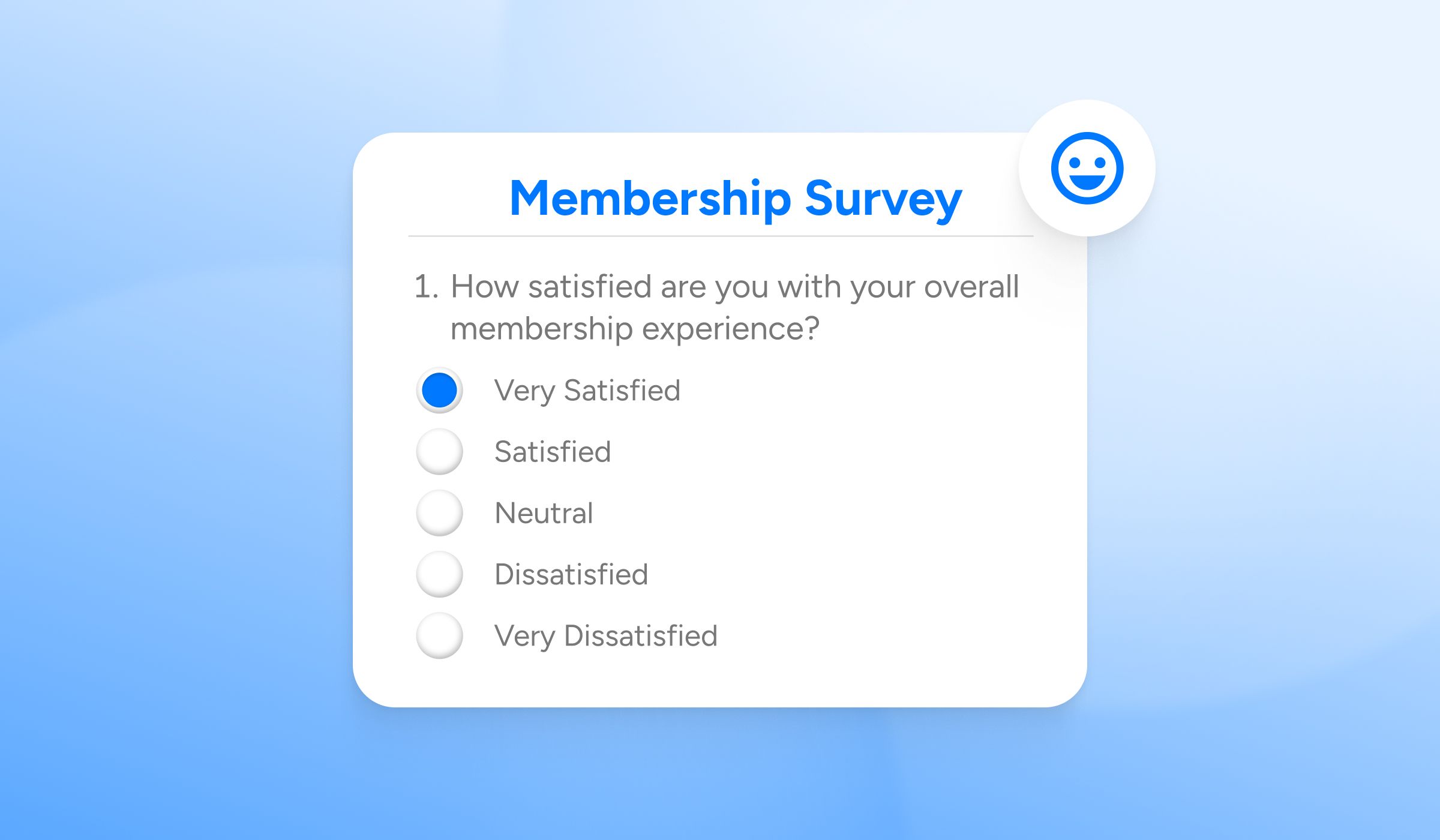

A membership survey is one of the most direct and cost-effective tools an association has to understand what members want, what they value, and what risks drive them away. A membership survey signals that you are listening, which in itself strengthens member trust.
This guide covers what a membership survey is, why it matters, which member segments to survey, what questions to ask, and how to turn the feedback you collect into real improvements in member satisfaction and loyalty.
What Is a Membership Survey?
A membership survey is a structured set of questions sent to your members to gather feedback about their experience, satisfaction, and priorities. The responses give your association reliable, data-driven insights rather than opinions from a small, vocal minority.
Membership surveys can be broad: covering overall satisfaction across your entire member base, or targeted: focusing on a specific segment, touchpoint, or benefit. The most effective associations use both approaches simultaneously.
A well-designed membership survey has four core benefits:
- It shows members they are heard, which strengthens their connection to your organization.
- It uncovers what members value most so you can focus your resources in the right places.
- It replaces guesswork with meaningful data your team can act on it confidently.
- It gives you early warning signs of disengagement before a member lapses.
Who to Include in Your Membership Survey
A single general survey sent to your full member list gives you useful high-level data. But segmenting your membership survey by audience unlocks far deeper and more actionable insights.
New Members
Survey new members within their first 90 days to understand their onboarding experience. Ask whether they feel welcomed, whether they have discovered the benefits they joined for, and what would make their early membership more valuable. The first 90 days directly correlate with long-term member satisfaction and renewal rates.
Active Members
Survey your engaged members at least once per year. Ask them which benefits they use most, what they would like to see improved, and how likely they are to recommend your association to a colleague. This audience gives you your best signal for what is working and what to invest in further.
At-Risk or Low-Engagement Members
Members with dropping engagement are a high-priority segment for a membership survey. Reaching out before they lapse gives you a chance to understand what has changed and respond with a targeted offer or outreach. Keep this survey short to maximize response rates.
Lapsed Members
Lapsed member feedback is among the most candid and valuable data you can collect. Ask why they did not renew and what would bring them back. Keep the survey brief and easy to complete.
Membership Survey Questions That Generate Useful Insights
The questions you ask determine the quality of your results. Focus on questions that reveal priorities, uncover pain points, and give you something to act on.
Questions for new member surveys:
- How easy was it to join and get started with your membership?
- What benefits were you most hoping to take advantage of when you joined?
- What would make your first months of membership more valuable?
Questions for annual member satisfaction surveys:
- Which membership benefits do you use most often?
- How satisfied are you with your overall membership experience? (Rate 1-5)
- Are you getting everything you need and expect from your membership?
- What benefits are most important to you right now?
- What would you most like to see improved?
- How likely are you to recommend membership to a colleague? (NPS question)
Questions for lapsed member surveys:
- What was the primary reason you did not renew your membership?
- Which benefits, if any, did you use during your membership?
- What would bring you back as a member?
How and When to Send Your Membership Survey
Survey frequency and timing affect both response rates and the quality of data you collect. A good cadence balances staying informed with not creating survey fatigue.
Annual Membership Survey
Send a comprehensive membership survey to your full member list at least once per year. Tie it to a consistent point in your membership calendar, such as mid-year or shortly after your annual conference, so you can compare results year over year and track trends.
Post-Event Pulse Survey
Send a short two to three question pulse survey within a few days of any major event or experience. Response rates are highest when the experience is fresh in a member’s mind, and the data you collect helps you quickly improve the next event.
Renewal and Onboarding Touchpoint Surveys
Embed short survey questions at key moments in the member lifecycle: after joining, after the first 90 days, and during the renewal window. These targeted surveys surface friction at the exact points where members are most likely to disengage.
Channels to distribute your membership survey:
- A link in a dedicated email campaign to targeted member segments.
- A post in the member feed of your online community.
- An announcement in your member portal or online community announcement area.
- A follow-up SMS or text message for time-sensitive pulse surveys.
How to Respond to Membership Survey Feedback
Collecting membership survey responses is only valuable if you act on what you learn. Members who see their feedback reflected in real improvements are far more likely to renew and recommend your association.
Follow this process to close the feedback loop effectively:
- Review responses regularly:
.Do not wait until year-end to review survey results. Build a recurring review into your team calendar, monthly or quarterly depending on survey volume.
- Look for patterns:
.Individual responses may be outliers. What matters is patterns across many responses. Focus on recurring themes, especially around benefits, communication, and value.
- Prioritize changes:
.Not everything surfaced in a membership survey can be addressed immediately. Rank issues by their frequency and their impact on member satisfaction and renewal rates.
- Act on the findings:
.Adjust your benefits, programs, communications, or processes based on what members have told you. If the survey revealed a gap in career development resources, address it.
- Tell members what changed:
.Communicate the improvements you made as a result of their input. A simple message saying ‘you told us, so we did this’ is one of the most powerful loyalty-building moves an association can make.
Using Your AMS to Manage Membership Surveys
Modern association management software makes it straightforward to build, send, and track membership surveys without relying on separate tools or manual processes.
Look for AMS platforms with built-in survey functionality that supports multiple distribution channels, segmentation by member type, and reporting tools to analyze results over time. Built-in survey features keep your feedback data connected to your member profiles, so you can see patterns at the individual and segment level.
Combining survey data with engagement tracking, event attendance, and renewal history gives you a complete picture of member satisfaction and the ability to intervene before a member lapse occurs.
FAQ
What is a membership survey?
A membership survey is a structured questionnaire sent to association members to collect feedback on their satisfaction, priorities, and experience. It gives associations reliable data to improve member benefits, communications, and retention strategies rather than relying on guesswork or input from a small group of vocal members.
How often should an association send a membership survey?
At minimum, send one comprehensive membership survey per year to your full member list. Supplement it with shorter pulse surveys tied to specific events or lifecycle moments, such as onboarding and pre-renewal. Sending more than one lengthy survey per year risks survey fatigue, which lowers response rates and data quality.
What questions should I include in a member satisfaction survey?
Focus on questions that reveal what benefits members use, how satisfied they are with their overall experience, what they would like improved, and how likely they are to recommend membership to others. Adding an open-ended question at the end, such as ‘Is there anything else you would like us to know?’, often surfaces insights that structured questions miss.
Should I survey lapsed members?
Yes. Lapsed member surveys are some of the most valuable feedback you can collect. Members who have left will often give you more candid answers about what fell short than current members will. Keep the survey short, three to five questions maximum, and use the findings to address the issues most likely to prevent future lapses.
How do I increase response rates for my membership survey?
Keep surveys short and focused. Explain why you are asking and how you will use the feedback. Send a follow-up reminder one week after the initial survey email. Distribute the survey through multiple channels including email, your online community, and your member portal. Closing the loop by sharing what changed as a result of past surveys is the single best way to improve response rates over time.