Association Event Planning: Phase-by-Phase Timeline & Complete Checklist

Events are the face of your organization, where members meet in person and have experiences that demonstrate your organization’s value. They turn professional connections into lifelong partnerships.
But a memorable event doesn’t happen by happenstance. It is the result of months of hard work by your team. For your organization to deliver an event that feels seamless, it’s crucial to embrace a complete event plan.
This guide is the blueprint for association event planning, from a comprehensive event planning timeline to best practices for virtual and hybrid events. This guide ensures that every deadline met creates an unforgettable member experience.
The Foundation: Experience-First Planning
Before you get into the nuts and bolts of event planning, define the scope of your event and what you’re hoping members will accomplish by attending.
Are you looking to provide continuing education opportunities? Do you want to have peer-to-peer networking opportunities? Are you looking to address a specific issue in your field?
When you lead with the experience, your logistics, like room layouts or registration flows, become intentional choices rather than just checkboxes.
The Complete Association Event Planning Timeline
Successful events are built in phases. Here is how to structure your lead-up to ensure nothing slips through the cracks.
Phase 1: 9-12 Months Out: Identify Strategy and Build Infrastructure
This is the bird’s-eye view phase. You are setting the goals that will dictate every subsequent decision. When kicking off event planning, your association should:
- Define Objectives: Establish key performance indicators (KPIs). Are you aiming for a specific number of new member sign-ups or a non-dues revenue target?
- Budget: Build a comprehensive budget. Include a 10% contingency fund for the unexpected.
- Source a Venue: Research and secure your venue or virtual platform. Consider accessibility and proximity to your member base.
- Define Sponsorship Tiers: Create your sponsorship sales kit. Identify partners who align with your mission.
12-Months Out Checklist:
- Finalize Event Date and Theme
- Check for industry conflicts or major holidays that could impact attendance.
- Draft Initial Budget and Revenue Goals
- Define your break-even point and set targets for registrations and sponsorships.
- Secure Venue and Sign Contracts
- Verify that the space can accommodate your desired layout and A/V needs.
- Define Attendee Personas
- Identify exactly who you are building this for so your marketing and content stay relevant.
- Create a Save the Date page on your website
- Announce your event date and location in your organization’s online community, and include important details. Make this event page the go-to spot for conference discussion. Leverage your community for brainstorming ideas from speakers, to keynotes, and more. This page will create buzz about the event.
- The Ultimate Guide to Event Marketing has best practices and tips to make your event a success. From planning to registration and more, learn the strategies to make your next event your most successful one.
- Begin accepting event registrations
- Open registration with early-bird pricing to secure initial revenue and gauge attendance numbers. Make it simple for members to register for your event with event management software. Allow them to easily see and select registration and payment options, and make it a snap for them to check out online.
Phase 2: 6-9 Months Out: Determine Content and Build Momentum
With the event’s scope planned, it’s time to shift to the meat of the event. Your goal is to build value through programming.
- Call for Speakers: Finalize your session topics and vet speakers who can deliver engaging, actionable content.
- Promotion Launch: Get members ready for your event and even more excited to attend by sending registrants a short series of pre-event emails that outline what to expect. For example, in one email, you might include event highlights. In another, include top tips for getting the most out of the event.
- Share Speaker Previews on Social: Share speaker teasers on social, and create graphics for speakers to share on social to promote your event. Consider offering speaker-specific discount codes to grow your attendee list.
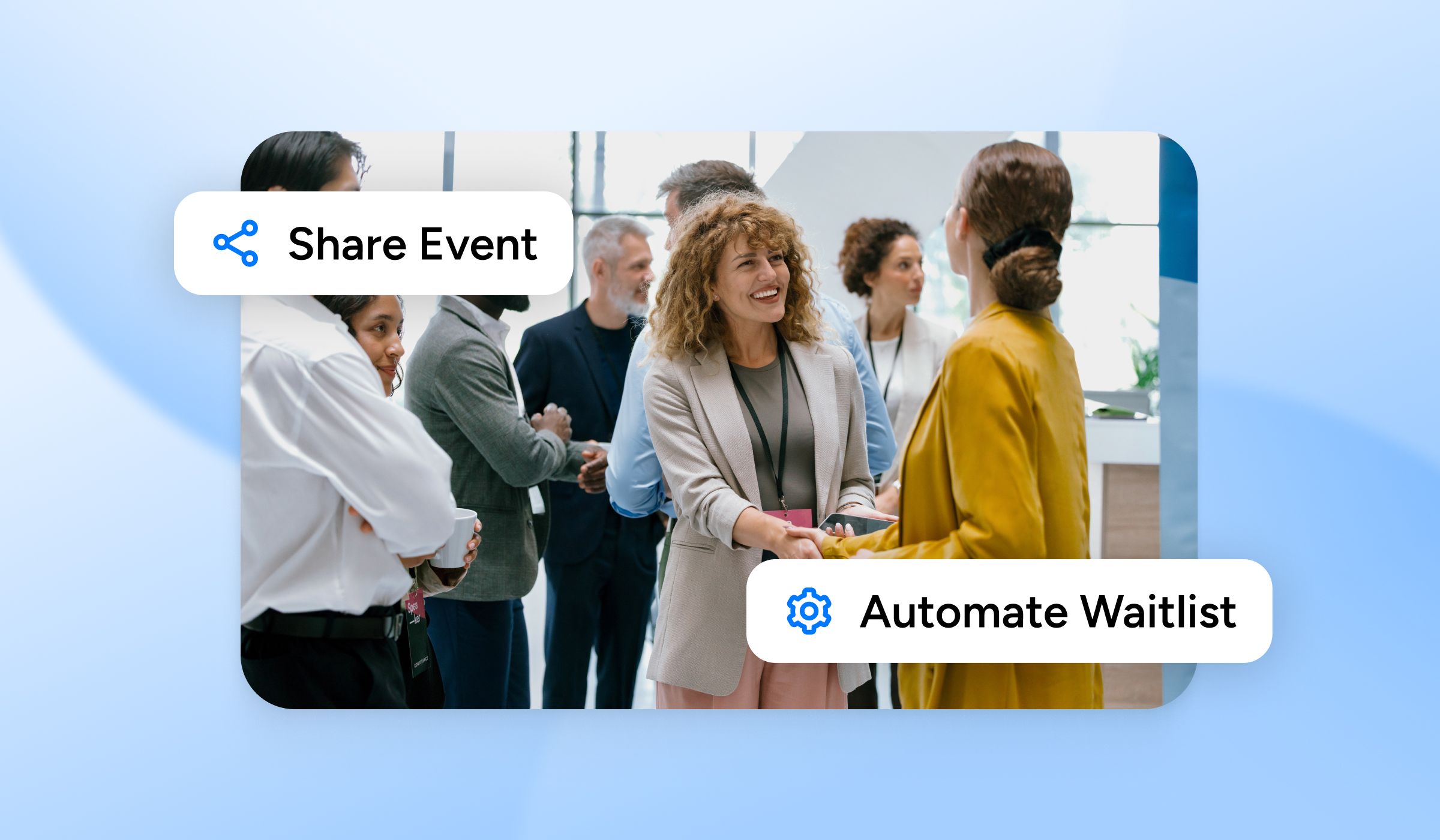
- Continue Promoting Event Registration: If you’re nearing capacity, consider offering a convenient waitlist that lets your members automatically add themselves once your event’s attendance limit is reached. This is a simple way to provide a smooth member experience while ensuring the greatest number of people attend your events.
Checklist:
- Confirm Keynote and Breakout Speakers: Ensure you have a diverse lineup that covers the most pressing industry trends.
- Launch Full Registration and Marketing: Execute a multi-channel campaign (email, social, and community) to drive early-bird sign-ups.
- Finalize Sponsorship Agreements: Collect all logos, descriptions, and creative assets for brand placement.
- Post Preliminary Agenda: Give prospective attendees a reason to click register by showing them the sessions they can’t afford to miss.
- Set Up Hotel Room Blocks: Monitor pick-up rates early to adjust your contract if needed.
Phase 3: 6-1 Month Out: Logistics and Fine-Tuning
It’s time for the final push. The foundation and framework are complete; now it’s time for the finishing planning touches.
It’s time to review the final event planning. Finalize your:
- Logistics Review: Finalize BEOs (Banquet Event Orders), A/V requirements, and room sets.
- Communications Plan.
- Draft your attendee know-before-you-go emails and mobile app notifications.
- A mobile event app is a powerful way to deliver a captivating, memorable, and engaging event experience for your members. Mobile apps help members:
- Easily access event details, including the schedule, educational sessions, venue maps, etc., on their mobile devices
- Keep attendees engaged through surveys, polls, and audience response systems that assist with learning, awareness, and overall participation
- Allow attendees to network through in-app messaging, activity feed, photo gallery, and more
- Run-of-Show
- Create a minute-by-minute schedule for staff and volunteers to ensure everyone knows where to be and when.
- Association events frequently get hung up on check-in. When your event is underway, your staff is focused on the activities you’ve planned for attendees, but check-in can be a huge pain point. Event management technology makes check-in and badging a breeze. From app-based check-ins to simple on-site badge printing, event technology streamlines the check-in process so your staff has more time to focus on the event experience.
Checklist:
- Finalize Menus and Catering: Confirm meal counts, including vegetarian, gluten-free, and other dietary requirements.
- Order Signage and Branded Materials: This includes everything from registration banners to directional signs and sponsor recognition.
- Confirm Speaker Travel and Lodging: Ensure every presenter has their flight and hotel details, along with their session time and room assignment.
- Conduct Tech Rehearsals: For hybrid or virtual events, test the platform with your moderators and key speakers to minimize on-site friction.
- Draft On-Site Communications: Pre-schedule app notifications and attendee “know before you go” emails.
Phase 4: Week Of: Event Execution
The big event is finally here. Your months of planning are about to go into execution. From managing attendees and speakers to creating exceptional experiences, it’s go-time for your event. Your team’s final kick-off should include:
- Final Walkthrough: Test every A/V setup and walk the floor to see the event through an attendee’s eyes.
- Contingency Plans: Ensure your team has a clear protocol for tech failures, speaker no-shows, or weather delays.
- Staff Briefing: Hold a final meeting to review the run-of-show and answer last-minute questions.
Checklist:
- Confirm Final Counts with Venue: Provide the latest updates on catering and room sets based on final registration numbers.
- Pack Your Event Survival Kit: Gather essentials like extra chargers, gaffer tape, office supplies, and a printed copy of the master run-of-show.
- Print Attendee Badges: Ensure your registration desk is organized with badges and any physical materials, such as programs or welcome gifts.
- Conduct Final Staff Briefing: Review the run-of-show and establish clear lines of communication for troubleshooting.
- Test A/V in Every Room: Check microphones, projectors, and slide clickers in each session space before the first member arrives.
Phase 5: Post-Event: Impact and Evolution
The event isn’t over when the doors close. The post-event phase is just as important for associations because it turns from member engagement to member retention. During this phase, you’ll reach out to members and speakers for feedback, debrief with your team, and continue nurturing and growing relationships with your members.
Start the evaluation with:
- Survey Distribution: Send your post-event survey within 24 hours to capture fresh feedback.
- Debrief: Meet with your team to review what worked, what didn’t, and whether you hit your KPIs.
- Follow-Up: Send thank you emails to attendees and sponsors with links to recorded sessions or slide decks.
- Engage with your community: Engage with the online event space you created, solicit feedback, share a link to session recaps, and keep the event momentum going.
Checklist:
- Distribute Post-Event Surveys: Send these within 24 hours while the experience is fresh in your members’ minds.
- Reconcile Final Budget: Track every expense against your initial projections to find efficiencies for next year.
- Send Thank You Notes: Acknowledge your sponsors, speakers, and volunteers for their contributions.
- Archive and Repurpose Content: Upload session recordings and slide decks to your member portal or AMS.
- Conduct an Internal Debrief: Meet with your team to document lessons learned and begin planning for your next cycle.
Virtual and Hybrid Considerations
When planning virtual or hybrid event, the experience-focused framing must be even stronger. You aren’t just streaming a stage; you are facilitating an online experience. Attendees expect rich experiences, not just a video-on-demand session.
Engagement is Different: Virtual attendees need more frequent interaction. Use live polls, Q&A, and dedicated digital networking lounges. Event management software takes the heavy lifting out of virtual and hybrid events. From facilitating viewer engagement to sharing session-critical resources, software converts the in-person momentum to online results.
Platform Support: Ensure your AMS or event software can handle seamless transitions between in-person and digital content. The hybrid attendee experience is just as important for member retention.
Sponsorship Value: Offer digital-only sponsorship opportunities, such as sponsored push notifications or virtual booth demos, to ensure ROI for your partners. Virtual event sponsor revenue is another avenue for your association to explore to maximize your event’s ROI.
Adding a virtual or hybrid component to your event not only broadens your reach but also gives new life to the onsite content experience. Plus, recorded sessions can be shared afterward to continue providing member value.
Ready to elevate your next association event?
Managing these moving parts is easier with the right tools. Download our Event Planning Checklist to keep your team on track, or discover how YourMembership AMS can automate your registration and member management, giving you more time to focus on creating that wow experience.
FAQ
Planning a successful event starts with shifting your mindset from logistics to experience. It should all serve a specific member goal. Start by defining the value you want attendees to walk away with, then use an integrated AMS or event management software to automate administrative tasks like registration and check-in. This allows your team to focus on high-impact moments rather than manual data entry.
A comprehensive checklist should cover five distinct phases:
1. Infrastructure: Goal setting, budgeting, and venue sourcing.
2. Programming: Call for speakers, agenda building, and early-bird marketing.
3. Logistics: Catering, A/V rehearsals, and mobile app configuration.
4. Execution: Final walkthroughs, staff briefings, and on-site check-in.
5. Post-Event: Survey distribution, financial reconciliation, and content repurposing.
For a major annual conference, you should ideally start planning nine –to 12 months in advance. This lead time is necessary to secure preferred venues, land high-profile keynote speakers, and build a sponsorship strategy that drives non-dues revenue. Smaller workshops or regional meetups may require a shorter runway of three –to six months.
Memorable experiences happen when you solve a problem for your members. Whether it is through peer-to-peer networking, specialized continuing education, or access to industry innovators, the event must feel intentional. On-site, you can enhance this experience by using a mobile event app to facilitate real-time engagement through live polls and gamification, ensuring members are active participants rather than passive observers.
In-person events focus heavily on physical logistics such as catering and room layouts, while virtual events require a deeper focus on digital engagement and technical stability. For virtual or hybrid formats, you must ensure your platform supports two-way communication—like Q&A and networking lounges—so online attendees do not feel like they are just watching a video on demand. Hybrid events require the most coordination, as you must balance the needs of two distinct audiences simultaneously.